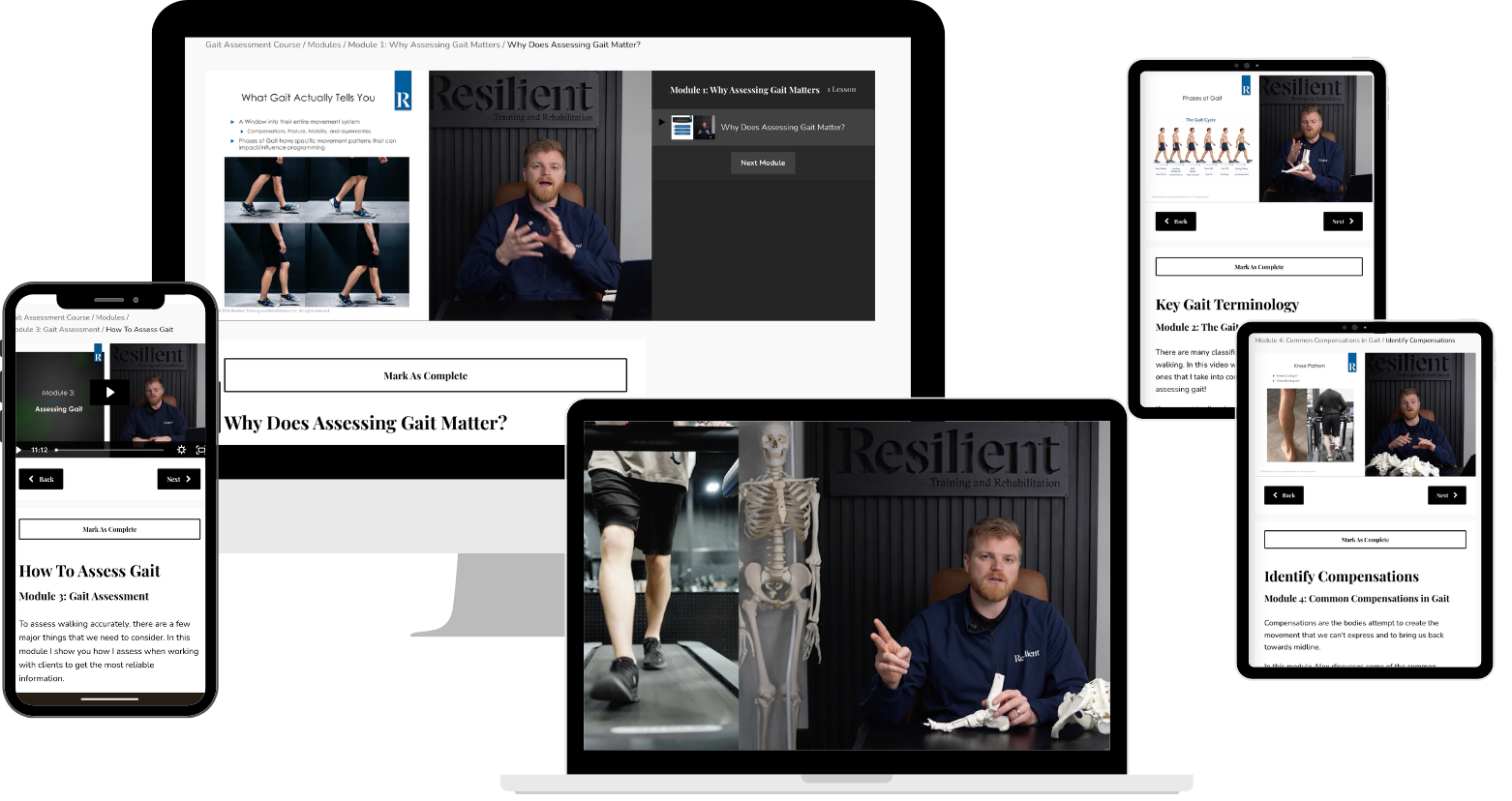
THE GAIT ASSESSMENT COURSE
6 MODULES TAKING YOU FROM FOUNDATIONS TO APPLICATION
LEARN HOW TO:
- COMPLETE A GAIT CYCLE ANALYSIS ON ANY CLIENT
- PINPOINT FAULTY PATTERNS
- IMPLEMENT EFFECTIVE CORRECTIONS
USED & TRUSTED BY PRO ATHLETES, PHYSIO'S, S&C COACHES, TRAINERS FROM:

You can study biomechanics in a textbook. But when a client is moving in front of you in real time, that's a different skill.
Analyzing and interpreting movement takes more than memorizing anatomy. It takes a coach's eye. The kind that comes from practice, repetition, and a clear model for what to look for. Without that, the information you learned stays in the book. You watch your client move and don't know how to translate what you're seeing into a better program.
Gait is the model I use to build that eye. It's how I categorize assessment, exercise selection, and programming for almost every client I work with.
Here's what I'm showing you inside the course:
1
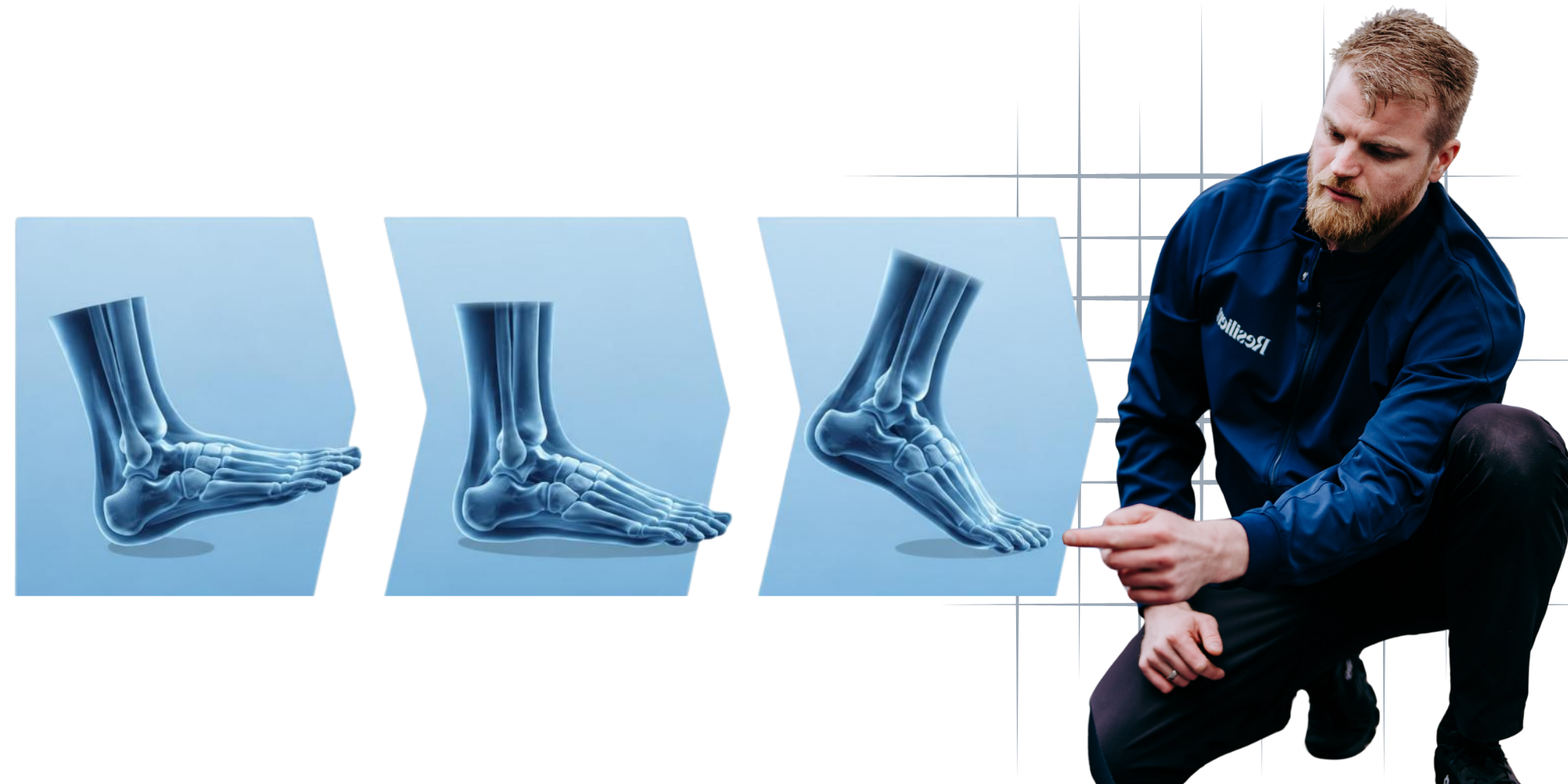
Understand the three phases of gait
Heel strike, midstance, toe off. Each phase has its own biomechanics. Heel strike opens up range of motion. Midstance absorbs force through internal rotation. Toe off produces force through stiffness. Once you understand what each phase requires, you can match assessment findings to it.
2
Assess gait the way I do
I'll walk you through my process. How I observe. What I'm looking for at each phase. How I use the same assessment measurements (squat depth, hip flexion, internal rotation, ankle flexion) to figure out which phase someone is stuck in. This is what I use with every client.
3
Match exercises to what you see
This is where gait becomes a programming tool. Once you've identified what phase someone has access to, you can pick exercises that meet them where they are and build the ranges of motion they're missing. Be a sniper with exercise selection instead of guessing.
Each phase of gait has different biomechanical requirements.
Heel strike is where you have the most range of motion available. Midstance is where you absorb force and create internal rotation. Toe off is where you produce force and create stiffness.
Once you can match what you see in assessment to a phase of gait, your exercise selection gets a lot more specific. Every exercise has a reason. Every progression has a why.
6 modules, from foundations to application.
Hi, I'm Alex
For over a decade I've chased one question: why bodies break down, and how to build them back stronger. I started Resilient to share the philosophy on movement, rehab, and strength and conditioning that I wish someone had taught me earlier.
Since 2019, I've helped thousands of trainers, therapists and movement professionals globally evolve their assessment models and achieve greater results with higher level exercise selection. My goal is to help you navigate the complexities of the body so you can eliminate pain and help your clients move with confidence.
Picture your next assessment.
A client walks in. You watch them move, and this time you actually know what you're looking at. You know which phase they're stuck in, and you already know which exercises will help. That's what this course gives you.
GET INSTANT ACCESS