
Mastering Split Squat Biomechanics Every Coach Should Know
Jan 20, 2026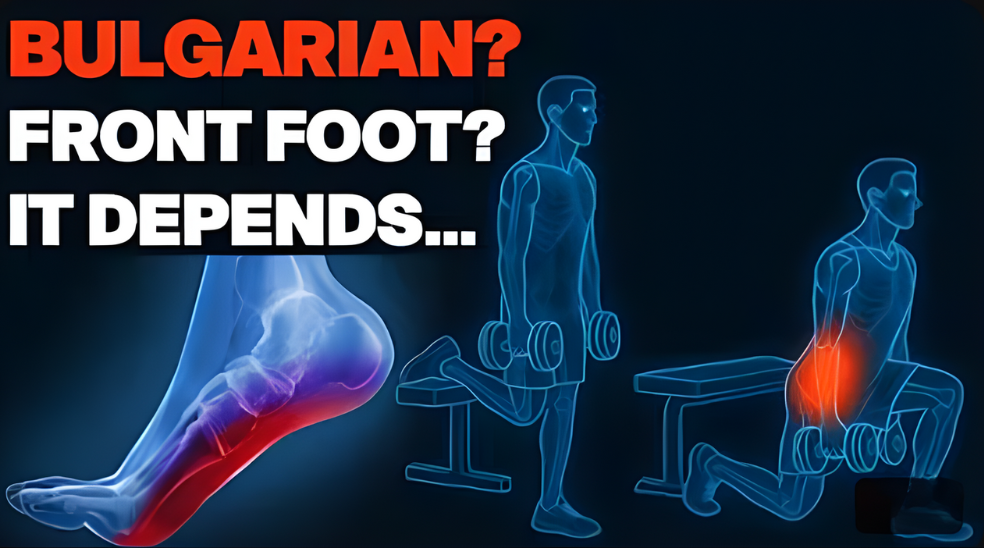
The split squat is one of the most commonly used lower body exercises in training and rehab.
It's also one of the most misunderstood.
Most discussions around split squats focus on difficulty. Rear foot elevated is harder. Front foot elevated is easier. Bulgarian split squats are advanced. Standard split squats are basic.
That framing misses what actually matters.
Split squat variations change joint demands, pelvic mechanics, and how force is managed through the system. If you don't understand those mechanics, you're guessing at exercise selection instead of solving a problem.
This blog breaks down what the split squat is actually asking of the body, why different variations feel easier or harder depending on the person, and how to choose the right option based on movement capacity rather than assumptions.
What a split squat really is
At its core, a split squat is a stationary lunge pattern.
With the right foot forward and the left foot back, the athlete lowers their center of mass and then drives back up primarily through the front leg.
Traditionally, this is taught as roughly 60 to 70 percent load on the front leg and 30 to 40 percent on the back leg. When the back foot is elevated, more load shifts to the front leg.
That description explains load distribution, but it doesn't explain mechanics.
To understand what is happening, you need to look at how the pelvis and hips are moving.
Pelvic mechanics in the split squat
With the right leg forward:
-
The left hip is in relative extension
-
The pelvis rotates toward the front leg
-
The front hip must manage flexion and internal rotation
-
The back hip must manage extension without dumping into the lumbar spine
Because the feet are positioned roughly hip width apart, the split squat requires hip internal rotation to even access the position.
Everything inside hip width relies on internal rotation. If that internal rotation is limited, the body will find it somewhere else.
This is why split squats often expose compensations quickly.
Common compensations you will see
When someone lacks the movement options required for a split squat, you'll often see:
-
The front knee collapsing inward or bowing outward
-
The back foot turning or swinging wide
-
Inability to extend the toes on the back leg
-
Excessive arching through the lower back
-
Rib flare instead of true hip extension
-
Hip hiking instead of hip flexion
These are not strength problems.
They're positioning problems.
The system is trying to accomplish the task without the joint capacity to do so cleanly.
Why torso position matters
Split squats are often cued as a vertical movement, with the torso staying upright as the athlete moves straight down and up.
That cue works against normal hip mechanics.
As the hips flex, the torso should naturally incline slightly forward. Resisting that movement locks the hips and forces the body to compensate elsewhere.
A helpful visual is thinking less like a rocket ship and more like an airplane.
The movement is still controlled, but it is more horizontal than strictly vertical. This slight forward lean unlocks the hips and allows the pelvis to move as intended.
Front leg mechanics
The front leg in a split squat must manage:
-
Hip flexion
-
Internal rotation
-
Posterior capsule opening
-
Controlled pronation through the foot
As the pelvis rotates toward the front leg, the body naturally wants to roll toward the outside of the foot. To stay balanced, the system needs internal rotation through the shin and femur, along with controlled pronation to keep the foot grounded.
If internal rotation is limited, you will see knee collapse, foot turnout, or excessive spinal movement instead.
Back leg mechanics
The back leg is primarily responsible for hip extension.
Hip extension involves turning away from that side. For that to happen without compensation, the pelvis must be able to move without collapsing into lumbar extension or rib flare.
This is why back leg mechanics matter just as much as the front leg. If hip extension is limited, the body will find it through the spine.
How split squat variations change the demands
This is where exercise selection becomes strategic.
Different split squat variations change where load is placed and which movement limitations are exposed or supported.
Front foot elevated split squat
Elevating the front foot shifts weight slightly back and unloads the front leg.
This is useful when:
-
Hip flexion is limited
-
Internal rotation is limited
-
The front leg is sensitive to load or pressure
By shifting the center of mass back, the athlete gains space at the ankle and hip, allowing movement to occur without forcing range that is not available.
Rear foot elevated split squat (Bulgarian)
Elevating the back foot shifts 80 to 90 percent of the load onto the front leg.
This biases hip extension on the front side and increases demand on the system.
However, this only works well if the athlete already has enough internal rotation to access that extension cleanly. Without it, the extension will come from the spine, knee, or foot.
Deficit Bulgarian split squat
A deficit Bulgarian combines both strategies.
By elevating the front foot while keeping the rear foot elevated, the starting position shifts weight back slightly, reducing internal rotation demand early, while still allowing deep hip flexion and extension as the movement progresses.
This variation is useful when:
-
Hip flexion, extension, and internal rotation are all limited
-
The athlete needs exposure to deeper ranges without excessive compensation
Additional tools like bands or heel elevation can further bias the movement as needed.
Programming takeaway
You can have a group of people all performing split squats in the same session.
The structure stays the same.
The variation changes.
That is not inconsistency, it's precision.
Good programming gives the system what it does not have, without forcing it into positions it cannot control.
When you understand split squat biomechanics, exercise selection stops being about difficulty and starts being about intent.
That is how you get better outcomes with less guesswork.
Want an even deeper dive?
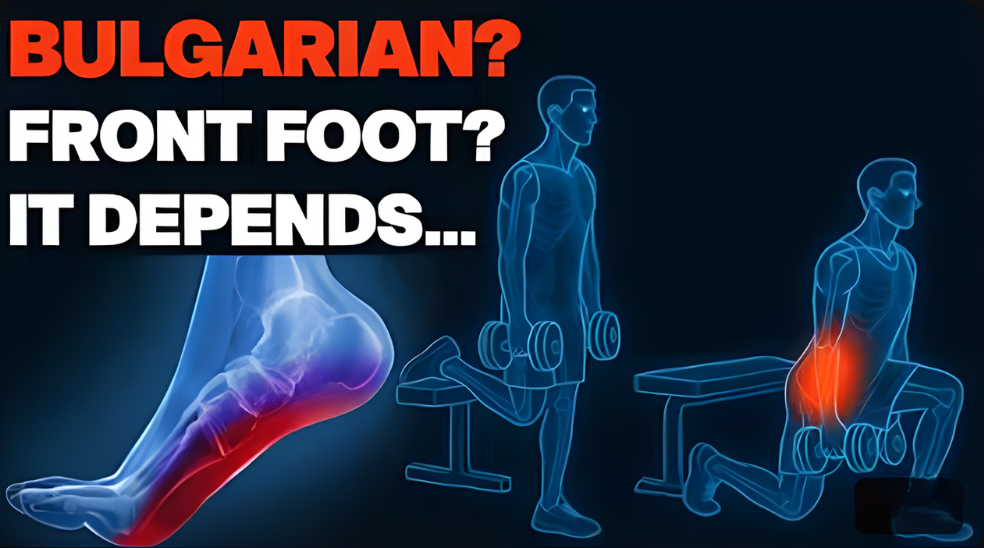
In this week’s YouTube episode, I walk through how split squat variations change hip mechanics, pelvic movement, and load distribution, and how to choose the right option based on what the body can actually access.
You can watch to the full breakdown here.
Want to apply this thinking across your programming?
Split squats are just one example of how biomechanics should drive exercise selection.
Inside EVOLVE, we focus on:
-
Understanding joint mechanics and movement options
-
Assessing what the system can and cannot do
-
Choosing and sequencing exercises with clear intent
If you want to get more precise with how you program and coach, EVOLVE is where we build that skill.

