Uncover innovative approaches to biomechanics, strength training, and pain-free movement, as we empower you with knowledge and practical insights.
Why You Can’t Feel Your Glutes (And How to Fix It)
Jan 28, 2026
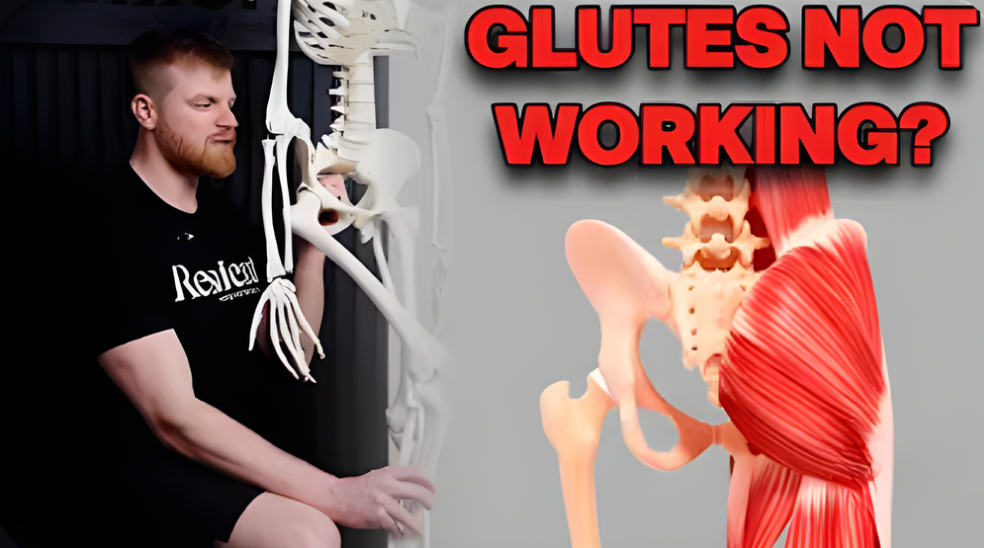
A lot of people have a hard time feeling their glutes during training.
The problem is, they're given glute strengthening and activation drills which is further exacerbating the issue.
More often than not, it comes down to the position of the pelvis.
The glutes are almost always active. The problem is that the glutes are not in a position to work effectively. Think of squeezing your biceps and then asking them to squeeze harder... It's not really effective.
There are three key areas that determine whether the glutes can actually do their job: the ribcage, the pelvis, and the knee.
If you'd rather watch a YouTube video that explains this in detail, click below:
The Ribcage sets the foundation
One of the most common things you will see in someone who cannot feel their glutes is a ribcage that sits forward.
When the ribcage pushes forward, the pelvis typically follows by tipping forward as well. From there, the body has to create tension somewhere to stay upright. That tension usually shows up in the muscles on the backside of the hips.
The glutes end up shortened and stiff.
A muscle that is already holding tension cannot contract well. It is already “on,” which limits how much it can contribute when you actually want it to produce force.
This is why improving ribcage position is often the first step.
When the ribcage comes back and down over the pelvis, the pelvis can reposition underneath it. That shift gives the glutes room to lengthen, which is what allows them to contract more effectively during movement.
One exercise that works well here is the hook-lying pullover. The goal is not to flatten the lower back or crunch the ribs down. Instead, the focus is on bringing the ribcage back while keeping the pelvis grounded, using the obliques to control the position. When this happens, glute engagement often improves without actively trying to contract them.
Watch below on how to properly perform the hook-lying pullover:
The knee controls how the pelvis moves
The second area that commonly limits glute function is the knee.
Many people lock their knees back when standing up from hinges, deadlifts, or split squats. In these cases, the knee straightens before the hip finishes extending.
When the knee snaps back early, the pelvis loses its ability to move freely around the femur. The work shifts into the lower back, calves, or other muscles that were never meant to take over hip extension.
For the glutes to contract well, they first need to be able to lengthen. That requires the knee to stay slightly bent as the pelvis moves.
Instead of pushing the hips straight back and locking the knee, think about lifting the hips up and over the femur while keeping the knee stacked over the foot. This allows the backside of the hip to stay open and gives the glutes access to real hip motion rather than compensating through the spine.
A useful drill for reinforcing this pattern is the kickstand hinge. With more weight on the front leg, it becomes easier to control the knee, keep the heel grounded, and feel the hamstrings and glutes lengthen as the pelvis moves forward.
Putting it together
When the ribcage and the knee are both doing their job, the pelvis can move through its full range of motion.
At that point, glute engagement is no longer something you chase with cues or extra exercises. It becomes a natural byproduct of better positioning and movement.
This is why improving how someone moves often does more for glute function than adding more activation work ever could.
If you want to see these concepts broken down visually, including the exercises mentioned above, you can watch the full video here:
And if you want to learn how to apply this same decision-making process across a wide range of exercises, the Roadmap to Exercise Selection goes deeper into how and why certain movements work.
Categories
Follow Us
THE RESILIENT NEWSLETTER
JOIN THE RESILIENT COMMUNITY
Stay ahead of the curve with exclusive updates, expert insights, and transformative articles delivered straight to your inbox by joining our email list today!
You're safe with me. I'll never spam you or sell your contact info.