
Foam Rolling Explained: Why Most People Get It Wrong
May 21, 2026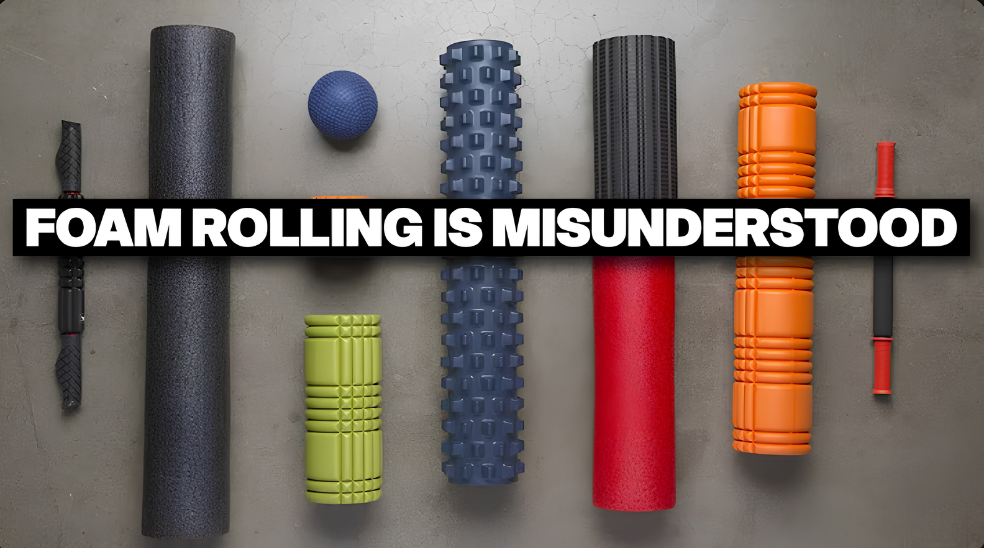
Foam rolling has had a strange journey in the fitness and rehab world.
A decade ago, it was everywhere. Every gym had a rack of them, every coach was prescribing them, and most people had one rolling around in their living room. Then the research started catching up to the marketing. People realized you can't actually "break up fascia" with a foam cylinder, and the pendulum swung hard in the other direction. Foam rollers became the punchline of evidence-based fitness content.
So which is it? Genuinely useful tool, or expensive placebo?
I think both camps are arguing about the wrong thing entirely. And once you understand what foam rolling is actually doing, you can stop debating whether it "works" and start using it with real intention.
What foam rolling actually does (and doesn't do)
Let's start with what the research shows.
Foam rolling stimulates skin receptors and mechanoreceptors, which produces temporary changes in muscle tone and perceived tension. You typically get a window of about 20 to 30 minutes where range of motion improves and the muscle feels less tight. That's real, and it's measurable.
But here's the important part: that's a nervous system response, not a tissue change. You're not lengthening muscle fibers. You're not breaking adhesions. You're modulating how the nervous system is interpreting tension in that area, which then allows for more range of motion temporarily.
The fascia argument is where things get murky. To actually deform fascia, you'd need around two tons of force sustained over a meaningful period of time. A 12 inch piece of foam under your IT band isn't producing that kind of force. You might be indirectly influencing fascia through those skin and mechanoreceptors, but you're not changing the tissue itself in any structural way.
So if foam rolling isn't breaking up tissue, and the nervous system effects are temporary, why bother?
This is where most people stop thinking and either keep foam rolling out of habit or throw the tool out entirely. Both responses miss what's actually useful about it.
Movement is a change of shape
Philip Beach has a book called Muscles and Meridians that I really like, partly because he uses embryology to explain movement. One of the core ideas in the book is that movement is a change of shape. Or said differently, the changing of shape is movement.
Think about the foot during gait. When your foot first contacts the ground, you have a relatively high arch. As your center of mass moves forward over the foot, that arch flattens and the foot pronates. The shape of the foot is constantly changing in response to where your body is in space.
The same thing happens at every joint in your body.
When you breathe in, your ribcage expands. The ribs externally rotate and the whole structure widens. When you exhale, everything internally rotates and comes back toward center. So even your ribcage is constantly changing shape, just based on respiration.
The pelvis does this too, even though it's harder to visualize. When you breathe in, the pelvis opens up at the top. When you breathe out, the pelvis closes at the top and opens at the bottom, and that opening at the bottom is what allows for internal rotation.
Every joint, every breath, every step is a shape change.
Why this matters for muscle function
Here's where it ties back to foam rolling.
When a joint is stuck in a particular shape, the muscles around it can't work properly. People will look at an EMG and say "this muscle isn't firing well" or "that muscle is weak," but the EMG only tells you how the muscle is contracting in that specific position. It doesn't tell you whether the joint is in a position that lets the muscle work in the first place.
Take the classic Trendelenburg test. Someone stands on one leg, their hip drops on the unsupported side, and the assessment says the anterior glute med is weak. But standing on one leg requires a lot of things to happen at once. The foot has to pronate. The tibia has to internally rotate. The femur has to internally rotate. The pelvis has to rotate. The ribcage has to counter-rotate.
If any of those shape changes aren't happening, the glute med has no chance of working well, regardless of how strong it is on a manual muscle test.
So instead of trying to strengthen a muscle that's already as strong as it needs to be, what if we changed the shape it's working from?
Foam rolling as a shape-changing tool
This is the part most people miss.
If I lay someone on their side and put a foam roller under their hip, I'm not "releasing the glute med." I'm laterally compressing the pelvis and changing its shape. When they stand back up, the pelvis is in a slightly different position, and now the muscles around it have a better chance to function the way they should.
Same idea with a tibial smash. You're not melting connective tissue. You're creating a shape change at the tibia that allows for the internal rotation the lower leg needs during single leg stance.
Foam rolling the lats? You're not changing lat tissue. You're compressing the ribcage on that side and influencing how it expands and rotates.
You can use a lacrosse ball on the bottom of the foot to mobilize the heel or the ball of the big toe. You can put a dowel or tiger tail under the heel and do ankle rockers to help separate the heel from the surrounding bones. These aren't "release techniques." They're shape-change inputs.
The tool is the same one everyone else is using. The framing is completely different.
How to think about it going forward
If you start at the muscle, foam rolling gets confusing fast. The research doesn't support most of the muscle-level claims, so it's easy to throw the tool out.
But if you start at the joint, things look different. Joint shape influences joint movement. Joint position influences which muscles can work properly. So if a foam roller can change joint shape, even temporarily, it becomes a meaningful tool for setting up better movement.
That's why I still reach for foam rollers regularly. Not because they release fascia. Not even primarily because of the nervous system effects, although those matter. I use them because they let me influence shape and internal pressure in ways that change how the rest of the body can move.
Once you see foam rolling this way, the debate about whether it works stops being interesting. The real question becomes when and how to use it for a specific outcome.
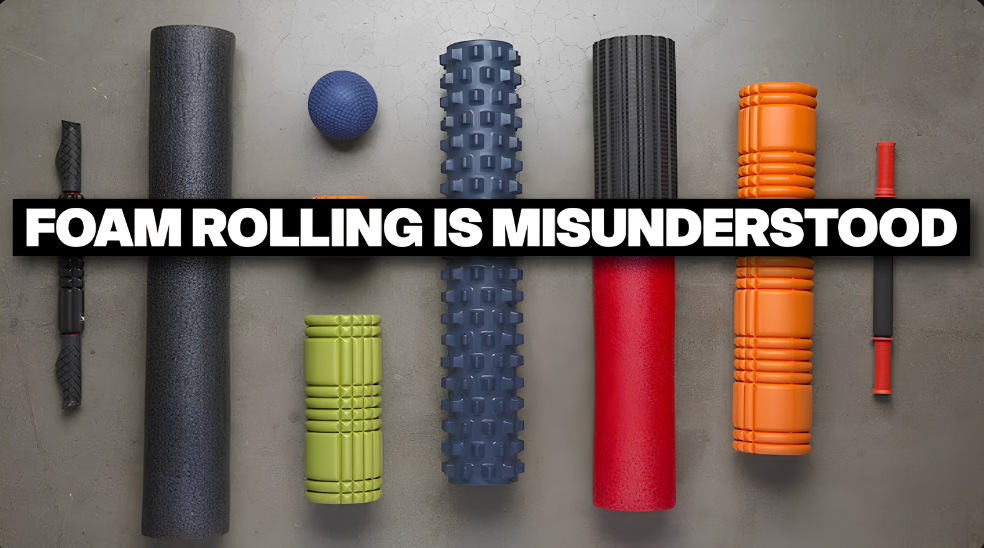
Want to see exactly how I apply this thinking to the ribcage, pelvis, and foot? I walked through it in detail in this week's video:
And if the idea of using constraints to address compensations resonates, it's the kind of thinking we go deep on inside EVOLVE. We spend a whole week on constraints and how to apply them, with summer cohort details coming soon.

