
Hip Internal Rotation Explained: Why It Actually Matters
Dec 25, 2025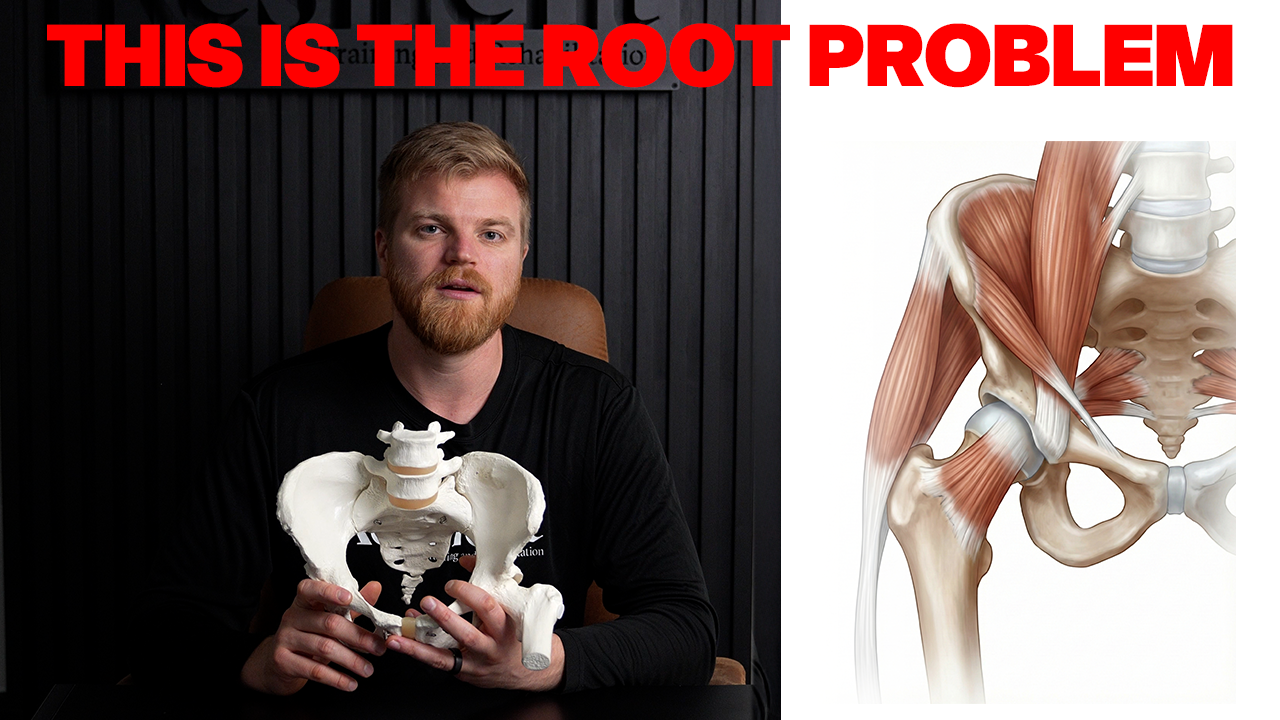
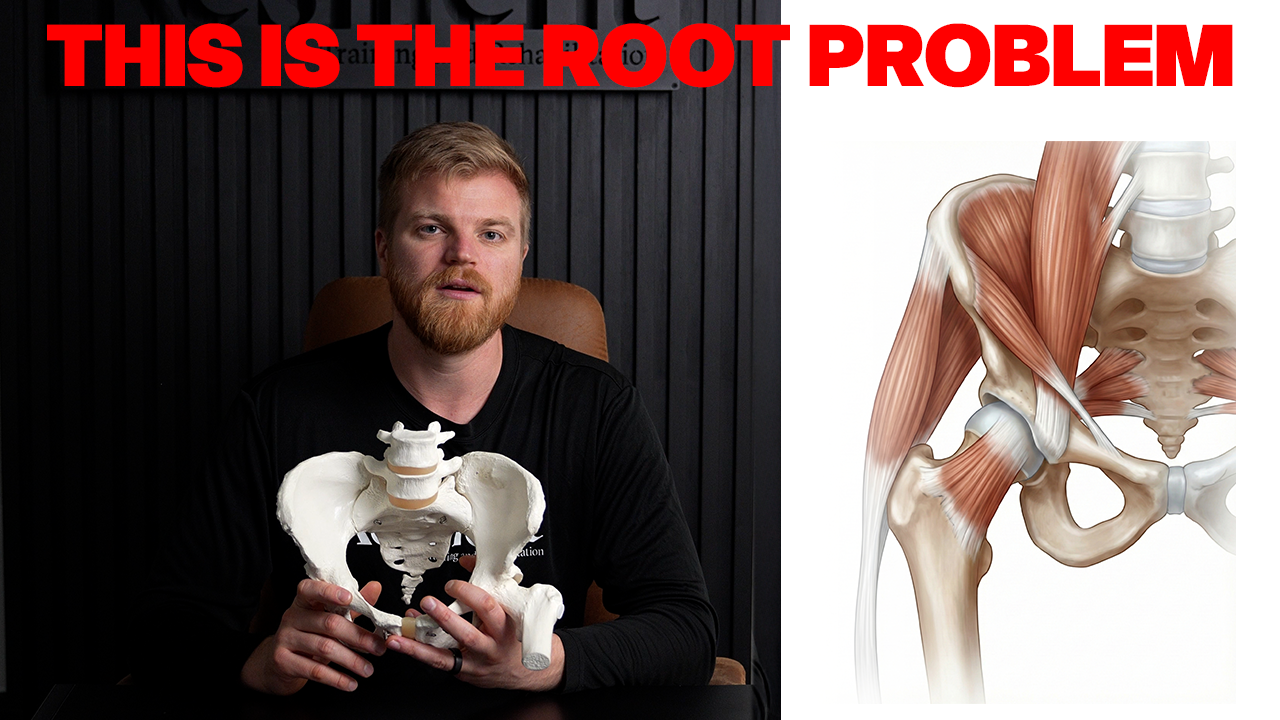
Hip internal rotation is one of the most talked-about concepts in biomechanics, and for good reason. But it’s also one of the most misunderstood.
Most people think of hip internal rotation as a simple joint action. Rotate the femur inward, improve the range, and move on. The problem is that this framing misses what hip internal rotation actually represents.
Hip internal rotation is not just about range of motion. It's a reflection of how well the body can accept force and produce force across a wide range of movements and positions.
If you prefer to see these concepts broken down visually, you can watch the full video here.
(Read on for full explanation.)
Hip Internal Rotation Is Context Dependent
Not every joint needs full range of motion all the time. In certain sports or tasks, limited motion in one area can even be advantageous. The same applies to the hip.
Hip internal rotation matters not because it must always be maximized, but because it gives the body options.
When internal rotation is available and well controlled, the body can:
-
Decelerate efficiently
-
Change direction without compensation
-
Produce force without dumping stress into other joints
When it is limited, the body finds other ways to keep moving.
Force Acceptance and Force Production
Hip internal rotation plays a role on both sides of movement: absorbing force and creating it.
Force acceptance shows up when you land, decelerate, cut, or load into a position. Think about the front leg of a split squat or the stance leg during walking. The hip is flexed, and internal rotation helps the body stay stacked and controlled as force moves through the system.
Force production shows up when you drive out of that position. Coming out of a cut, standing up from a chair, pushing the ground away, or accelerating forward all require internal rotation as well.
The key difference is where that rotation is coming from.
In more flexed positions, internal rotation tends to be driven by the femur moving within the socket.
In more extended positions, internal rotation often comes from the pelvis rotating over the femur.
Same motion. Different strategy.
Why Compensations Show Up When Internal Rotation Is Missing
When hip internal rotation is limited, the body still needs to move forward, rotate, and produce force. So it borrows motion from somewhere else.
This is where common compensations appear:
-
Excessive lumbar extension
-
Knees bowing out or collapsing inward
-
Over-rotation of the pelvis
-
Weight shifting toward the toes
-
Rib flare or forward head posture
These are not random patterns. They are solutions.
If the hip cannot internally rotate well, the body shifts its center of mass forward or rotates excessively to create momentum. The goal is not perfect alignment. The goal is continued movement.
Understanding this changes how you approach both assessment and programming.
Hip Internal Rotation in Daily Life
This is not just a sports or performance concept.
Walking, standing up from a chair, sitting down, hinging, rotating, and reaching all require some degree of hip internal rotation. When it is missing, everyday movement becomes less efficient, more effortful, and often more uncomfortable.
That is why improving internal rotation often leads to changes in:
-
Perceived stiffness
-
Muscle tension
-
Movement ease
-
Available options in certain positions
Not because a muscle was stretched, but because space and control were restored.
Why Exercise Selection Matters
Hip internal rotation is not a single limitation with a single solution.
Someone who is missing internal rotation in hip flexion often needs exercises that:
-
Keep the pelvis back
-
Load the front leg
-
Control early stance positions
A front foot elevated split squat is a good example. Adding a heel lift can further reinforce the position by allowing better access to the hip.
Someone who's missing internal rotation in hip extension may need exercises that:
-
Emphasize pelvic movement over the femur
-
Reinforce force production
-
Address extension limitations
A rear foot elevated split squat or rotational patterns like cable lifts may be more appropriate in this case.
This is why two people can perform the same exercise and get very different results.
Internal Rotation Is a Capacity, Not a Cue
It's important to remember that internal rotation is a capacity, not something you cue directly in most cases.
If the pelvis moves too far forward, space in the hip decreases and the femur cannot move as well. If the center of mass shifts too far forward, internal rotation is lost. These are positional problems first, not muscular ones.
This is also why opening up internal rotation often improves multiple things at once. You are not fixing one joint. You're restoring options across the system.
Final Thoughts
Hip internal rotation matters because it underpins how we move through space, absorb force, and generate power. It shows up differently depending on the task, the position, and the individual.
Understanding whether the limitation is occurring in flexion or extension, and whether it is driven by the femur or the pelvis, is what allows you to choose the right exercises instead of guessing.
When you get that right, you often see improvements not just in mobility, but in movement quality, tension, and performance.
If you want to go deeper into how these compensations show up, why they happen, and how to address them with precision, this is exactly the kind of reasoning we develop inside the EVOLVE Biomechanics Mentorship.

