
How to Restore Shoulder Internal Rotation Using the Face Pull
May 14, 2026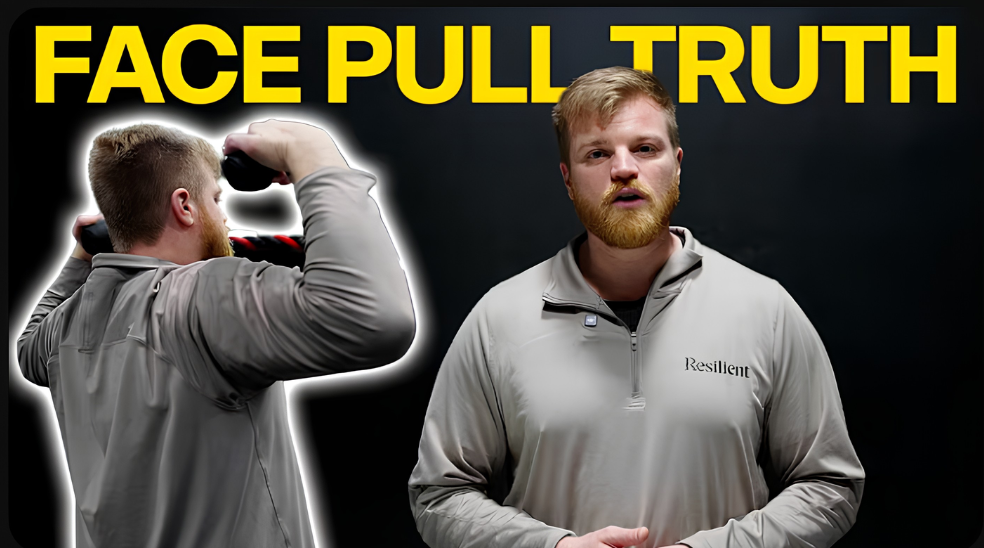
Most coaches and clinicians know the face pull as an upper back exercise. A tool for posture. A go-to for rounded shoulders or building external rotation strength.
But there's another use for it that most people miss entirely.
In my experience, the face pull is one of the most effective exercises for restoring shoulder internal rotation, especially for clients who have too much external rotation and not enough internal.
That sounds backwards. Most people think of the face pull as an external rotation exercise. So how does it end up restoring the opposite range of motion?
Let's break it down.
Why Some Shoulders Lose Internal Rotation
I had a client recently who walked in with a ton of external rotation. Way more than the normal range. But almost zero internal rotation. Five degrees, maybe.
This is more common than you'd think, especially in people who train hard, sit with their chest puffed up, or have been coached to constantly "pull the shoulders back."
Here's what's happening underneath that presentation.
When the shoulders are constantly pulled back and squeezed together, the orientation of the socket changes. A rounded shoulder faces the socket more forward. A squeezed-back shoulder faces it more upward. Both positions change the available range of the joint.
If you're already standing with your shoulder blades pinned back, you're essentially living in external rotation. There's nowhere else for the shoulder to go. You've used up the available range just standing there.
So when you try to test internal rotation, there's nothing left.
What Internal Rotation Actually Requires
For internal rotation to happen at the shoulder, the humerus and the sternum need to move away from each other.
That requires space. Space across the front of the chest. Space behind the shoulder blade. Space for the scapula to glide forward around the ribcage.
If the upper back is locked in a squeezed-together position, that space doesn't exist. And without that space, the shoulder physically can't access internal rotation, no matter how much you stretch the joint itself.
This is the piece most rehab approaches miss. People treat the shoulder joint in isolation when the real problem is upstream, in how the scapula and ribcage are positioned relative to each other.
Why the Face Pull Works for This
When you set up for a face pull, the cable pulls you toward it. To resist it, you have to shift your weight back. That shift naturally opens up the space between the shoulder blades.
Then, as you pull, you compress that space. Which means the front of the chest has to open up to accommodate the movement.
That's the sequence: open the back, then close it, which opens the front.
That's the exact mechanic internal rotation requires.
So while the face pull is loading the upper back and external rotators on the surface, what it's teaching the system underneath is the ability to alternate between expanded and compressed states across the shoulder girdle. That alternation is what restores internal rotation.
After a few sessions using face pulls as the main driver, my client went from 5 degrees of internal rotation to about 30. His external rotation came back down into a normal range at the same time.
Common Face Pull Compensations to Watch For
This only works if the exercise is done correctly. Most face pulls in the wild are getting none of these benefits because of compensation patterns that cancel out the mechanic.
Here are the three to look for:
Flared ribs. The ribcage shoots forward as the client pulls. This is the most common compensation. It cancels out the whole point of the exercise because the front of the chest can't open if the ribs are already jutted forward.
Head pushing forward. You'll see the head shoot forward as they pull back. This usually means they're shrugging up and cheating the range they don't have through neck extension.
Pulling with the shoulder blades instead of around the ribcage. The scapula needs to move around a stable ribcage. When the client pulls with the shoulder blades, the ribcage gets dragged along for the ride, and you lose the separation between the two structures that the exercise is supposed to create.
If any of these are showing up, the client isn't doing a face pull. They're just rowing with bad posture.
How to Set Up the Face Pull Correctly
Here's the setup I use:
Staggered stance. Feet parallel gives you too much power and tempts the client to use the ribs for leverage. A staggered stance keeps weight in the back heel, which helps the client lean away from the cable and maintain that separation through the shoulders.
Full flat exhale first. Before pulling, get a complete exhale to lock the ribs down. This sets the ribcage in a neutral position so it doesn't flare during the pull.
Pull on the next exhale. Bring the cable toward the nose, not the chin or the forehead.
Drive the elbows back, not the hands. The hands just follow. Keep the wrists locked. Cueing the elbows keeps the scapula doing the work instead of the arms.
Keep the back open. Let the shoulder blades move around the ribcage while the ribcage itself stays quiet.
When the exercise is done this way, the back of the upper back closes, the front opens, and you actually get the internal rotation you're training for.
Why This Matters for Pressing and Overhead Work
Shoulder internal rotation is non-negotiable for anything pressing or overhead. Bench press. Push-ups. Overhead press. Pull-ups, even.
If a client doesn't have internal rotation, they'll compensate somewhere else. Usually through rib flare, neck extension, or grinding the shoulder joint into ranges it doesn't actually own.
This is why so many clients with "good posture" (the kind that looks like they're always at attention) end up with chronic shoulder issues. Their shoulders look fine. They just can't access the range they need to load safely.
The face pull, used correctly, is one of the most efficient ways to give that range back.
See the Full Demo
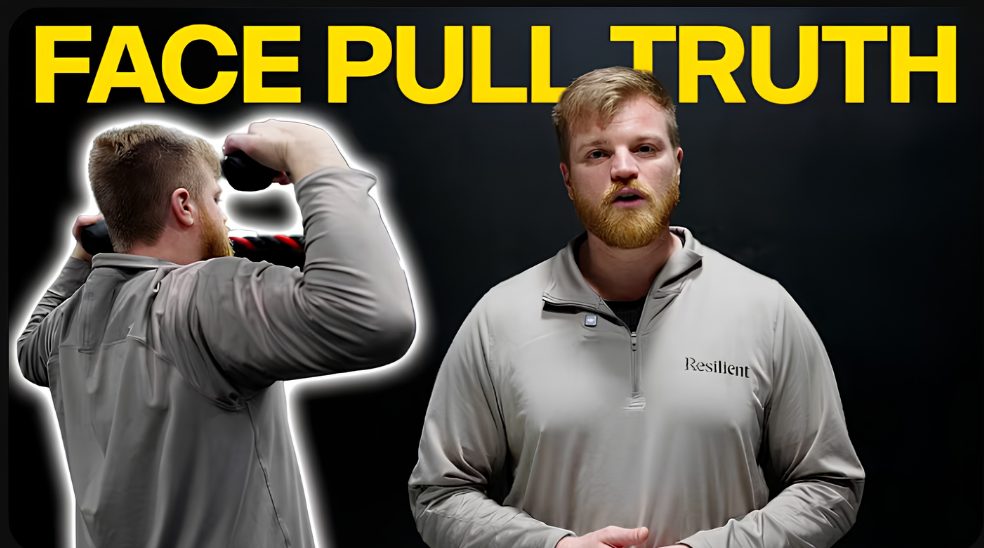
I walked through the full setup, the compensations to watch for, and the cueing I use on YouTube, including the visual of how the socket orientation changes based on shoulder position. If you want to see the mechanics play out, you can watch the full video here.
If you want to go deeper on how to assess shoulder issues like this and select the right exercises to progress your clients through, that's exactly what we cover inside the Foundations of Biomechanics Course. We break down how to categorize movements like squats, hinges, presses, and rows, and how to progress them based on what your client actually needs.

