
Inside Edge vs Outside Heel: How Foot Pressure Dictates Everything Up the Chain
Dec 29, 2025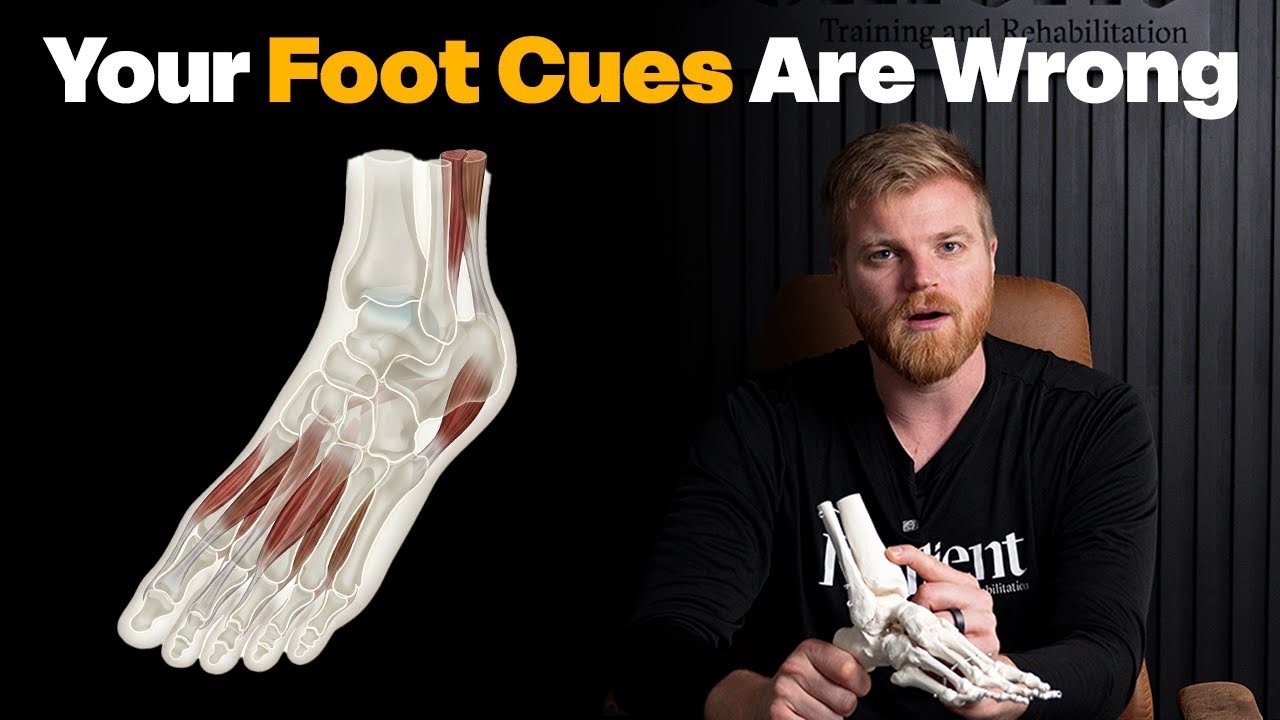
Stop Using Generic Foot Cues: How the Right Pressure Points Change Everything Up the Chain
If you’ve ever cued a client to “stay heel heavy” or “push through the big toe” and something still didn’t look right, this article is for you.
Foot cues are often treated like minor details but in reality, they’re one of the most powerful tools we have for influencing the entire body.
In this breakdown, we’ll explore:
-
Why different foot cues create completely different movement outcomes
-
When to cue the inside edge vs the outside heel + ball of the big toe
-
How foot pressure drives rotation, hip mechanics, and compensation patterns
-
Why generic cues like the “tripod foot” often fail
Want to watch a full video explaining this? Watch the video below!
The Foot Is the First Point of Contact And Nothing Happens in Isolation
The foot is your body’s first interaction with the ground.
That means everything that happens at the foot influences what happens above it: knees, hips, pelvis, ribs, spine, shoulders.
Bottom-up mechanics matter.
If pressure consistently loads the:
-
Inside of the foot → muscles on the inside bias load
-
Outside of the foot → lateral structures bias load
Those pressure differences change:
-
Arch behavior
-
Joint rotation
-
Center of mass
-
How force is transferred through the system
This is why “just squat” or “just press” is never just anything.
Inside Edge vs Outside Edge: What You’re Actually Biasing
Let’s clarify what these cues actually do.
Pressure on the Inside of the Foot
-
Biases pronation
-
Encourages a flattening arch (not a collapsed one)
-
Promotes hip extension on that side
-
Useful when you need to drive force backward or re-center the pelvis
Pressure on the Outside of the Foot
-
Biases supination
-
Encourages a higher arch
-
Creates different rotational demands up the chain
-
Can help control excessive inward collapse when used correctly
But here’s where most people get it wrong…
Why the “Tripod Foot” Cue Often Doesn't Work
The classic tripod cue:
-
Heel
-
Base of the pinky toe
-
Ball of the big toe
In theory, it sounds solid.
What we want instead is intentional pressure that creates a clear rotational outcome.
The Game-Changing Cue: Outside Heel + Ball of the Big Toe
This is one of the most effective and misunderstood cues.
Here’s what happens when you cue:
Outside heel + ball of the big toe
-
The foot begins to spread, especially through the forefoot
-
The pinky toe naturally finds the ground
-
The arch flattens just enough
-
You create pronation + internal rotation
-
That internal rotation carries up into the hip
This is gold when you need to rotate into a side, not away from it.
And importantly the muscles activate because of the joint position, not because you told someone to “feel their glutes.”
Real-World Application: Split Squat Foot Cues
Let’s apply this to a split squat.
Scenario:
Your pelvis is biased to the right, and you want to rotate back toward center or left.
Right Foot Forward
You want to promote right hip extension.
-
Cue: Inside edge of the heel + ball of the big toe
-
Keep the fifth toe down (but don’t overcue it)
-
This helps drive the pelvis back toward neutral
Left Foot Forward
You still want to rotate left without dumping into the ankle.
-
Cue: Outside heel + ball of the big toe
-
This encourages foot spreading and internal rotation
-
Allows the hip to accept rotation instead of compensating
Same exercise.
Different foot cues.
Different outcomes.
This is not random, it’s exercise selection with intention.
“Heel Heavy” Isn’t Wrong, It’s Just Specific
The “heel heavy” cue exists for a reason.
It’s often used to:
-
Shift center of gravity backward
-
Prevent excessive forward tibial translation
-
Create more usable ankle motion
If someone lives in their toes:
-
Their shin is already forward
-
Their back arches
-
The foot dumps inward
Cueing heel heavy simply gives them room to move.
But it’s not universal.
-
Want more hip flexion? Heel bias helps
-
Want more hip extension? Forefoot bias may be better
Context is everything.
Stop Cueing Muscles, Cue Positions
One of the most important coaching takeaways: Muscles are a reaction to joint position.
Instead of telling someone:
-
“Use your glutes”
-
“Feel your hamstrings”
-
“Activate your core”
Try this:
-
Cue the pressure point
-
Let the joint position change
-
Ask them what they feel after
The muscle activation will show up without forcing it.
Why This Belongs in a Roadmap of Exercise Selection
This is exactly why coaching shouldn’t be:
-
Random cues
-
Generic progressions
-
Copy-paste exercises
Foot pressure → joint position → rotation → muscle response → movement quality
That’s a roadmap, not a guess.
And it applies to:
-
Lower body lifts
-
Upper body pressing
-
Even something as simple as a biceps curl
If this is something that you find helpful and want an entire exercise database with explanations of what each exercise does, then check out my Roadmap to Exercise Selection

