
Stop Chasing Tight Muscles: The 4-Layer "Onion" of Movement & Biomechanics
Mar 27, 2026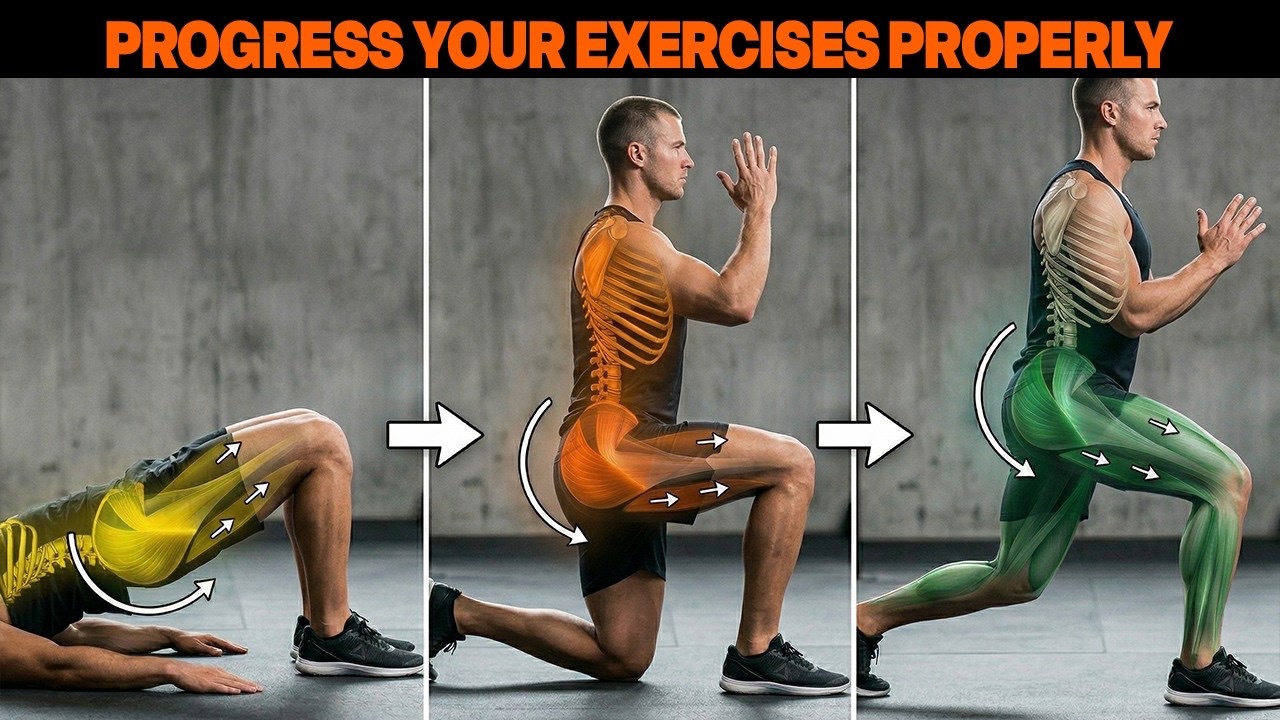
When it comes to assessing movement, many coaches and clinicians get stuck in the weeds.
We tend to look at an athlete or a client and immediately try to pinpoint a specific tight muscle, like a stubborn piriformis or a tight pec.
But what if focusing on the muscles first is actually backward?
When programming exercises, you need to look at the body through a top-down hierarchy.
Think of it like a four-layer onion. If you start from the outside in, everything about biomechanics and exercise programming becomes much clearer.
Here are the four stages of movement you need to master.
Layer 1: Center of Mass (The 30,000-Foot View)
The first and most important layer is your Center of Mass (COM). Before you look at anything else, you need to ask: Where is the weight shifted?
Is your client's COM forward over their toes? Is it shifted back toward their heels? Are they favoring their right side because their pelvis is turned?
When your center of mass shifts backward toward your heels, your body naturally becomes "lighter."
Your tissues relax, your joints decompress, and you gain more movement options because you have more physical space to move into.
Conversely, a forward-shifted COM means you are gearing up to produce force.
You can spot COM shifts just by looking at someone's posture and feet:
- Are the toes aggressively gripping the ground?
- Are the arches collapsed inward?
- Is one shoulder rolled forward while the head tilts to the opposite side?
All of these are simply the body compensating to manage its center of mass.
Layer 2: Internal Pressure (Tension vs. Expansion)
Directly linked to your center of mass is the second layer: Pressure.
Inside the human body, pressure exists on a spectrum of tension and expansion. As your center of gravity moves forward, you increase tension and pressure. This is fantastic for force production—like when you need to hinge, internally rotate, and violently extend your hips to jump or lift a heavy deadlift off the floor.
However, as your center of gravity shifts back, pressure decreases. Your body yields, tissues expand, and areas like the pelvic floor can descend. This decompression is exactly what you need to successfully absorb force or drop into a deep, full-range-of-motion squat.
Layer 3: Joint Mechanics (The Kinematic Chain)
Only after we understand COM and Pressure do we look at the third layer: Mechanics.
This layer involves looking at what is physically happening at the foot, tibia, femur, hip, ribcage, and neck when the center of mass shifts.
If your weight shifts forward onto the balls of your feet, your hips are naturally pushed into a more extended position.
If you turn your body to the right, your right hip must internally rotate while your left hip extends.
Understanding these mechanical chain reactions allows you to properly assess a client and pick exercises that actually fix their mechanical deficits.
Layer 4: Tissues (Muscles and Connective Tissue)
The final layer "the core of the onion" is the Tissues. This includes the stiffness, contraction, and superficial tension of your muscles.
Depending on the previous three layers, your tissues are generally performing one of two actions:
- Overcoming: Pushing against resistance (like trying to move a 1,000 lb barbell). This pairs with a forward center of mass, increased pressure, and internal rotation.
- Yielding: Absorbing force and descending (like dropping into a deep squat). This pairs with a backward center of mass, decreased pressure, and expansion.
If we go from tissue to mechanics, to pressure, to center of mass, we're going to get confused along the way... The muscles are going to react to the mechanics or to the joints.
The Takeaway: Program Top-Down, Not Bottom-Up
There are simply too many muscles in the human body to accurately pinpoint a single "tight" culprit.
More often than not, a muscle feels tight because it is dealing with excessive load due to poor joint position, which is dictated by pressure and center of mass..
Instead of chasing tight muscles, take a step back.
Assess the center of mass, manage the pressure, understand the joint positions, and then look at the muscle activity. Use physical constraints in your programming—like heel wedges, foam rollers, or specific cable setups, to force the center of mass where it needs to be.
When you fix the top layer of the onion, the muscles will automatically do exactly what you want them to do.
If you want to how to actually apply this with every major exercise, then check out my Roadmap to Exercise Selection Course

