
How To Use Biomechanics To Make Programming Easy
Mar 12, 2026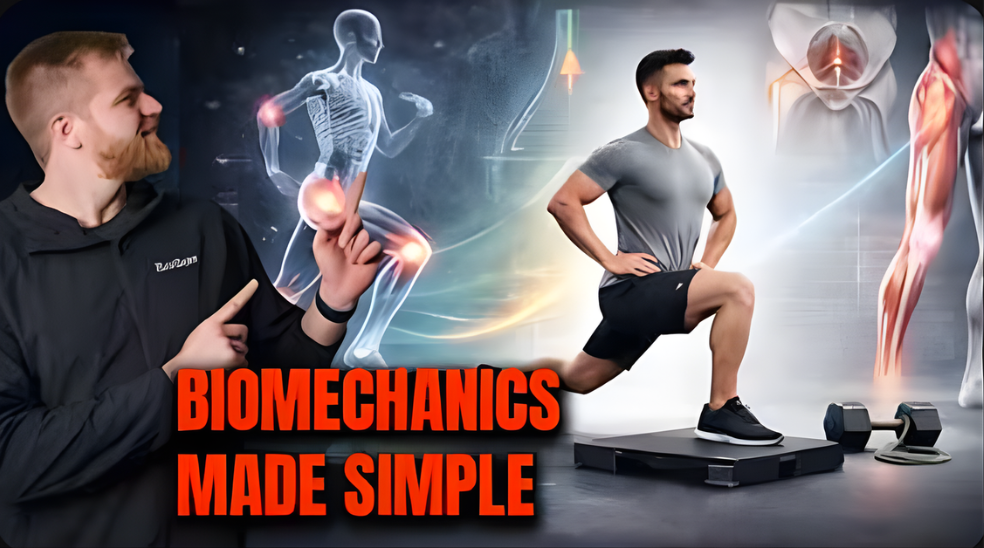
If you work in fitness, rehab, or any corner of the movement industry, you're already using biomechanics. You might just not be calling it that.
Every time you coach a hinge, cue a split squat, or watch someone walk across the room and notice something feels off, that's biomechanics. It's not a specialty reserved for researchers or PhDs. It's just the study of how the body moves.
Break the word down: bio means body, mechanics means movement. That's it.
It's more practical than you think
Here's where it gets useful. Most coaches look at an exercise and ask "what muscle does this work?" Biomechanics pushes you to ask a better question: why does this variation load that structure more than another?
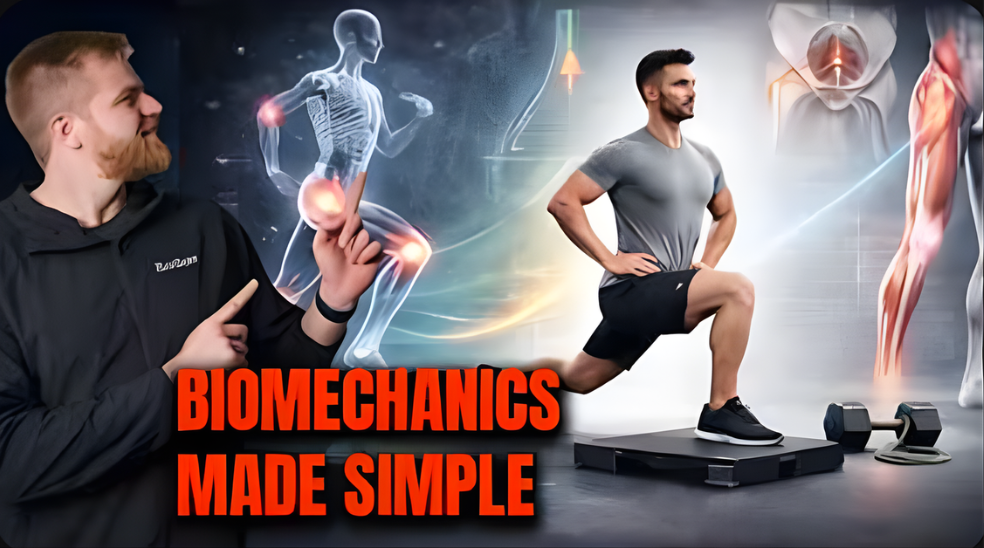
Take the split squat. Rear foot elevated versus front foot elevated. A lot of coaches know one loads the glutes more and the other loads the quads more. But the reason why comes down to something more fundamental: where is the pelvis relative to the foot?
If the pelvis is in front of the foot, you're emphasizing hip extension. If it's behind, you're in more of a hip flexed position. Same general movement pattern, completely different structures being targeted. That's not a random outcome. That's biomechanics.
And it doesn't stop there. Load, velocity, angles, force vectors, joint position, range of motion. Every variable you adjust is changing something about how the body responds, whether you're conscious of it or not. If you want to see how this plays out across different exercises and movement patterns, I broke it down in this week's YouTube video.
What happens when you don't have this foundation
Without at least a basic grasp of biomechanics, exercise selection becomes a guessing game. You might land on the right choice, but you won't always know why, and you definitely won't know how to adjust when something isn't working.
When a client keeps compensating in the same pattern, or can't seem to get out of a recurring discomfort, biomechanics gives you a framework to actually troubleshoot it. It tells you what's happening at the joint level, what's being loaded, and what might need to change.
You don't need to memorize every formula or read every textbook. But having a solid set of principles changes the way you see movement entirely.
Ready to build that foundation?
The Foundations Accelerator is a 2-week live cohort designed to give you exactly that. You'll cover the core biomechanics principles you need to make smarter programming decisions, with live Q&A and a community working through it alongside you. It's currently $238, which is 40% off the regular price.
Join the Foundations Accelerator here
If you've been winging it and getting decent results, imagine what's possible when you actually know what you're doing.

