
Stop Squeezing Your Shoulder Blades: The Biomechanics Mistake Ruining Your Rows (and What to Do Instead)
Dec 03, 2025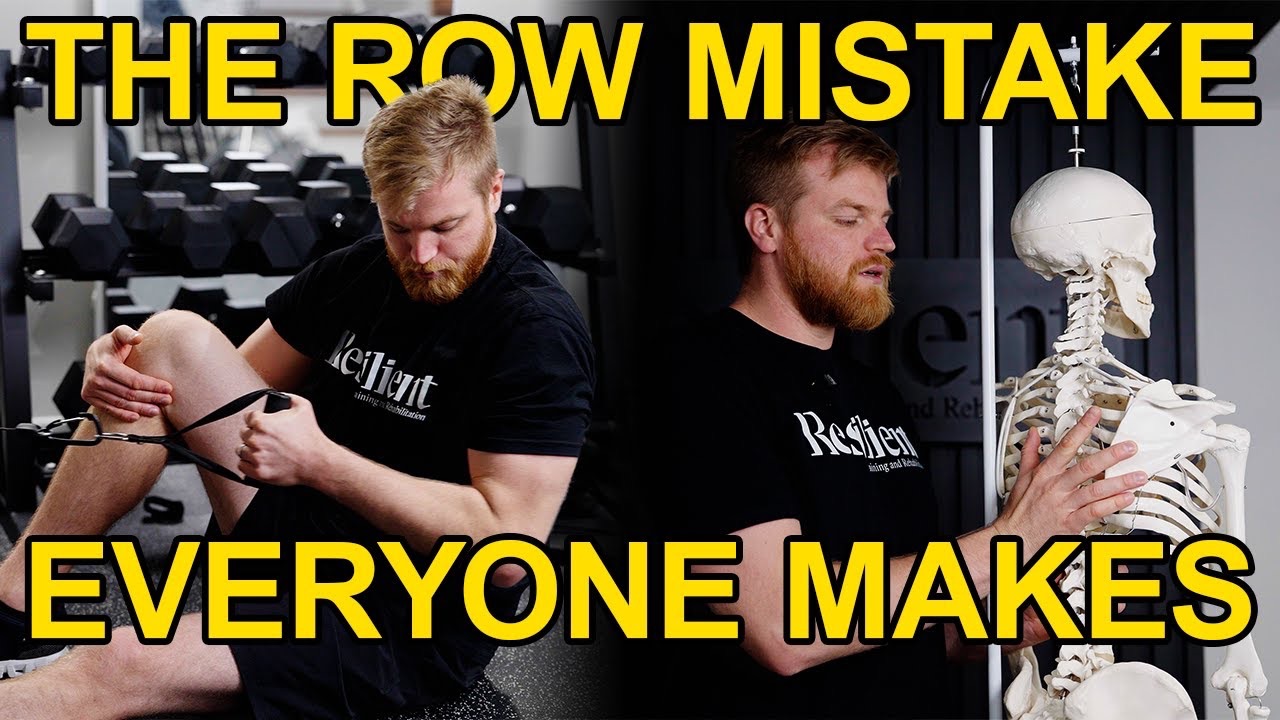
If you’ve ever been told to “squeeze your shoulder blades together” during rows, band pull-aparts, or while trying to “fix” your posture… you’re not alone.
This cue has been around for decades, and while it sounds helpful, it’s actually one of the fastest ways to reduce shoulders of mobility, impact strength and hypertrophy gains, and inhibit the very muscles you think you’re training.
I’m Alex Effer, founder of Resilient Training & Rehab, and after helping thousands of coaches, clinicians, and lifters improve movement quality, here’s what I can confidently tell you:
The cue “squeeze your shoulder blades together” is overrated.
In this post, I’ll break down why, what’s actually happening when you use that cue, and the biomechanics-driven strategies you should use instead to train the upper back the way it was designed to work.
If you want to just watch the video, click below:
Why “Squeezing Your Shoulder Blades” Is Holding You Back
Most people believe retracting the shoulder blades will:
-
Improve posture
-
Strengthen the rhomboids
-
Create more “tension” in the upper back
-
Fix rounded shoulders
But here's the truth:
1. Squeezing the shoulder blades closes the space you NEED behind the rib cage
The space between the shoulder blade and spine—your posterior rib cage—is crucial for:
-
Shoulder flexion
-
External rotation
-
Abduction
When you squeeze your shoulder blades together, you literally steal this range of motion.
Think of it like this:
Scapula moves too close to the spine ➜ Rib cage is then pushed forward ➜ Weight shifts to the toes ➜ Tension builds between the shoulder blades and in the back of the pelvis ➜ Shoulder range becomes limited
This is why so many people feel “tight” even though they’re doing band pull-aparts every day.
2. You’re not actually training your rhomboids
Here’s the kicker…
When the rib cage is pushed forward and the shoulder blade retracts excessively, the rhomboids are no longer positioned to contract effectively.
They’re shortened, compressed, and mechanically disadvantaged.
Muscles don’t get stronger when you jam them into the end of their range—they get stronger when they move through their range.
What You Should Be Doing Instead: Retract the Rib Cage, Not the Scapula
This is the game-changing concept most coaches and clinicians miss:
The goal is NOT to retract your shoulder blades.
The goal is to retract your rib cage.
When you bring your rib cage back and under the shoulder blades, you:
-
Create space for the scapula to move
-
Maintain shoulder range of motion
-
Put the rhomboids in a lengthened, powerful position
-
Increase rear-delt and mid-trap activation
-
Reduce compensations
This allows you to train strength and mobility at the same time.
How to Apply This to Your Rows and Band Pull-Aparts
Let’s break down exactly how to train with this improved cueing strategy.
1. The Cross-Body Row (The Most Underused Upper-Back Builder)
The cross-body setup naturally encourages the rib cage to rotate under the shoulder blade, opening the upper back.
How to do it correctly:
-
Let the cable “win”—reach the arm and allow the shoulder blade to wrap around the spine.
-
Keep your chest still as you pull.
-
Stop pulling when your ribs would otherwise rotate/flare.
-
Think: ribs back, arm pulls—not chest forward.
You’ll feel a massive increase in upper-back activation because you’re finally using the muscles through a full, optimal range.
2. The Traditional Seated Row (A Better Version)
Most people start rows already retracted.
Instead, try this:
-
Start with scapulae slightly away from the spine
-
Allow the arms to reach
-
Take a breath into the space between your shoulder blades
-
Pull while keeping your ribs back, not forward
-
Stop before your ribs drive forward or your shoulder rounds
Think of “leaning your chest in between your shoulder blades” as you pull.
This maintains a stacked rib-cage-over-pelvis position and skyrockets muscle recruitment.
3. The Band Pull-Apart
The biggest mistake people make is that they pull too far and flare their ribs to finish the motion.
Instead:
-
Start with arms reaching forward
-
Gently retract the rib cage, not the shoulder blades
-
Pull the band apart only as far as you can keep your chest “behind” your shoulders
-
Keep the ribs down and back
You’ll instantly feel more rear delts, mid-trap, and rhomboid engagement.
Why This Matters for Pain, Strength, and Shoulder Mobility
This isn’t just a technique tweak—it’s a foundational biomechanical correction that influences:
-
Overhead mobility
-
Pressing strength
-
Posture
-
Shoulder health
-
Back tension
-
Rib cage positioning
-
Pelvis alignment
By keeping the posterior rib cage open and letting the scapula glide properly, you're not just building strength—you’re restoring natural movement and reducing long-term compensations.
This is what most lifters miss… and what most therapists were never taught.
The New Standard
“Squeeze your shoulder blades together” has had a good run, but it's outdated.
The new standard?
- Retract your rib cage, not your shoulder blades.
- Create space instead of closing it.
- Maintain position while you move through it.
If you want stronger rhomboids, healthier shoulders, and a more resilient upper back, this shift is non-negotiable.
Want More Biomechanics Breakdowns Like This?
If you found this helpful and want a Course that breaks down exercises like this while using better cues, then check out my brand new Roadmap To Exercise Selection!

