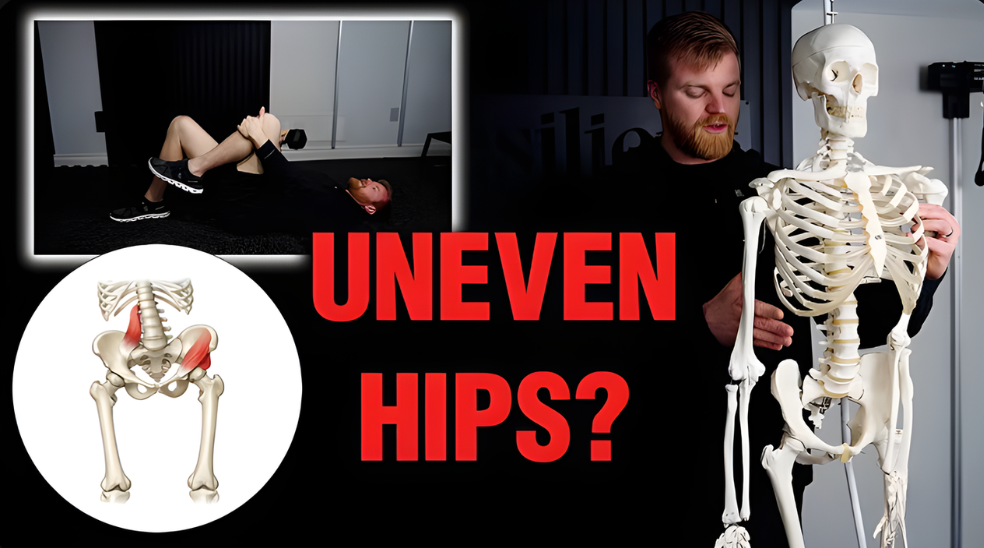
One of the most common things I see during an assessment is a hip that sits higher on one side than the other.
Most people assume that means something on that side is tight and needs to be stretched.
But uneven hips are rarely a muscle tightness problem.
They are usually a joint position problem.
If you prefer to watch the full breakdown with demos, I walk through this step by step in this week’s YouTube video.
Let’s unpack what’s actually happening.
What Causes a Hip Hike?
Let’s say the right hip is elevated.
When that happens, you will often find:
-
Limited right hip internal rotation
-
Limited right hip extension
-
The pelvis rotated toward the right
-
The ribcage counter rotating back toward the left
-
A higher left shoulder to balance things out
This is not random, it's a strategy.
If the right hip cannot internally rotate, you lose the ability to push effectively through that foot. And if you can't push through that side, the body still has to create force somehow.
So it finds it somewhere else.
You’ll see:
-
Side bending through the ribcage
-
Extension through the lower back
-
A forward weight shift
-
Rotation above to counter rotation below
Now it looks like a posture issue, but it started as a motion issue.
The muscles around the hip, including the QL, are usually reacting to this position. They are not the root cause. The root cause is the loss of joint motion and the compensations that follow.
This is why stretching the high hip rarely fixes the problem long term.
Why Internal Rotation Matters
Think about this scenario:
If I stand to your left and push you toward your right side, how do you push me back?
You press your right foot into the ground and internally rotate that hip.
If that motion is limited, you cannot create force through that side.
So instead of pushing through the hip, you side bend, arch, or rotate through the ribcage to compensate.
That compensation becomes your default posture over time.
So the question is not “what is tight?”
The question is “what motion is missing?”
In most hip hike patterns, it's internal rotation and extension on the elevated side.
How To Start Fixing It
Instead of stretching the high hip, we restore position first.
One simple drill I like is a bridge variation with a press.
Lie on your back.
Gently hold the opposite knee toward your chest. You are not aggressively pulling it in. Just holding it.
Then press the foot of the elevated side into the floor and lift into a small bridge.
You should feel the hamstring on that side engage.
That hamstring helps rotate the pelvis back underneath you. That is the goal. Reposition first. Do not roll into the other side. Let the pressure from the foot create the shift.
Add breathing at the top. Exhale as you lift. Let the ribs come down as the pelvis rotates back.
Once you can control that position on the ground, progress to standing.
A lateral lunge with controlled rotation works well.
Set your feet slightly wider than shoulder width. Shift into the elevated side to create length through that hip. Then push off that foot and allow the ribcage to rotate back over the pelvis.
Stay loaded on that side. Keep the knee unlocked. Breathe as you move.
Now you are teaching the body to produce force through the hip instead of around it.
Position First. Then Strength.
Uneven hips are not just a cosmetic issue... they're a movement strategy.
If you try to strengthen on top of a compensation, you reinforce the pattern. If you restore position first, you give the body a better option.
That's the difference.
If you want to see the full breakdown, including how I coach these drills and what to look for during assessment, watch the full YouTube video here.
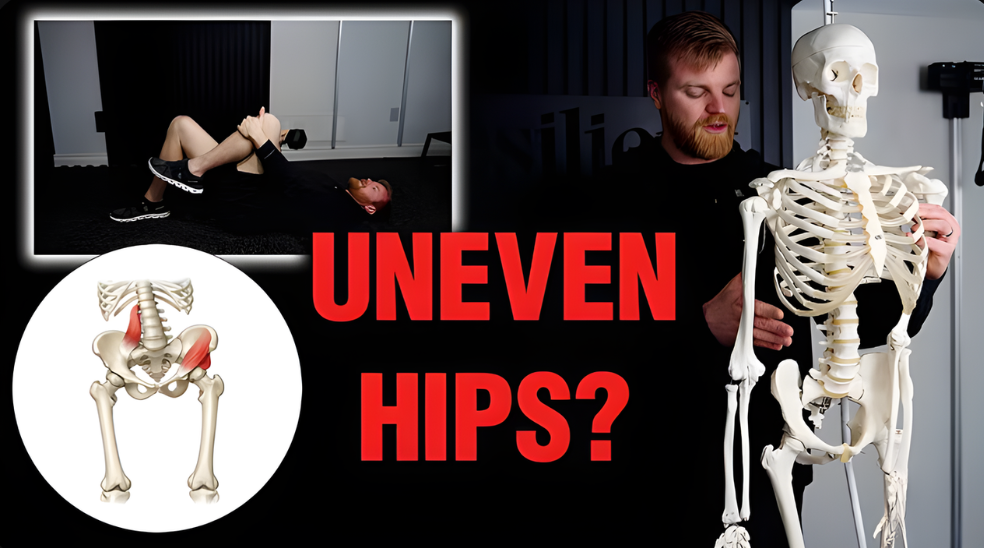
And if this type of breakdown is helpful, the Resilient Posture Program goes deeper into ribcage and pelvic positioning and how to train it correctly.