
Why Your Hip Pain Isn't a Hip Problem: The Forearm–Hip Connection Most Practitioners Miss
Apr 13, 2026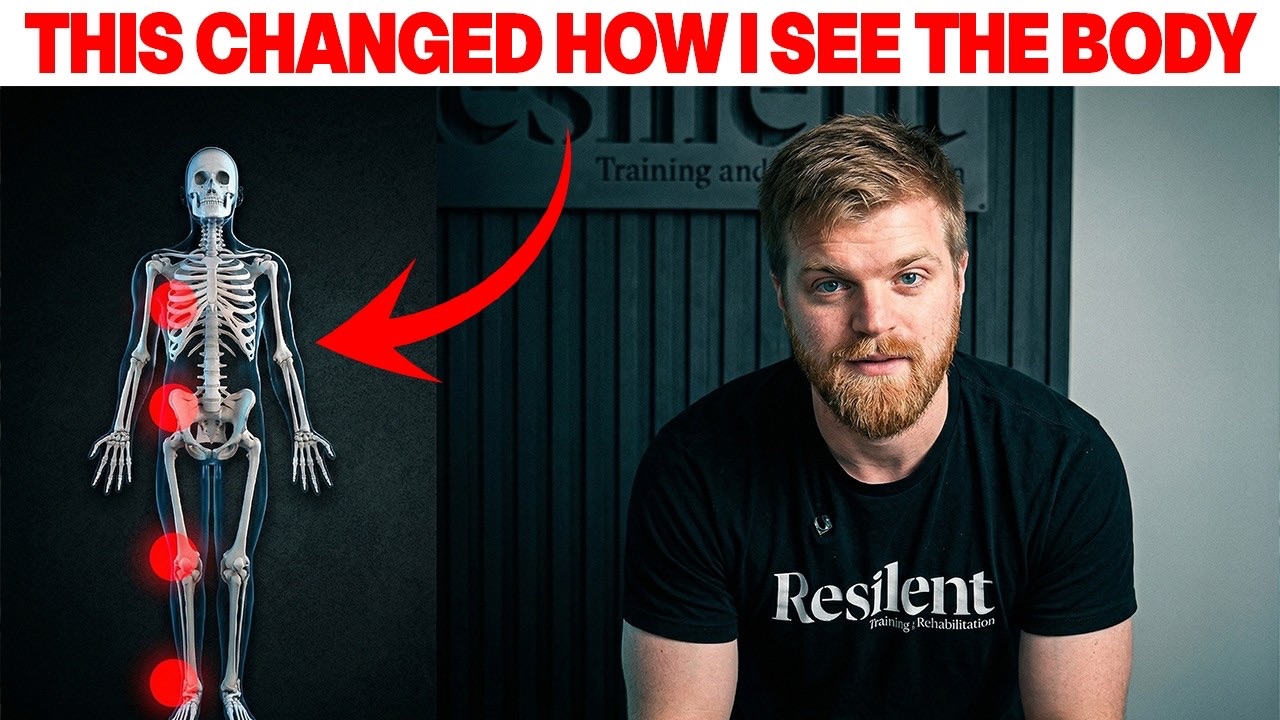
Everyone knows "the body is connected." But knowing it and actually applying it are two very different things and the gap between them is where patients stall and practitioners get stuck.
Here's a case that illustrates exactly what that gap looks like, and what closing it means for your results.
If you'd rather watch, here is the full video:
The client who stumped everyone
A chiropractor reached out asking for a second set of eyes on one of his patients.
The complaint: right-side hip pain and pinching with any loaded movement on that leg.
He'd already been assessed and treated by multiple practitioners.
Each one did what most of us are trained to do they focused on the hip.
When we sat down with the assessment, here's what we found:
- Right hip internal rotation: limited
- Right hip external rotation: limited
- Right hip flexion: limited
- Rib cage: rotated left
- Right pelvis: appearing to shift forward and left
- Right foot: dumping in (pronation)
The picture was clear: this wasn't just a stiff hip.
There was a systemic orientation pattern playing out from the rib cage all the way to the floor.
Repositioning the system, not the part
We moved through integrated exercises addressing the rib cage, pelvis, knee, and foot together, not in isolation. The result was real and measurable:
Significant. But he was still getting the pinching in some movements. So we kept looking.
The hand nobody thought to check
This is where it gets interesting. Looking at his posture, something stood out: his left hand position was off. His elbow was facing forward, meaning the forearm was supinated (turned out). But his thumb was rotating inward, almost reaching toward his pinky. A classic compensation pattern.
Try this right now: twist your own hand inward fully and keep going. You'll feel your forearm rotate, your shoulder follow, and eventually your rib cage begin to turn. That rib cage rotation shifts your weight distribution. It changes where your pelvis sits. It changes what your hip has to do.
We did soft tissue work on the radius of his left forearm. His reaction told the story, it was excruciating. That's when he mentioned, almost as an afterthought, that he'd broken his elbow years before. The fracture had altered his ability to rotate the forearm. His whole upper body had been compensating ever since.
The result that reframed everything
No hip work. No soft tissue around the pelvis. Just the radius. We retested in a follow-up session, same outcome. Hip pain disappeared as tricep and curl variations were layered in to reinforce the new range.
A second case: left low back pain
Around the same time, a separate client presented with left low back pain. He was heavily rotated into the right side. Applying the same logic, we mobilized the right radius, nothing else. His hip internal rotation went from zero to 20 degrees. Once we addressed what was happening at the foot and knee to lock in the gain, his sciatic pain was gone and the clicking in his back stopped.
How to actually learn this
Reading about it is one thing. But developing the eye to see these patterns in real time — across rib cage, pelvis, forearm, foot, and everything in between — takes a structured approach. That's exactly what the EVOLVE Biomechanics Mentorship is built around: learning to read the whole system as one interconnected unit, not a collection of isolated joints.
The mentorship includes direct access to answer your case questions as you apply these concepts in practice.

