
Why Your Squat Depth Is Getting You Nowhere (The Butt Wink Explained)
Apr 12, 2026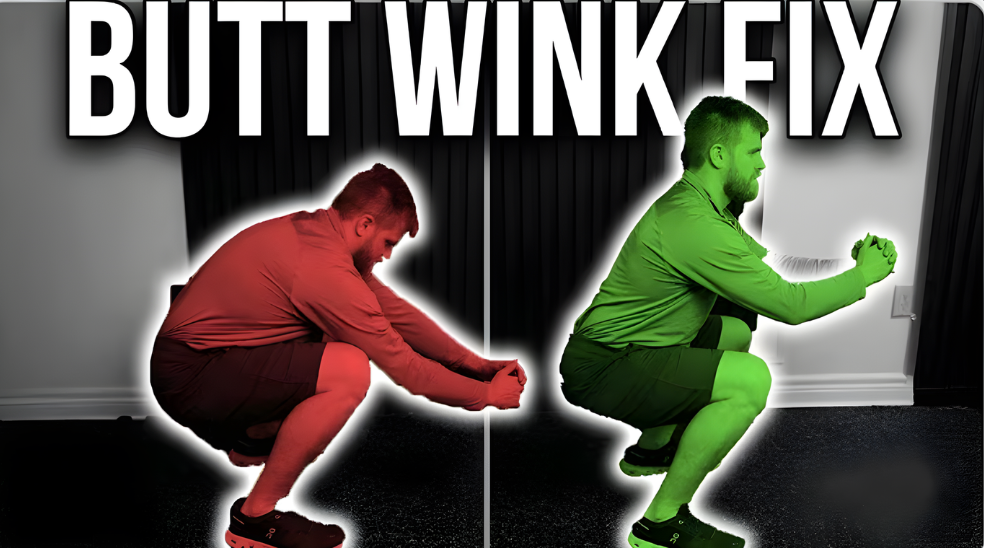
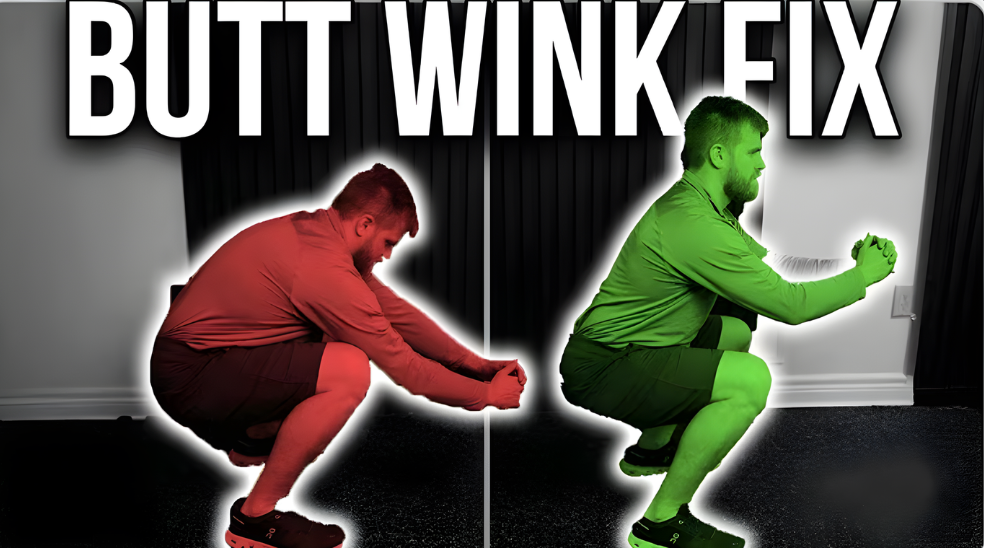
If you or your clients have a butt wink in the squat, the first instinct is usually to chase more mobility. More hip stretching, more ankle work, more time at the bottom.
But here's the thing. It's usually not a flexibility problem. It's a positioning problem. And until you understand what's actually driving the butt wink, you'll keep working around it instead of fixing it.
Here's what's actually going on.
The hip socket has to face a certain direction in order to move well through a squat. As the hip flexes and internally rotates through the mid-range, the socket needs to be oriented more forward so the femur has somewhere to go.
But in a lot of people, the pelvis is already dumped forward before they even start moving. When that happens, the sockets are pointing more toward the ground instead of forward. So as they descend, they hit a wall earlier than they should. They run out of room in the hips and the body finds it somewhere else. Usually the spine. That's the butt wink.
The tricky part is that the people who look the most mobile are often doing this the most. You'll see someone go really deep into a squat, feet turning out wide, knees flaring, and think they're moving well. But they're not hinging through the hip. They're rotating around it because internal rotation isn't actually available to them. The depth is coming from somewhere it shouldn't be.
So the fix has two parts.
First, you have to decompress the back of the hip so the pelvis can shift into a better position. When the back of the pelvis is compressed and tense, the sockets stay pointed down no matter how much the person tries to sit into the squat. Getting that space back is what allows the pelvis to tilt into a position where the hips can actually do their job.
Second, you have to reinforce that position under some load before you start chasing more depth. This is where a lot of people skip ahead. They restore a little range of motion and immediately go back to squatting as deep as they can. But if the nervous system hasn't learned to control the new position, it's not going to hold. You need to own the range before you earn more of it.
A good starting point is limiting depth to what the person can control with a neutral pelvis, and building from there. A box squat at the right height does this well. It forces a natural stopping point, gives the body a moment to decompress at the bottom, and trains the person to come back up from their hips rather than rocking out of the hole.
In this week's video, I break down two specific exercises I use to address this pattern, including how to set them up and what to look for.
If this kind of thinking, reading a compensation and tracing it back to the actual cause, is something you want to get better at across the whole body, the Foundations of Biomechanics course is a solid place to start. It covers the principles behind why the body moves the way it does and how to use that to make smarter decisions for your clients.

