
Your Hamstrings Aren't Tight. They're Overstretched.
Apr 01, 2026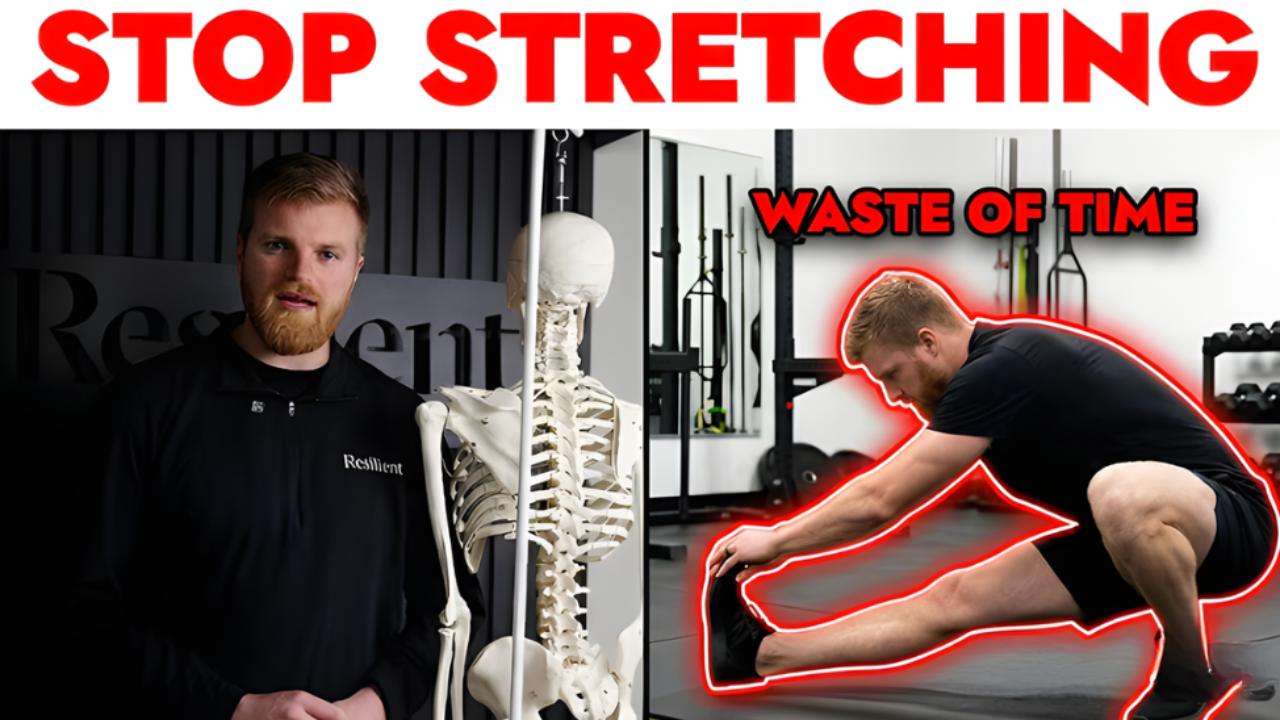
If you deal with that constant pulling feeling in the back of your legs, you've probably tried the obvious fix: stretch the hamstrings more.
Maybe you do a standing toe touch every morning. Maybe you hold a seated stretch for 30 seconds after every workout. Maybe you've been doing it for months and still feel like nothing has changed.
Here's why.
What if the hamstrings aren't actually tight? What if they're already being pulled too long, and that sensation you're calling tightness is actually your nervous system saying "stop, we're already at our limit"?
It sounds counterintuitive, but once you understand how the hamstrings actually work, it makes complete sense.
How the hamstrings get overstretched
The hamstrings attach at the sit bone at the top and travel down to the back of the knee at the bottom. That means two things affect their length: what the pelvis is doing and what the knee is doing.
When you tilt the pelvis forward and extend the knee backward, you're lengthening the hamstring at both ends at the same time. The sensors inside the muscle start firing. It feels like tightness. But the muscle isn't short. It's being pulled too far in both directions at once.
So when you go to the floor and pull your leg toward your chest, you're asking a muscle that's already at its limit to stretch even further. That's not going to give you lasting relief. It's going to keep you stuck in the same loop.
The real issue is pelvic position
When someone is living in an anterior pelvic tilt with flared ribs and their center of gravity shifted forward, the hamstrings are under constant tension because of where the joints are, not because the muscle itself is short.
You'll often see this paired with an arched lower back, ribs that flare upward, and a tendency to shift weight toward the toes. All of that puts the pelvis in a position that keeps the hamstrings on a constant stretch, which is why the tightness feeling never fully goes away no matter how much you stretch.
The fix isn't more length. It's restoring joint position so the muscle can actually function the way it's supposed to.
Two exercises to address it
Once you understand that the hamstrings are a symptom and the pelvis is the source, the approach completely changes.
The first exercise focuses on resetting pelvic position using breathing mechanics. Lying on your back with a pad under your hips, you use a specific breathing pattern to gently bring the pelvis into a better position without over-recruiting the abs or forcing range of motion that isn't there yet. The pad matters because it helps people with an arched lower back access the position without just crunching everything down.
The second exercise reinforces that position by actually loading the hamstring in a shortened range. With the foot on a foam roller, you push into the roller while maintaining pelvic position. The foam roller creates a small challenge because it wants to roll away, so the hamstring has to work to control it. This is the opposite of stretching. You're teaching the muscle to fire in a position where it actually has slack.
Both exercises work together to restore joint position first, then reinforce it with the right kind of muscle activation.
The bigger takeaway
Just because something feels tight doesn't mean it's short. Sometimes the sensation of tightness is actually your body telling you a muscle is already being pulled too far.
Before you add more stretching to your routine, it's worth asking: what are the joints doing? Because if the pelvis is in the wrong position, no amount of hamstring stretching is going to change how things feel. You have to address the source.
Watch the full video breakdown here, including a full demonstration of both exercises.
Want to build a deeper understanding of how joint position affects the whole body? That's the foundation of everything we cover inside EVOLVE. If you're a coach, trainer, or therapist who wants a system for actually understanding why your clients move the way they do, check out the program details below.

