
Does Foam Rolling Actually Work? The Biomechanics Answer You Haven't Heard
Apr 17, 2026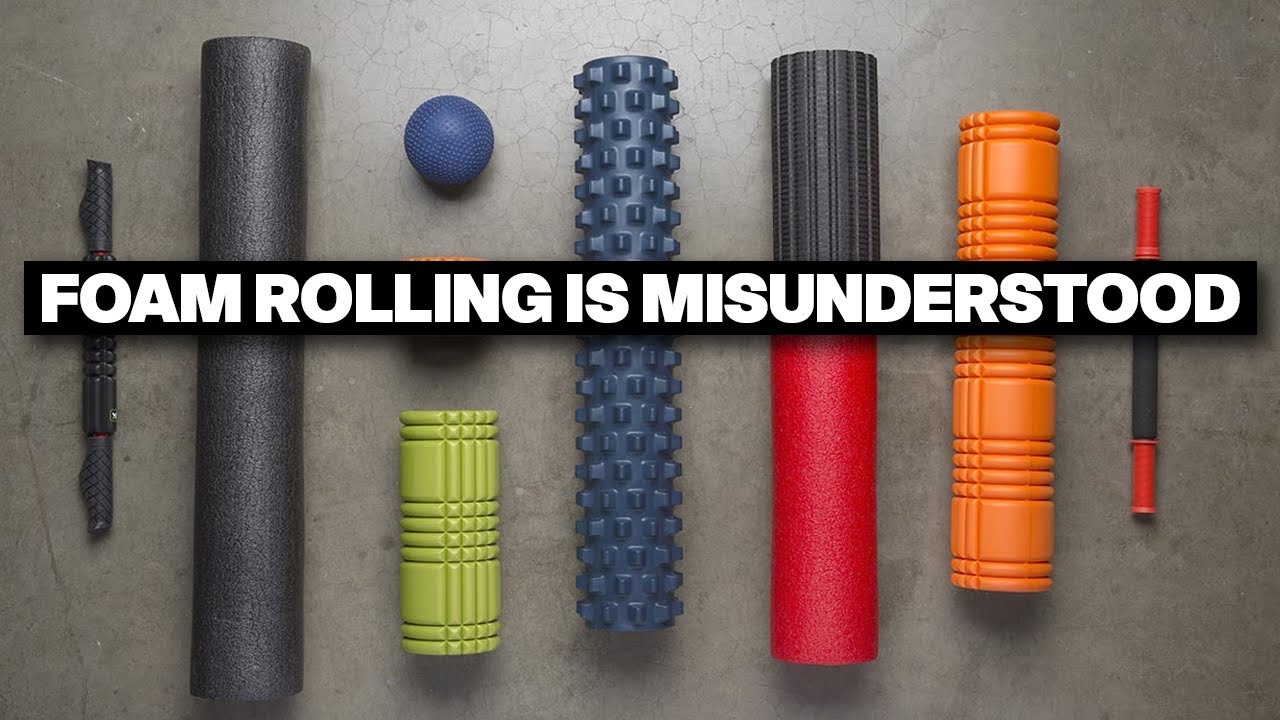
If you've been in the movement and rehabilitation space for any length of time, you've watched the foam roller go from must-have training tool to overrated gimmick and back again.
Almost everyone has one collecting dust in a corner.
But whether foam rolling is actually useful depends entirely on why you think it works and most people have that part wrong.
In this post, I want to cut through the noise and explain why I still use foam rollers regularly in my practice, and why the reason has nothing to do with fascia release or muscle lengthening.
Rather watch instead?
Why the Foam Rolling Debate Keeps Going in Circles
The main argument in favour of foam rolling has historically centred on two ideas: it feels good (a real, if simple, benefit), and it releases or changes the fascia.
The "feel good" element is legitimate there is research showing that foam rolling stimulates skin mechanoreceptors, which can create temporary changes in muscle tone and reduce perceived tension.
This explains the short window of improved mobility you might notice after a session typically in the range of 20 to 30 minutes.
The fascial release argument, however, is where things fall apart. Fascia is extraordinarily tough connective tissue.
To actually change its structure requires forces measured in the hundreds of kilograms applied over extended periods.
A foam roller however uncomfortable it might feel is not generating that kind of mechanical load.
The tissue changes people attribute to fascia are almost certainly happening through the same neurological mechanisms described above: mechanoreceptors influencing muscle tone and joint position sense, not structural remodelling of connective tissue.
So when the fascia narrative gets debunked, as it should, people throw out the foam roller along with it. That's the mistake.
Movement Is the Change of Shape
To understand why foam rollers can be genuinely valuable, you need to start with a foundational idea about how movement works.
Philip Beach, in his book Muscles and Meridians, puts it clearly: movement is the change of shape.
Every joint in your body goes through continuous shape changes as you move through space.
Think about the foot during walking as your centre of gravity shifts forward over your toes, the arch loads and lowers.
The foot changes shape.
The same is true at the ribcage: during inhalation, the ribs expand and externally rotate; during exhalation, they compress and internally rotate.
The pelvis follows a similar pattern, opening at the top on inhale and at the bottom on exhale.
These shape changes are not incidental they are the mechanism through which joints position themselves for appropriate muscle recruitment.
When a joint is in the right shape, the right muscles can do their job.
When it isn't, they can't regardless of how strong those muscles might be in isolation.
How Foam Rollers Actually Influence Movement
This is where foam rolling becomes genuinely interesting.
Rather than thinking of a foam roller as something you drag across a tight muscle, think of it as a constraint a tool that temporarily changes the shape of a joint or body segment to create a better mechanical environment.
The ribcage example
Consider someone with a chronically expanded ribcage stuck in an inhaled position, with the ribs flared out to the sides.
If you position them on top of a foam roller so it contacts the lateral ribcage, you compress that side inward.
You have changed the shape of the thorax.
This can reduce the tension pattern that was limiting movement and put the ribs in a position that allows for better breathing mechanics and more effective load transfer.
The hip and pelvis example
One of the most commonly misread clinical findings is the Trendelenburg sign: when a patient stands on one leg and the opposite hip drops, this is typically attributed to gluteus medius weakness.
But single-leg stance is not just a test of one muscle.
For it to work, you need foot pronation, tibial internal rotation, femoral internal rotation, and an appropriate pelvic position.
If any of those shape changes are missing, the glute med can't do its job not because it's weak, but because the joint isn't in the right position for it to produce force effectively.
Lying on your side with a foam roller under the hip creates a lateral compression of the pelvis that can influence that shape, temporarily changing the mechanical environment so that when you stand up, you're starting from a better position.
The tibia and foot
A tibial "smash" foam rolling the lower leg isn't about breaking up scar tissue.
It's applying compression in a specific direction to encourage tibial internal rotation.
Rolling the posterior hip influences the same mechanism.
Even something as simple as a lacrosse ball under the heel can help mobilize the calcaneus and improve ankle mechanics.
Muscles React to Joint Position, Not the Other Way Around
This gets at a deeper principle that underpins how I approach movement assessment and intervention: muscles don't determine joint position. They react to it.
EMG data will tell you how hard a muscle is contracting but it won't tell you whether the joint is in an appropriate position for that muscle to be effective.
Two people can show identical EMG output and have completely different functional movement, because the joint position context is different.
This is why "strengthen the weak muscle" often fails as a rehabilitation strategy, if the joint isn't in the right position, strengthening doesn't fix the underlying problem.
Using a foam roller to change the shape of a joint puts the system in a better state first, so that the muscles recruited during subsequent movement are working in the position they were designed for.
A Framework for Using Foam Rollers Purposefully
With this understanding in place, here is how I approach foam rolling in practice:
- Identify the shape deficit. What joint is not moving through its full range of shape change? Is the ribcage stuck in inhalation? Is the pelvis not able to close at the top? Is the tibia not internally rotating during loading?
- Choose the constraint to address it. Position the foam roller so it compresses in the direction that corrects the shape. This is specific, it is not "roll out the IT band."
- Use it as a set-up, not a standalone fix. The 20–30 minute neurological window that foam rolling opens is an opportunity to load movement in the improved position. The constraint creates the shape; movement and load reinforce it.
- Think beyond the foam roller. Half foam rollers, lacrosse balls, dowels placed under the heel, tiger tails all of these can serve as positional constraints depending on what you're trying to achieve.
So, Does Foam Rolling Work?
Yes. But not for the reasons most people think, and not the way most people use it.
Foam rolling does not meaningfully change fascia. It does not permanently lengthen muscles.
It produces a temporary neurological window of reduced perceived tension and more importantly, when used with intention, it can change the shape of a joint to create a better mechanical environment for the muscles that depend on that position.
Used that way, it is a precise and genuinely useful clinical and coaching tool. Used as a generic warm-up ritual dragged across every major muscle group, it is mostly wasted effort.
The difference is in the framework you bring to it.
Want to go deeper on this?
The EVOLVE Biomechanics Mentorship covers joint shape, internal pressures, diaphragm and pelvic floor mechanics, and how to apply these principles in clinical and coaching settings.

