
Glute Activation Is a Myth If You Don't Fix This
May 28, 2026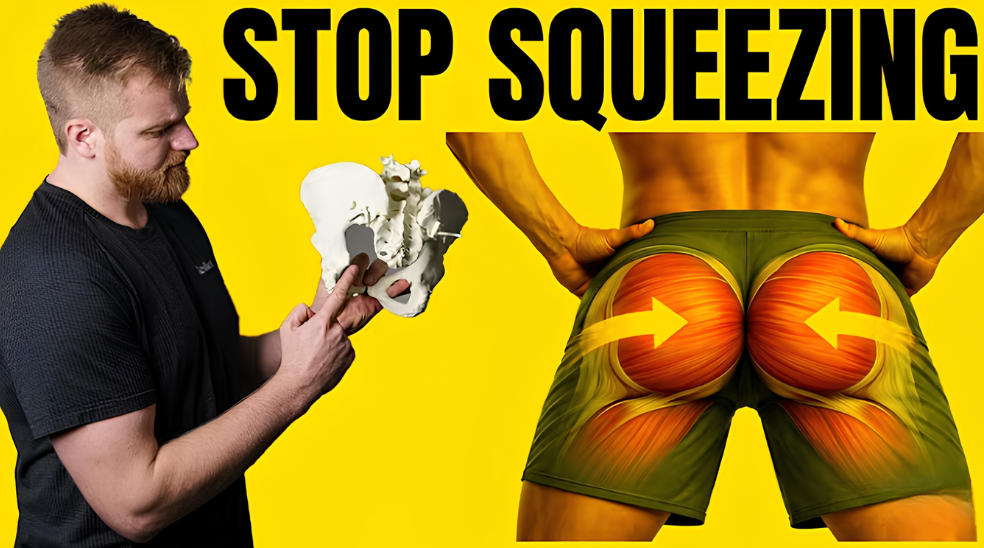
How many times have you heard someone say they can't feel their glutes during a certain movement?
The usual response is to tell them to squeeze harder. Or to load them up with glute bridges and activation drills, forcing the position until something finally clicks.
And most of the time, it doesn't work.
Here's why. When someone can't feel their glutes, it's usually not because the muscle is weak. It's because the muscle is already sitting in a contracted, shortened position. It's not that there's nothing there to work with. It's that the muscle has nowhere left to go.
A muscle that's already bunched up can't do much. It needs room to lengthen before it can contract and actually produce force. So this isn't a muscle problem. It's a position problem. And the position that matters most here is the pelvis.
The pelvis sets the table for the glute
The position of your pelvis directly affects how much tension and contractility your glutes have available.
Think about what the glute is supposed to do when you walk. Your heel hits the ground, you roll through the midfoot, and then you push off. That push off phase is when the glute really earns its keep. It drives you not just forward, but over to the other side, so the opposite foot can land and start the whole cycle again.
But that only happens if the pelvis is sitting somewhere that lets the glute work. And there are two common ways it ends up somewhere it shouldn't.
Problem one: the pelvis dumps forward
When the pelvis tips forward into an anterior tilt, you get a lengthening effect through the glutes.
This often happens because someone can't put force into the ground or doesn't have the internal rotation of the hip to propel themselves forward. So instead, they shift their center of mass toward their toes and compensate somewhere else, usually by arching the low back or flaring the ribs.
As the pelvis dumps forward, the glutes get pulled long. And a glute that's stretched out like that isn't in a position to work functionally. It's already lengthened, so cueing it to fire harder doesn't accomplish much.
Problem two: the sway back and the clenched glute
The second presentation looks almost opposite, but it comes from the same place.
Here, someone's center of mass is so far forward that they end up squeezing the glutes constantly just to push themselves toward their toes. You get the look of the tucked tailbone, the "no butt" slouch, the sway back posture. The tailbone tucks under, which builds tension in the back of the pelvis, and the top of the hips gets pulled up toward the head.
Picture slipping on ice. Your hips shoot forward and scoop underneath you, and then you start to fall back. These people live in a version of that. They're in a constant state of almost falling backward, because they've pushed themselves so far forward that the muscles in the front of the hip have to work overtime just to pull them back and keep them upright.
If the forward dump is a bucket spilling water out the front, this is a bucket spilling backward. Two different looks, same underlying issue. The pelvis isn't where it needs to be, so the glute can't do its job no matter how hard you cue it.
So what do we actually do about it?
Instead of squeezing, the goal is to open things up and reposition. We want to create space in the front and the back of the hip, and get the ribcage to cooperate, so the pelvis can settle into a better spot.
A few things I reach for:
Getting the knees above the hips naturally rocks the pelvis back and opens up the backside. One setup I use a lot is the "butt cracker." Take a half foam roller, put it on a short box so the knees sit above the hips, and have the person straddle the roller. Because the squeezed glutes tend to pull the sit bones together, the roller sits right between them, and shifting side to side starts to spread the sit bones apart and open the back of the hip.
Side lying work on a foam roller is another one. It smushes the hips into a better position and opens the front and back at the same time.
Prone work can help too, but it has to be specific. If you just throw someone on their stomach, they'll arch and squeeze right back into the pattern you're trying to address. You have to position the ribcage and pelvis so those spaces can actually open.
The bigger principle is that you can't just say "do a row" and call it done. You need multiple constraints working together. You're trying to open the back of the hip, the front of the hip, and the front and back of the ribcage all at once, while keeping the chest open and bringing the weight back without hyperextending the knees, rolling the feet, or crunching to get there.
A position like a lat hang on the pulldown machine can do this well. Legs over the top of the knee pads rather than under, then lean back and let everything open up. Not crunching, just leaning back enough to keep the chest up while nothing collapses.
The part everyone misses
Here's what ties it all together. To really get the glute firing, you have to separate the femur from the sit bone.
That's the opposite of what a glute bridge does. A bridge brings the femur and the pelvis together and squeezes them tighter, which is exactly the wrong direction if the glute is already shortened.
A hinge does the opposite. Something like a kickstand hinge, where one foot is forward, the knee stays bent, and the pelvis rolls over the top of it. Now the femur and pelvis are separating from each other. That separation is what gives the glute room to lengthen and stretch before it contracts. Same as an elastic band. You have to stretch it before it can snap back.
So if you've been handing out "squeeze your glutes" cues and a stack of glute bridges and activation drills, that's why it hasn't been working. We're not respecting what the pelvis is doing first.
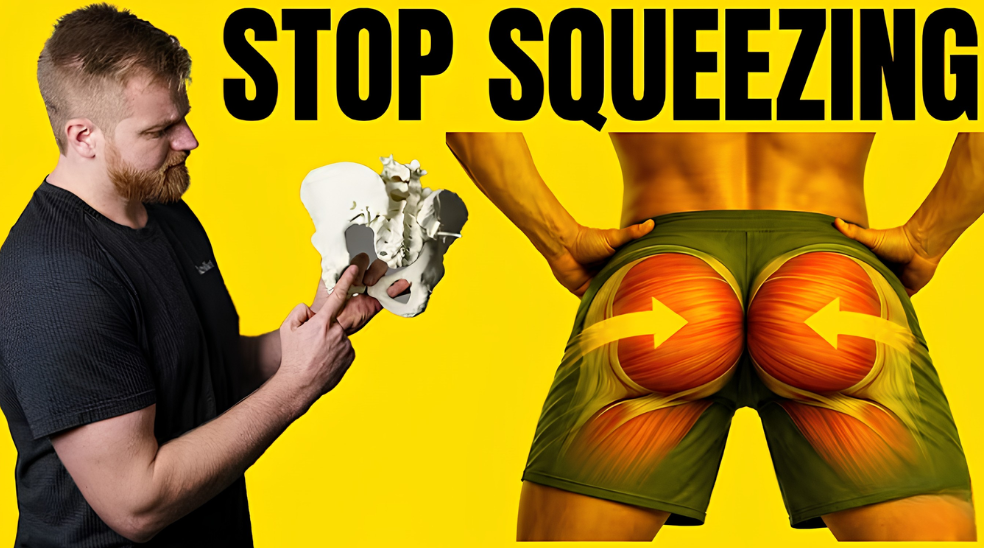
I walk through all of this with a pelvis in hand in this week's YouTube video, including the butt cracker setup and a closer look at the kickstand hinge. I also break down the kickstand hinge and a bunch of other variations in my Roadmap to Exercise Selection course if you want to go deeper on programming it.
If understanding compensations like this is the kind of thing you want to go further with, this is exactly what we dig into inside my EVOLVE Biomechanics Mentorship. What compensations actually mean, and what to do about them.

