
Why Your Hip Hike Isn't a Muscle Problem (And What Actually Causes It)
Jul 06, 2026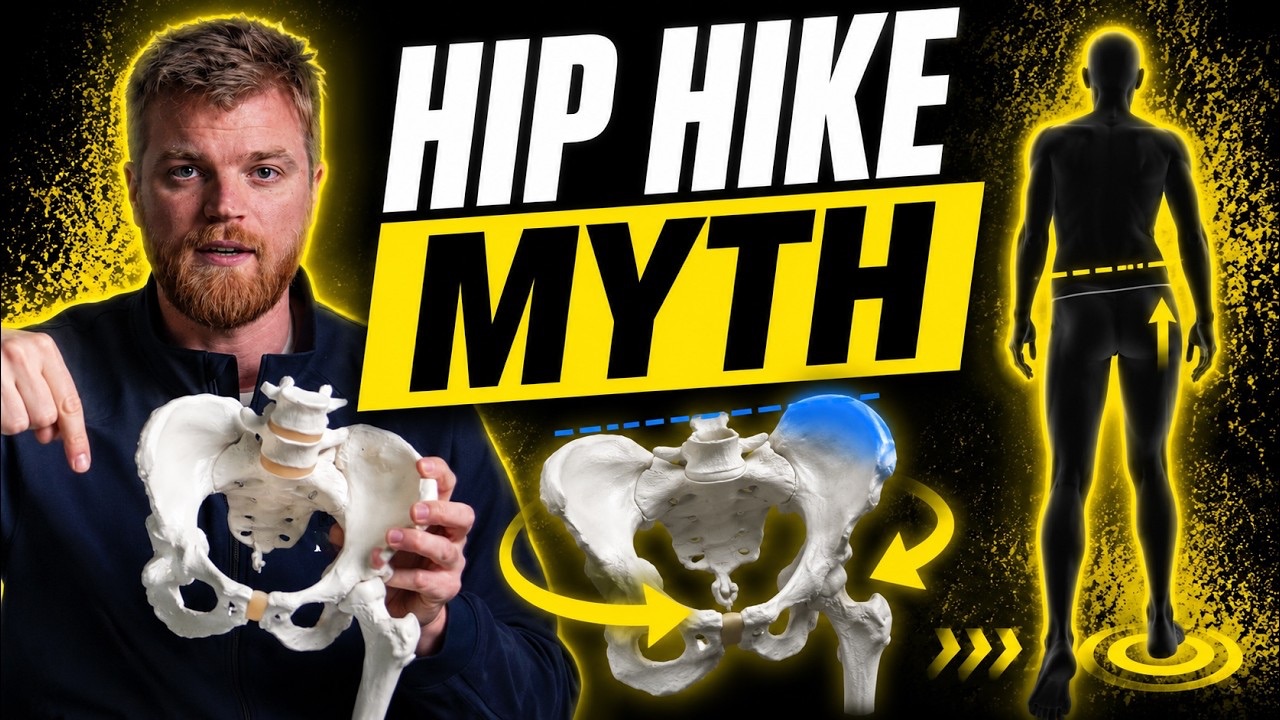
If you've ever been told your hip hike is caused by a "tight" muscle, you've only been given half the story... and it's the half that leads to the least effective fixes. A hip hike (also called a lateral pelvic tilt during gait or single-leg loading) isn't a muscle problem at its root. It's a positional compensation: your body's way of managing where your pelvis, spine, and base of support are relative to each other.
Understanding that distinction changes everything about how you train it, coach it, or rehab it.
What Is a Hip Hike?
A hip hike happens when one side of the pelvis elevates relative to the other, most commonly seen during single-leg stance, marching, stair climbing, or running gait. Picture standing on your left leg and marching your right leg up if the right hip hikes up excessively as it rises, that's the pattern in question.
It rarely shows up in isolation. Where there's a hip hike on one side, there's almost always a corresponding hip drop on the opposite side and the two are mechanically linked.
The Real Cause: It's a Chain Reaction, Not a Tight Muscle
The hip hike is downstream of a shift in base of support. When your center of mass drifts toward the outside edge of your stance foot, a cascade follows:
- The base of support shifts laterally (pelvis moves toward the outside of the foot)
- The pelvis rotates in that direction
- The spine rotates to follow the pelvis
- The stance-side hip hikes up as a stabilizing reaction to that rotation
- The opposite hip drops, creating compression through its lower, posterior side
- The femur on the dropped side externally rotates further, which feeds back into the pattern and makes the hike worse
Muscle tightness, commonly blamed as the cause, is actually just the tissue's response to this chain. Releasing or stretching the "tight" muscle without addressing the positional chain above is treating a symptom, not the source.
Why Hip Flexion and Internal Rotation Matter
A key missing piece in most hip hike compensations is a loss of hip flexion and internal rotation on the side that's hiking. Without the ability to internally rotate the femur, the body can't keep the knee tracking in line with the hip and heel during loading think of a lateral lunge, where the loaded hip needs to internally rotate to stay stacked. When that rotation isn't available, the pelvis rotates instead, and the hike shows up as the compensation.
How to Actually Correct a Hip Hike
Rather than isolating and stretching one "tight" area, an effective correction sequence addresses the whole chain in order:
- Restore hip flexion and internal rotation on the hiking side
- Decompress the posterior pelvis on the dropped side, so it stops driving the pattern
- Drive hip extension on the hiking side while keeping the pelvis open rib cage back, not dumping forward into the lower back
- Allow the opposite side to accept force, opening the posterior hip and letting that foot pronate normally
Skip a step, and the compensation typically resurfaces somewhere else,a dumped pelvis, an arched lower back, or a hyperextended knee are all common substitutes for the missing motion.
The Takeaway
A hip hike is a window into how your base of support, pelvis, spine, and hip rotation are all working together or not. Chasing the "tight" muscle in isolation misses the mechanical story underneath it. Address the sequence base of support, pelvic rotation, hip flexion/IR, and load acceptance on the opposite side and the compensation resolves at its source.
Want to learn more? Join my EVOLVE Biomechanics Mentorship

