
How We Eliminated Knee Pain Without Strengthening
Feb 05, 2026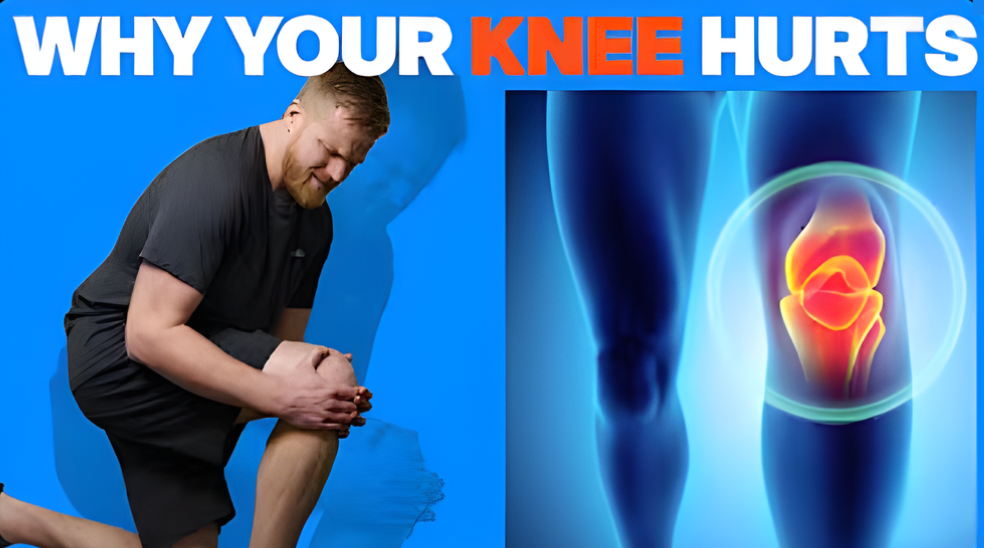
Knee pain is rarely just about the knee.
That sounds obvious, but in practice, it is still one of the most common places people get stuck. They focus on strengthening the knee, loading the knee, or protecting the knee, without stepping back to look at how the rest of the body is interacting with it.
This case study is a good example of why that approach often fails.
The client came in with knee pain that showed up almost exclusively when going downstairs. Not during training. Not going upstairs. Just during stair descent.
That detail immediately tells us something important.
Going downstairs is a force acceptance task. The body has to absorb load through the leg. If someone struggles here, it usually points to a problem with how force is being managed, not a lack of strength.
To understand why the knee was struggling, we had to look at what was happening above and below it.
How Foot and Hip Position Shape Knee Mechanics
The knee sits between the foot and the hip, and it responds to what both ends are doing.
In this case, the pelvis was oriented forward and rotated toward the right side. That position encouraged the knee to sit closer to extension and the tibia to rotate outward. When the tibia lives in external rotation, the knee loses access to flexion.
That matters because knee flexion is how we absorb force.
If the knee cannot bend slightly and internally rotate, force cannot travel smoothly up the chain. Instead of being distributed through the hip and pelvis, stress stays local at the knee.
The foot played a role as well. The client did not have the ability to properly pronate through the foot. Without that pronation, the tibia could not internally rotate and the hip could not flex effectively.
When those options are missing, the body finds workarounds.
The knee caves inward.
The knee snaps back into extension.
The foot collapses.
The lower back extends.
The ribs flare.
The hip hikes.
This client showed all of those strategies.
Every step downstairs reinforced the same pattern, and every repetition added more stress to the knee.
Why Strengthening the Knee Did Not Work
Before coming in, the client had already tried traditional approaches. Quad strengthening. General leg work. Knee focused exercises.
None of it helped.
That makes sense once you understand the mechanics.
If force is entering the knee in a poor position, adding more strength does not fix the problem. It simply increases the amount of force the knee has to deal with locally.
Instead of loading the knee harder, the goal needed to be changing how force was being accepted in the first place.
Changing the Strategy by Changing the Position
Rather than starting with the foot on the ground, we temporarily took it out of the equation.
This allowed us to organize the hip, pelvis, and ribcage without the foot collapsing underneath them.
One of the first positions we used was a prone frog position with the right knee slightly elevated. Elevating the knee helped shift the body back onto the right side and encouraged better hip positioning. Being prone also helped clean up rib position and reduce excessive extension strategies.
From there, we introduced a tibial mobilization using a foam roller. The goal was to restore internal rotation of the tibia, which is essential for knee flexion and force absorption.
Once the knee and hip had better options, we gradually reintroduced load through the foot in supported positions. Side lying with the foot on the wall allowed coordination between the hip and knee without overwhelming the system.
As control improved, we transitioned into more upright positions. High half kneeling variations allowed the body to learn how to put force into the ground with the pelvis and ribcage stacked over the leg. Cable chops added rotational demand, teaching the client how to load the right side while turning into it.
This transition is critical. Many breakdowns happen when someone moves from supported positions into standing. Teaching that transition in a controlled way prevents old strategies from taking over.
Reintroducing Standing Load Without Old Compensations
Once standing, we used hinge patterns with the knee supported against a foam roller. Instead of a traditional kickstand stance, the non working leg was placed slightly back and out to the side, similar to a lateral lunge position.
This setup forced the body weight over the right leg. The foam roller kept the knee flexed, while the hinge reinforced proper force acceptance through the hip and knee.
From there, we progressed into crossover step ups.
By this point, something important had already happened.
The client could go downstairs without pain.
What This Case Really Demonstrates
This case was not about finding the perfect exercise.
It was about restoring options.
Once the foot, tibia, femur, and pelvis could all move in the right relationships, the knee no longer needed to rely on hyperextension or valgus strategies to manage load.
Force could finally travel where it was supposed to go.
That is the real goal in rehab and performance work. Get the joints into the right positions, teach the body how to accept and produce force in those positions, then gradually add complexity.
When you do that, symptoms often resolve faster than expected.
Not because you chased the pain, but because you fixed the problem underneath it.
If this case study was helpful, you can watch the full video breakdown where I walk through each position and progression in more detail.
And if you know someone dealing with knee pain, feel free to share this with them.

