
Patellar Tendonitis Rehab: Why Mechanics Must Come Before Load
Aug 02, 2026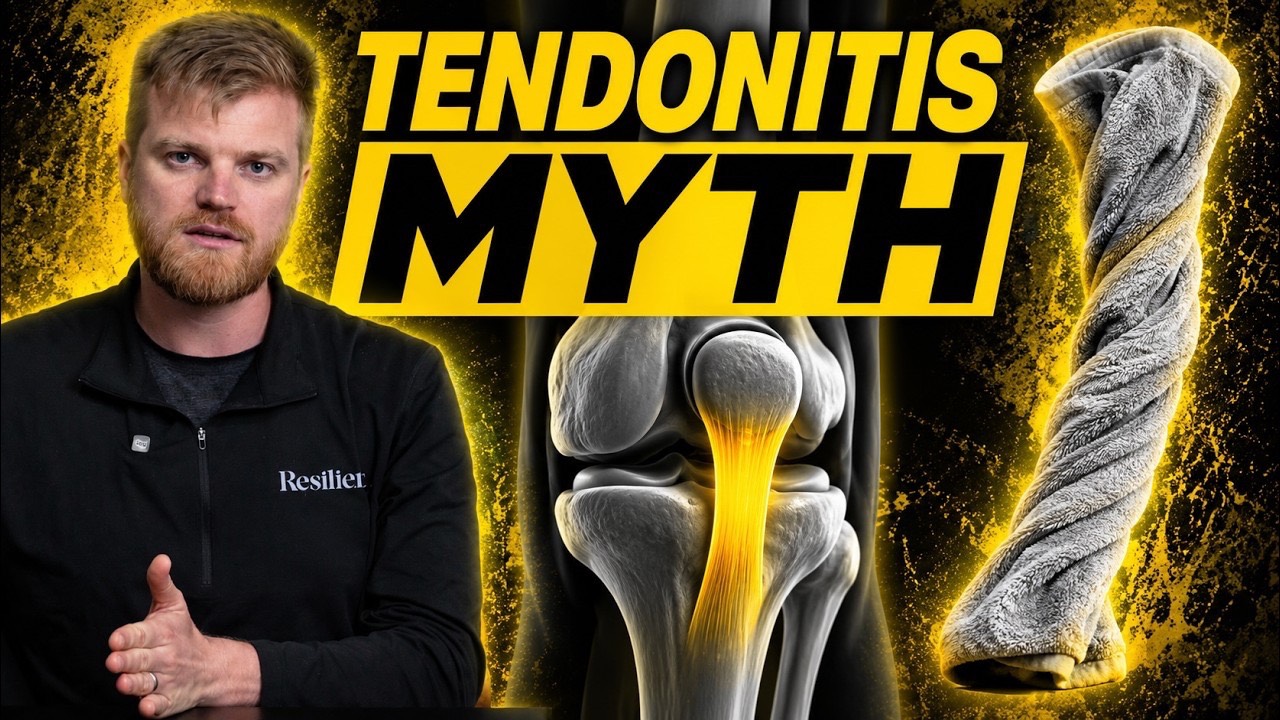
By Alex Effler | Resilient Rehab Podcast
When it comes to treating patellar tendonitis and low load tolerance, the standard advice in the physical therapy world is usually pretty simple: ramp up the strength. The logic dictates that you have to incrementally increase the load on a structure in order for it to adapt, heal, and handle the demands of your sport or daily life.
While tissue loading is an incredibly important part of the puzzle, how we actually arrive at that loading phase matters just as much.
In a recent Q&A for my Gait Assessment Course, a recurring question popped up: When treating patellar tendonitis, are mechanics important, or should we just go straight after loading and strengthening the tendon?
While both approaches can get results, I have found that prioritizing a mechanical approach first leads to significantly better, longer-lasting outcomes. Here is a breakdown of why understanding knee biomechanics is the secret to overcoming stubborn knee pain.
The Traditional Route: Loading the Tissue
There is a wealth of research supporting traditional strengthening movements for patellar tendonitis. Exercises like leg presses, heavy slow resistance training, and leg extensions are highly effective at forcing the tendon to adapt, which can eventually reduce pain symptoms.
However, just throwing load at a joint without understanding why it was overloaded in the first place is like putting a bigger engine in a car with flat tires. Before we ask a tissue to accept more load, we need to ensure the joint is in a position to actually absorb it.
The Biomechanics of Knee Flexion
To understand why patellar tendonitis happens, we have to look at how the knee is actually supposed to work.
Knee flexion (bending) is not just a simple hinge movement. In order for the knee to bend efficiently and safely:
-
The tibia (shinbone) must be able to internally rotate.
-
The femur (thighbone) must stay relatively externally rotated.
When you lack this relative motion at the knee, your body loses its primary mechanism for absorbing and distributing force.
The "Wringing Towel" Effect
When assessing clients with patellar tendonitis, one of the most common mechanical presentations I see is a tibia that is turned out (externally rotated) and a femur that is turned in (internally rotated). You will often see this manifest visually as knees that heavily cave inward or severely bow outward.
External tibial rotation is necessary for knee extension (straightening), but if your tibia is stuck there and cannot internally rotate when you try to bend your knee, you have a major problem.
When you land a jump or step down stairs, your knee needs to flex to accept the force coming from the ground up through your foot. If the tibia is twisting one way and the femur is twisting the other way, the patellar tendon gets caught in the middle. It gets twisted like someone wringing out a wet towel.
When a joint that can't properly rotate is forced into flexion, it bends the patellar tendon under immense, poorly distributed tension. Over time, this repetitive twisting and bending results in pain, inflammation, and low load tolerance.
A Smarter Framework for Knee Rehab
If a tissue is not in a mechanical position to accept load, throwing more weight at it via heavy leg extensions isn't always the best first step.
My objective is to clean up the joint mechanics first, and then progressively overload the tissue. Here is the framework I use with my clients:
-
Teach the Knee How to Bend: Restore the internal rotation of the tibia so the knee can flex as a functional hinge, rather than twisting the tendon.
-
Teach the Hip How to Internally Rotate: Ensure the femur is moving correctly in relation to the tibia.
-
Teach the Foot How to Move: Force absorption starts from the ground up. The foot must be able to articulate properly to prevent excessive strain from traveling up the shin.
-
Introduce Progressive Load: Once the mechanics are cleaned up, we start putting more load and gravity on top of that foot.
Because the joint is now moving efficiently, the knee can effectively distribute force. This is when traditional strengthening exercises become incredibly powerful.
The Bottom Line
Low load tolerance isn't just about a "weak" tendon. It is a function of mechanical ability, tissue capacity, and how well the two integrate. By fixing the underlying mechanics before blindly overloading the joint, we set the stage for a much smoother and more effective rehab process.
Want to dive deeper? If you are a practitioner or coach wanting to learn more about how the knee actually works—including the differences between inside and outside knee pain, and the specific assessments and exercises required to fix them: check out my Evolve Biomechanics Mentorship.
If you found this breakdown helpful, be sure to subscribe to the Resilient Rehab Podcast and share this post with someone dealing with stubborn knee pain!

