
The Mobility Secret No One Is Talking About
Jul 15, 2026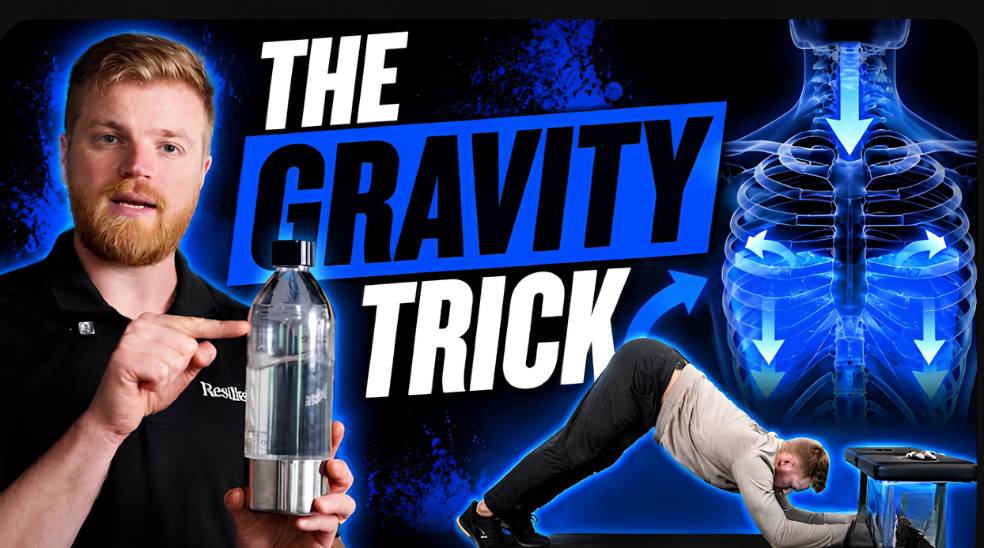
If you've been chasing shoulder and neck mobility with the usual stretches and still not seeing the changes you want, there's a good chance you're missing a category of exercise most programs leave out entirely: inversion work.
Not handstands. Just getting the hips above the head for a bit. It sounds simple, but the effect it has on the upper body is significant, and it comes down to something most coaches never think about: internal pressure.
The water bottle analogy
Here's the easiest way to understand what's happening.
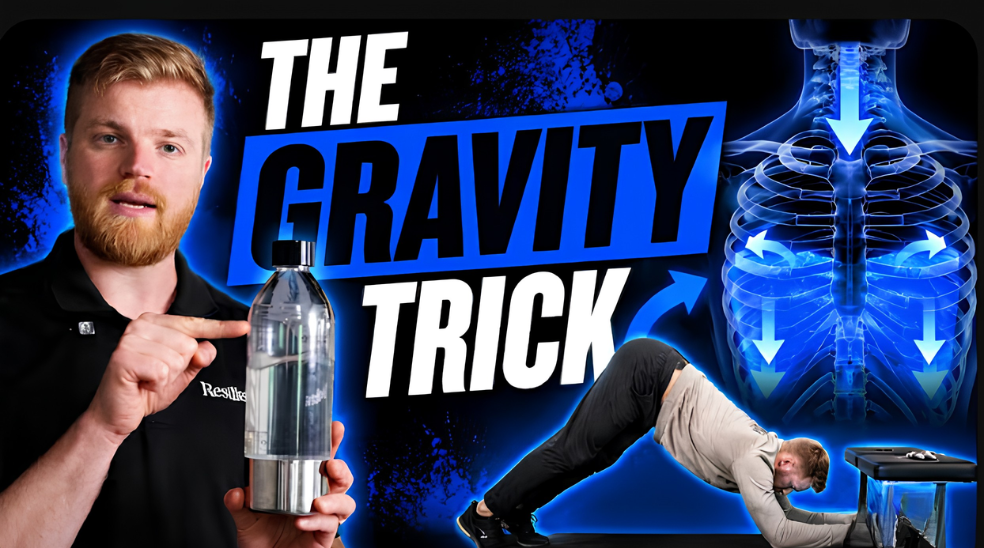
Picture a water bottle. When you breathe in normally, gravity pulls everything down, so the lower ribcage fills and expands first. That's where the "water" goes. Meanwhile, the upper ribcage, the part further from gravity's pull, stays flat and compressed. There's no water up there to expand it.
That's the flat T line look a lot of coaches talk about when they describe someone's upper back. It's not just an aesthetic thing. It means the upper ribcage genuinely can't expand the way it needs to, which limits how the shoulder blades and neck move through their full range.
Now flip the bottle upside down. The water that was sitting at the bottom moves up toward what's now the low point, the cap, or in this analogy, the head. That's the whole principle behind inversion work. Get the hips above the head, breathe, and gravity does the work of pushing expansion into the upper ribcage instead of the lower one.
Why this matters for shoulder mobility
When the upper ribcage can't expand, the space around the shoulder blades and the base of the neck stays compressed. That compression limits how well the shoulder blades can move against the ribcage, which shows up as restricted overhead reach, poor scapular upward rotation, and tension that never seems to go away no matter how much you stretch the area directly.
Inverting the body changes where that pressure goes. Instead of air filling the lower ribcage first, the expansion happens right where it's needed most, between the shoulder blades and around the base of the neck.
Getting the set-up right
The details matter more than people expect. Kneeling too high, letting the hips go too far over the head, or not finding the right balance between the arms and legs all lead to the same problem: instead of expanding through the ribcage, people end up gripping through their traps and upper back muscles. That defeats the purpose entirely, since it just adds more compression in the exact area you're trying to open up.
The same is true for pelvic position during the exercise. Rounding through the lower back to compensate creates compression around the pelvis instead of allowing it to open, which limits how much benefit reaches the upper body.
I walk through the full setup for both a beginner version and a more loaded progression in this week's video, including exactly where to position the knees, hands, and pelvis to get the effect you're after.
Where this fits into the bigger picture
Inversion work is one piece of a much larger approach to reading how someone's body is compensating and knowing exactly which exercise addresses which pattern. That kind of systematic thinking, going from compensation to cause to the right intervention, is exactly what we build out across the full body inside EVOLVE.
This cohort also includes something new: a full week dedicated to the business side of coaching, covering client acquisition, retention, and how to actually build this into a sustainable business, not just apply it in a session.

