
The Real Cause of Anterior Pelvic Tilt (It's Not Weak Glutes or Tight Hip Flexors)
Jul 05, 2026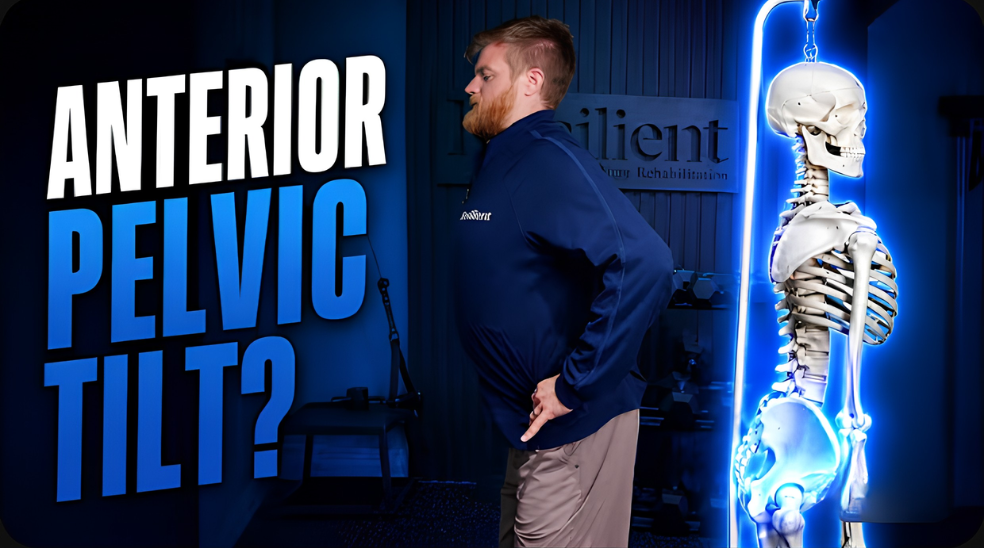
I asked AI for the best exercises to improve anterior pelvic tilt. It gave me exactly the answer most coaches and clinicians already believe. Strengthen certain muscles. Stretch others.
That's the standard advice. It's also incomplete.
Anterior pelvic tilt isn't really a strength problem or a flexibility problem. It's a compensation. To actually change it, you have to understand why it's happening in the first place.
Anterior Pelvic Tilt Isn't Automatically a Problem
First, an important distinction. Having anterior pelvic tilt isn't inherently bad. A lot of athletes use it as a strategy.
An anterior pelvic tilt shifts the body's weight forward, toward the toes. That's a useful position for producing force quickly. If you need to get off the ground fast, you don't want your weight back toward your heels. You want it loaded into the middle and front of the foot.
The tradeoff is that anterior pelvic tilt locks the body into one plane of motion. Rotation and side bending become difficult. The body is built to run in a straight line and not much else. So while it can be a useful strategy in the short term, it comes at the cost of losing other movement options.
Why Anterior Pelvic Tilt Actually Happens
Anterior pelvic tilt shows up as an arch in the lower back that causes the pelvis to dump forward. That arch isn't random. It happens because someone is missing hip flexion, internal rotation, or hip extension.
In other words, they're missing the ability to accept force and produce force through the hip.
If the hip can't do that job, the body still needs to find a way to move forward. So it borrows from the spine instead. The lower back arches, the ribs flare, and the muscles on the back of the body squeeze to push the body forward onto the toes.
Here's the key idea: when someone's body weight is centered over the middle of the foot, roughly stacked over the laces, that's the position that allows the hip to internally rotate and drive force into the ground. That's the explosive, powerful position the body wants to find.
When someone can't get there through the hip, they get there anyway by using something else. The lower ribcage and the spine do work that was never meant to be their job. And that borrowing steals range of motion from the shoulder, the rib cage, the hips, and the pelvis.
This is often exactly why people end up with low back pain, shoulder tension, rib cage tightness, or a pinch in the front of the hip or shoulder. They've maxed out their ability to use anterior pelvic tilt as a strategy, so the load has to land somewhere else. Somewhere that wasn't built to handle it.
Three Exercises That Actually Address It
Once you understand anterior pelvic tilt as a compensation rather than a weakness or tightness issue, the exercise selection changes.
1. Prone Sphinx Variation (Pelvis-Supported)
This is a variation of a sphinx position you may have seen before, but the pad placement is different. Instead of placing it under the rib cage, it goes under the pelvis, specifically under the pointy front part of the hips (the ASIS).
Lie on your stomach with elbows out in a V position, not tucked tightly to the sides. Slide the arms slightly forward so the elbows line up with the forehead, hands in a wide spade position, and gently slide the elbows apart as if pulling the shoulder blades wider.
Take a breath in through the nose while pushing through the elbows, with the chest moving up and in between the shoulder blades rather than backbending. The head should lift because the elbows are pressing, not because the neck is craning up.
The goal is a stretch through the upper back and between the shoulder blades, not the hips. The pelvis should stay relaxed throughout. As the upper back opens, the pelvis follows.
Two sets of six reps is a good starting point, with attention to lifting straight up rather than leading with the head.
2. Short Seated Cable Chop
"Short seated" means the knees are positioned above the hips, which naturally rolls the pelvis back, without crunching forward to get there.
Hold the cable and let it pull you into a tall position, feeling weight settle into the center of the sit bones rather than the back of them (which feels like tucking under) or the front of them (which feels like an excessive arch and lean forward). Feet are set outside shoulder width, with something under the groin to elevate it slightly if needed.
Breathe in as the cable pulls the shoulder blades wide, then pull down toward the center between the legs, taking a breath in at the bottom while keeping the chest and back open. Breathe out on the way back up.
The instinct will be to let everything cave inward as you pull. Resist that. Let the natural motion of the hips and pelvis do the work instead of pulling from the arms or spine.
3. High Kneeling Split Squat (Cable-Assisted)
Start in a high kneeling position, with the focus on pressing up rather than dropping down.
Using a light cable pull (just enough resistance to keep the rib cage back), set up with the front knee in line with the laces. Avoid tucking the rib cage or pelvis to compensate.
Breathe in, then breathe out while holding the cable position and pressing through the instep of the front foot to rise. Lower with a breath in, rise with a breath out, minimizing how much the back leg contributes to the movement.
A Different Way to Think About Anterior Pelvic Tilt
Most advice on anterior pelvic tilt, whether it comes from AI, a trainer, or general rehab guidance, is built on a strength-and-stretching framework. That framework misses the actual mechanism.
Anterior pelvic tilt is a compensation for missing hip motion, not a sign of a weak or tight muscle group. Once that shift in thinking happens, exercise selection becomes a lot more targeted.
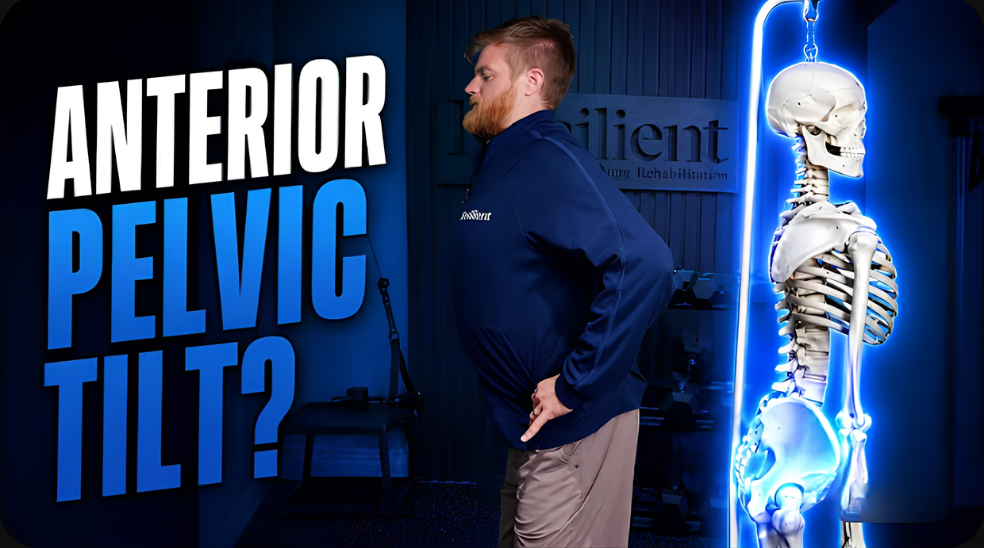
Watch the full video breakdown here.
If this way of thinking about compensations is useful to you, this is exactly the kind of pattern we break down in depth inside EVOLVE, my 10-week live mentorship for coaches, trainers, and therapists who want a real system for assessment and exercise selection, not just a list of exercises to try.

