
Three Measurements That Explain What You're Seeing in Gait
Sep 03, 2026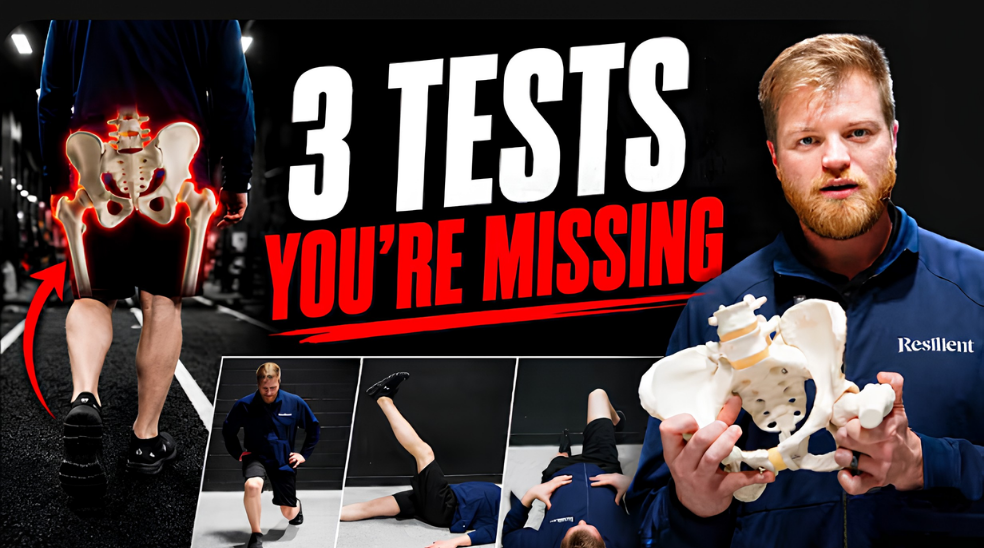
Gait assessment is one of the most valuable tools you can use with a client, but it can also be one of the hardest to read. There's a lot happening in a short window of time, and it's not always easy to pinpoint exactly what's driving a compensation pattern just by watching someone walk.
That's why gait isn't the only thing I look at. I pair it with three other measurements that each isolate a smaller piece of what's happening mechanically. When I bring those findings back to the gait assessment, the full picture gets a lot clearer.
Here's how I use each one.
The Split Squat
The split squat is the first piece. Setting up front foot to back foot, feet hip width apart, puts the hip into a position that requires internal rotation. That's important because a lot of gait compensations come back to a limited ability to internally rotate, whether that shows up while extending the hip, landing, or standing over one leg.
While a client is in the split squat, I'm watching for a few specific things. Do the knees cave in? Does the foot dump inward? Does the back leg turn away, or does the foot roll out to the side when the toes are elevated? Each of those is a signal for how that person is likely to load their leg during the loading phase of gait.
The split squat also tells me something the other two measurements can't, because it requires stability against gravity. It shows how someone absorbs force on the way down and produces force on the way back up, which is exactly what's demanded during walking.
Hip Internal Rotation
The second measurement is hip internal rotation on its own, without the added demand of standing against gravity. This is where the split squat and hip internal rotation start to work together. The split squat shows force absorption and production. Hip internal rotation shows how the hip is actually able to move within the socket.
This matters most during midstance. As the hip moves into a flexed position, the back part of the hip needs to stay open so the foot can land out front and the body can stand on top of that leg. If the hip can't get into that position, that's often where you'll start to see the hip shift to the side or hike up, a pattern tied to Trendelenburg gait that's worth understanding on its own.
If a client is lacking hip internal rotation, this measurement tends to confirm it clearly, since there's no stability demand masking the limitation.
The Straight Leg Raise
The third measurement is the straight leg raise. On the surface, this one can be confusing, since the leg is moving in front of the body during the test. But based on the mechanics involved and where the restriction typically shows up, the straight leg raise actually mirrors hip extension more than hip flexion.
This makes it a useful way to see how well someone can extend their hip and push off the foot during gait. As a client pushes through the foot and extends the hip, the straight leg raise tells you whether that extension is coming from the right place, or whether they're compensating by pulling that movement from somewhere else in the chain.
Why These Three Together
Gait is complex because there's so much happening at once. Breaking it down into these three individual components, the split squat, hip internal rotation, and the straight leg raise, makes it easier to understand the full picture and connect what you're seeing in gait back to a specific cause.
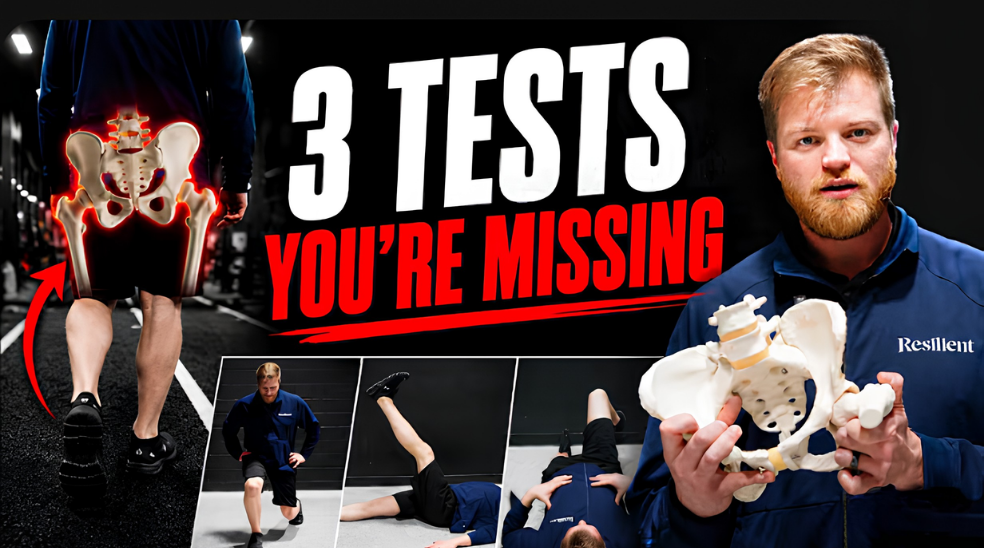
The video that walks through all three of these measurements together is linked below if you want to see them demonstrated side by side.
Watch the full breakdown here.
If you want to go deeper into understanding gait itself and the compensation patterns that show up during it, that's exactly what the Gait Assessment Course walks you through, from the assessment itself to what those findings actually mean for a client's programming.

