
Uneven Shoulders? Why the Ribcage Is Usually the Driver
Oct 29, 2026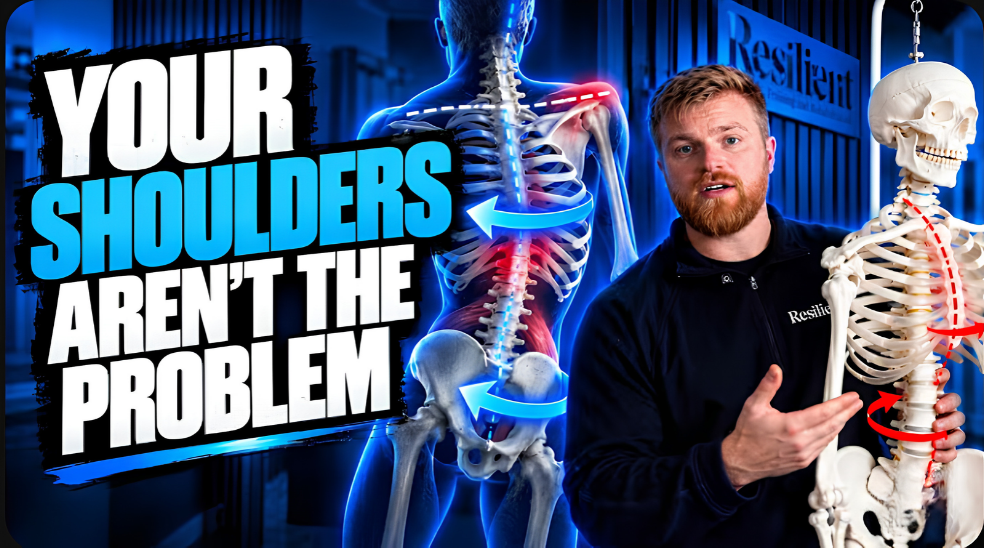
Have you ever noticed that one of your shoulders sits lower than the other? Or maybe you've seen it in a client standing in front of you, one side dropped, the other sitting a little higher and further back.
The common response is to go straight to the shoulder. Stretch it, strengthen it, cue it back into place. It's a reasonable instinct, but it tends to miss what's driving the position in the first place.
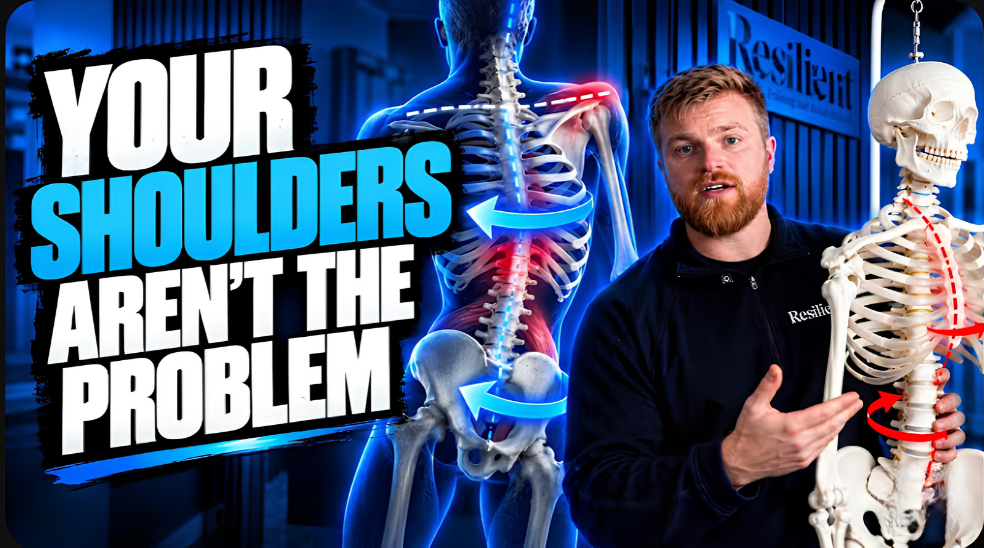
In most cases, uneven shoulders come down to what's happening underneath them. The ribcage, and how it's rotated, is usually the bigger piece of the puzzle.
How the Ribcage Drives Shoulder Position
Let's use an example where the right shoulder sits lower than the left.
When that right side drops, the center of gravity shifts toward the right. If nothing else changed, you'd end up loading the outside of your right foot. To keep that from happening, the body counters by rotating the ribcage back toward the left.
A simple way to picture it: the pelvis drifts toward the right, and the ribcage counter-rotates back toward the left.
The shoulders don't have much say in this. They follow along for the ride.
What Happens at the Shoulder Blades
The shoulder blades move relative to the ribcage, so when the ribcage turns, they go with it.
As the ribcage rotates left, the right shoulder blade starts to move away from the spine. That brings the right shoulder further forward. For some people, it gets stuck there, which is the rounded shoulder pattern we've covered in some of my rounded shoulder and forward head posture content.
On the left side, the opposite happens. The shoulder blade moves toward the spine and the shoulder comes back and out. Some people hold onto that position with a bit of a shrug.
So now you have one side rounding forward and the other pulling back, all driven by the same rotation underneath. The longer someone holds that pattern, the more it shows up as an asymmetrical shoulder position.
Changing the Approach
Once you see uneven shoulders as a ribcage rotation issue, the plan starts to look different. The goal becomes helping the ribcage rotate back toward center, or even a little toward the right, so the back of the right ribcage can open up.
Here are two exercises I use to do that.
Exercise 1: Hooklying Arm Bar
This one starts on the ground, which makes it a good entry point.
Lie on your back with your hips resting on a pad. That small elevation lets the pelvis tilt back slightly on its own, so the ribcage can settle into a better position without a lot of tension. You'll also want a kettlebell.
Hold the kettlebell with your right arm reaching toward the ceiling, positioned so it sits on the outside of your wrist. The weight will want to pull your arm out to the side. Resisting that pull is what starts to turn the ribcage toward the right. Opening up your hand lets you turn even further into that side.
From there, place your left hand on your right lower ribs and think about pushing the ribcage toward the right. You should feel the right side of your back get heavier on the ground. As you breathe in, let the lower ribcage and the space between your shoulder blades expand. As you breathe out, turn a little more, with your sternum rotating toward your right arm.
What you're after is a natural rotation of the ribcage that opens up the upper back. You don't want the ribs flaring up, and you don't want a lot of crunching or gripping to hold the position.
Exercise 2: Standing Band Rotation
The second exercise brings the same idea into standing and uses the hips to drive the movement.
Hold onto a band with your left foot forward, then crouch down a little. That slight bend lets you rotate through the hips rather than driving the knee inward.
Drive your left knee forward and keep it there. Holding the band, sit back into your right leg. Then reach your left hand underneath so your chest turns toward the right. Breathe in through your nose and feel the stretch through your right upper back. As you breathe out, push off your left leg to shift deeper into the right.
A few things to keep in mind:
Stay on the inside edge of your right foot the whole time. If you drift onto the outside of the foot, you've gone too far. The ribcage and pelvis should also move together as one unit, so avoid leaning with the ribcage while the hips go the other way.
You shouldn't feel a lot of muscle working here. A little bit in the quads is normal, but if it feels intense, you're probably sitting too low. Bend the knees just slightly and keep the left knee bent throughout.
If you'd like to see how both of these look in practice, including the breathing and setup details, I walk through them in this week's video.
Bringing It Into Strength Training
Some people will need more time on the ground before they're ready for the standing work. Others will do better with exercises that don't ask for as much rotation. Both are fine places to start.
The bigger point is that this work doesn't need to live only in the warm-up. You can modify the squat, deadlift, split squat, row, press, and any other exercise in your program to account for that rotation. When the strength program reinforces the same changes you're working on, they tend to stick a lot better.
Want a Program That Does This for You?
If you're looking to address your compensations while still training, that's what the Rebuild Blueprint is built for. It's a 12-week strength and mobility program designed to help restore posture and reduce compensations as you train.

