
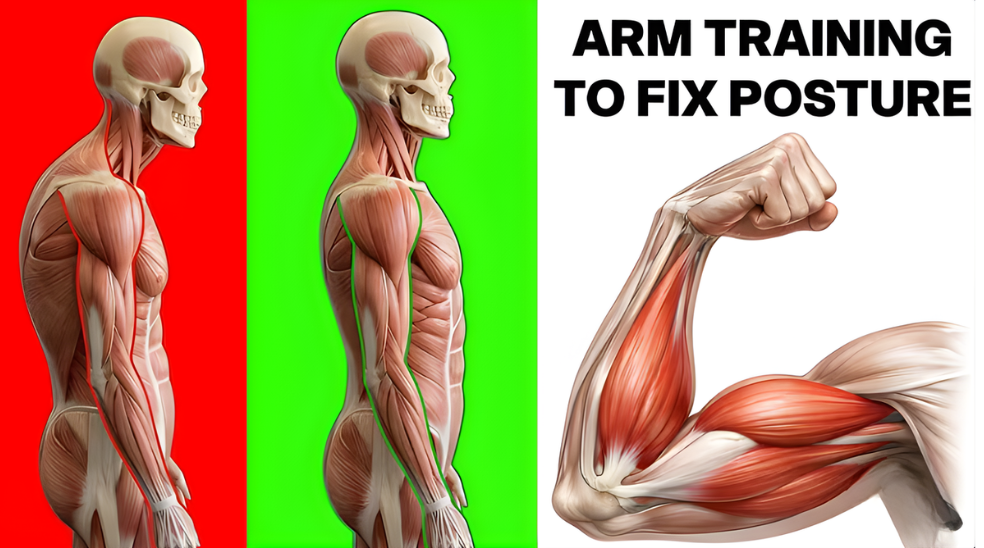
Why Arm Training Fixes Rounded Shoulders Better Than Stretching
Mar 26, 2026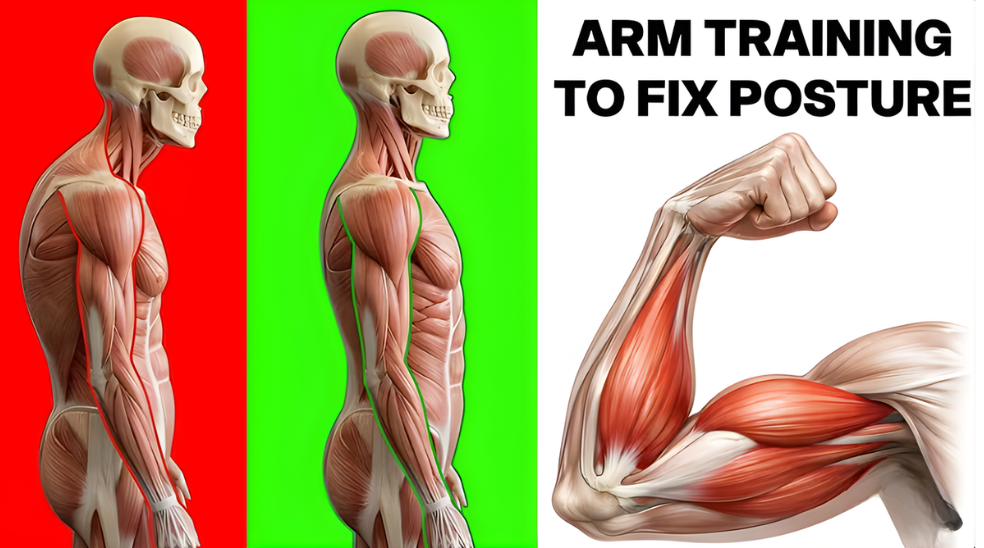
If your client has rounded shoulders, you've probably reached for the same toolkit everyone else does.
Doorway pec stretch. Band pull-aparts. Cues to squeeze the shoulder blades together.
And those things aren't wrong exactly. But they're chasing symptoms. And until you understand what's actually driving the rounded shoulder in the first place, you'll keep chasing.
Here's what's really going on.
The space problem
When the shoulder rounds forward, it runs out of room. The space in the front of the shoulder closes off. The space between the shoulder blade and the spine closes off too.
So the shoulder blade does what it has to do. It rides up and over the ribcage just to find somewhere to go.
That's when you start seeing the winging. That's when shoulder mobility breaks down across the board. Flexion, extension, internal and external rotation, all of it gets compromised. Not because the muscles are too tight, but because the architecture is off.
The fix isn't just stretching what's tight. It's reopening those spaces. And the most effective way to do that is from the inside out.
That's where arm training comes in.
Why the tricep matters more than you think
There are three tricep muscles (that's literally where the name comes from), and most people think about all of them the same way. Extend the elbow. That's it.
But the long head of the tricep is different. It crosses the shoulder joint and attaches to the shoulder blade. That means it doesn't just extend the elbow. It also extends the shoulder, and when it does, it contributes to rotation of the ribcage toward that side.
When you set up a tricep exercise to get the long head working, you're not just training the arm. You're creating rotation through the ribcage that simultaneously opens the front of the chest and creates length through the backside of the shoulder.
The exercise that does this well is a bent-over cable tricep extension. But the setup is everything.
Elbows out to the side, not tucked in. A kickstand stance rather than both feet together. If someone has one shoulder that's more rounded than the other, elevating the foot on that side creates a natural rotation of the hips and ribcage that helps open the backside even more. The cue that works well: imagine the ground is pushing up underneath your elbows. Reach into it, keep the back long, then breathe out and pull.
That position, combined with the breath, opens the front and the back at the same time. That's the piece most stretching approaches miss.
What the bicep curl is actually doing
The long head of the bicep mirrors what the long head of the tricep does, but on the other side of the joint.
It crosses the shoulder on the front, and it's involved in shoulder flexion. As you bring the elbow forward and flex the shoulder, the shoulder blade has to respond. It tilts back and moves closer to the ribcage, which is exactly where it needs to be for normal shoulder function.
The cable preacher curl is the setup that works best here, specifically because the cable pulls you toward it, which forces you to shift back through the ribcage rather than just curling with the arm.
Foot position matters here too. To open the left shoulder, step the left foot back. Push into the outside of the right heel to drive rotation toward the left side. Open the palm as you reach for the cable. Take a big breath in before you curl, feel the stretch through the upper back, then breathe out as you pull.
Done right, this isn't just a bicep exercise. It's repositioning the shoulder blade relative to the ribcage with every rep.
The principle underneath all of this
The exercises aren't the point. The position and the intention behind them is the point.
The reason doorway stretches and band pull-aparts produce inconsistent results isn't that they're bad exercises. It's that they treat the shoulder as an isolated problem rather than looking at the ribcage and the space the shoulder blade actually has to work with.
When you train with the goal of expanding the ribcage in the right directions and restoring the relationship between the shoulder blade and the spine, you start to see results that stick. Because now training is reinforcing posture, not working against it.
That shift in thinking, from chasing the symptom to addressing the architecture, is what separates good movement coaching from great movement coaching.
Want to go deeper?
I put together a full video breaking down both of these exercises, including how to set them up, cue them, and program them for clients. Watch it here.
And if this way of thinking about training and posture together is something you want to apply more systematically, I just opened enrollment for EVOLVE, my 9-week biomechanics mentorship. It's where we take this kind of inside-out approach and work through it across the whole body, with real cases, live coaching, and a framework you can actually use. If you've been curious, now's a good time to take a look. Learn more about EVOLVE here.

