
Why Duck Feet Aren't a Foot Problem (And What to Do About It)
Mar 19, 2026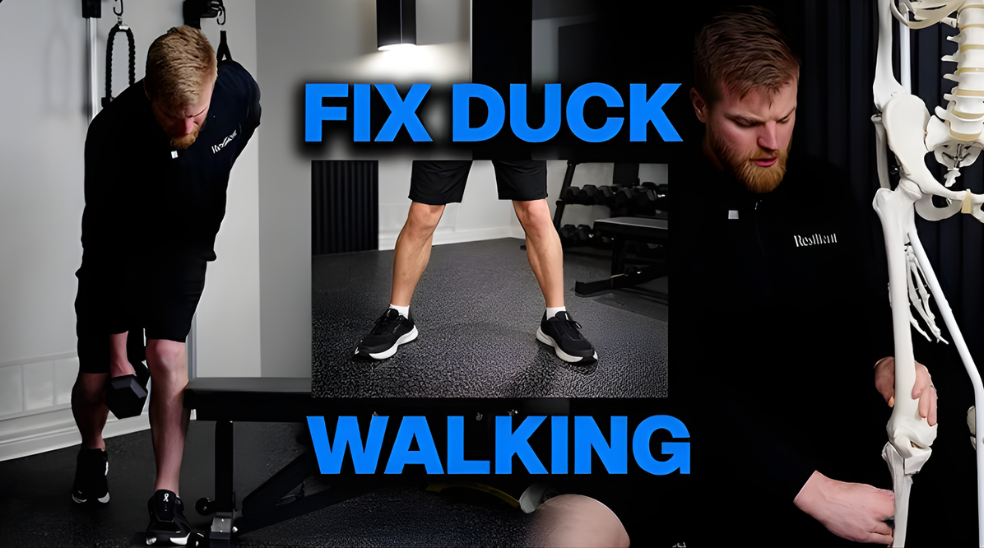
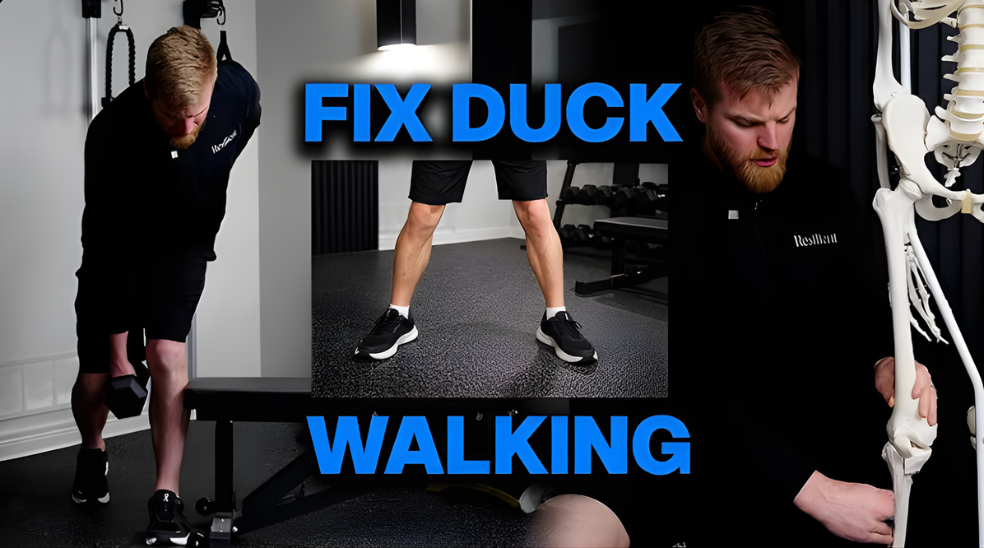
Have you ever watched someone walk and noticed their feet turned way out to the sides?
Most coaches see that and go straight to the foot. Orthotics, toe-in cues, ankle mobility work. It makes sense on the surface. The foot is what you're looking at.
But duck feet aren't a foot problem.
They're a hip problem.
What's Actually Causing It
When there's tension building up at the back of the pelvis, specifically through the glutes and external rotators like the piriformis, it starts to pull the socket outward. And when the socket faces out, the whole leg follows. The shin turns out. The foot turns out. Everything spins.
You'll also often see an anterior pelvic tilt layered on top of it. Sometimes one foot turns out more than the other, which tells you the pelvis is rotated, not just tilted. Either way, the foot is just showing you what's happening upstream.
So what's actually missing? Internal rotation at the hip.
If someone is stuck in external rotation, they don't have access to the other direction. And without internal rotation, there's no way to decompress the back of the pelvis and bring things back toward neutral. You can cue the foot all day and nothing will stick, because you're working on the output instead of the input.
Two Exercises to Address Duck Feet
These two movements are designed to restore hip internal rotation and integrate it through the foot. Watch the full breakdown on YouTube if you want to see them demonstrated in real time.
1. Frog Pose Position Breathing
This one takes the foot out of the equation first, which matters. If you see feet turning out significantly with the knee caving in at the same time, that's a sign the problem is above the knee. Start here before adding foot loading.
Set up wide enough that you're on the inside edge of your knees, drop to your elbows, and get tall through your shoulders. On the exhale, push your knees straight down into the ground. Not squeezing inward. Pushing down. That distinction matters more than it sounds. Squeezing tends to tip people into a lumbar arch. Pushing down shifts the weight back into the hips and opens up the posterior pelvis.
If one foot is turning out more than the other, make it asymmetrical. Elevate the opposite knee slightly with a pad. That loads the more external-rotated side so it actually has to generate the internal rotation, rather than just going along for the ride.
2. Hip Hinge with Foot Loading
Once the pelvis position is reinforced, integrate the foot. The goal here is to get the inside edge of the foot in contact with the ground, which turns the shin in, without the knee collapsing along with it. That second pattern, everything rotating in together, is just as common as the duck feet pattern itself and worth actively watching for.
A hinge variation with the toes slightly elevated helps groove this. The knee drives forward over the foot while the hip rotates. The rotation should be coming from the hip, not from the whole chain twisting as a unit.
The Bigger Picture
Duck feet, knee cave, forward head posture. These are outputs. The inputs are always higher up the chain.
That's the shift that changes how you work with clients. When you stop chasing the symptom and start asking what's driving it, your results get faster and more consistent. You stop second-guessing your exercise selection because you actually understand why you're choosing it.
That's what biomechanics gives you as a coach: a way to read the output and trace it back to the source.
Want to build that kind of thinking into how you work with every client? The Foundations of Biomechanics course is a good place to start. Check it out here →

