
Why High Arches Don't Respond to Pronation Exercises (And What to Do Instead)
Jun 11, 2026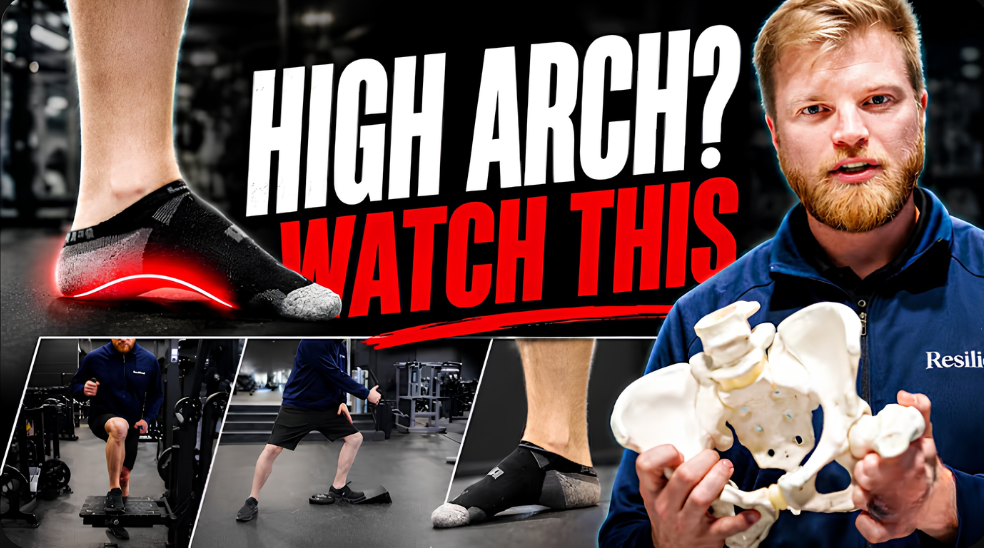
If you've tried pronation drills with a high-arch client and seen zero results, you're not doing it wrong. You're just solving the wrong problem.
High arches aren't a flexibility issue you can stretch away. They're a mechanical response to where the body thinks it needs to be - and until you address that, no amount of towel scrunching is going to change the foot.
Here's what's actually going on.
Why the arch gets stuck in the first place
When someone has a high, stiff arch, their center of mass has shifted forward toward their toes. The body doesn't want to fall, so it grips - clenching the toes and the front of the foot to hold position.
At the same time, tension in the posterior chain pulls the heel forward. Now you have compression coming from both ends: front pressure from toe gripping, back pressure from posterior tightness. The foot literally folds in the middle.
That's the high arch.
So when you put a towel under the foot and ask them to press down into the ground, there's nowhere for the tissue to go. The front is blocked. The back is blocked. The drill hits a wall before it can do anything.
The fix isn't more pronation work - it's creating space first
Before the foot can pronate, you have to remove what's stopping it. That means two things: pulling the center of mass back, and opening up the tissue on both ends of the foot.
Here's the three-exercise progression I use:
1. Cable-assisted posterior loading
This targets the root cause - the forward center of mass. Using a cable to lightly pull the shoulder blades apart, you cue the client to breathe out and push back, stopping when the lower ribcage contacts the ground. On the inhale, the cable assists the return.
The goal is to decompress the pelvis, ribcage, and ankle while training the center of mass to shift back. Toes elevated on a small wedge makes this more accessible for clients who are really stiff.
2. Warrior cable lunge
Clients with high arches almost always have hips that are turned out in external rotation. Putting them in a standard split squat means fighting that pattern immediately.
This variation widens the stance to match where their hips actually are, then adds toe and heel elevation to separate the two ends of the foot. Instead of crunching down, the arch now has room to drop. Keep the weight back through the heel and shift front to back in a small range - enough to load through the hip without the pelvis compensating.
3. Crossover step-up
Front-to-back ankle mobility is often the limiting factor in a split squat - but a lateral step-up sidesteps that entirely. By stepping across the body, you get on the inside edge of the foot naturally, without needing full sagittal ankle range.
Think of it as body-checking the ankle medially as you step up. That inside-edge loading is exactly the pronation you're trying to develop, just accessed through a direction the body isn't blocking yet.
The principle underneath all of it
The order of operations matters. You can't load a pattern the body has no access to. These three exercises work because they meet the client where they are, create space in the restricted areas, and then layer in the pronation you're looking for once the tissue can actually respond.
Not every high arch is the same, but these principles transfer across most presentations.
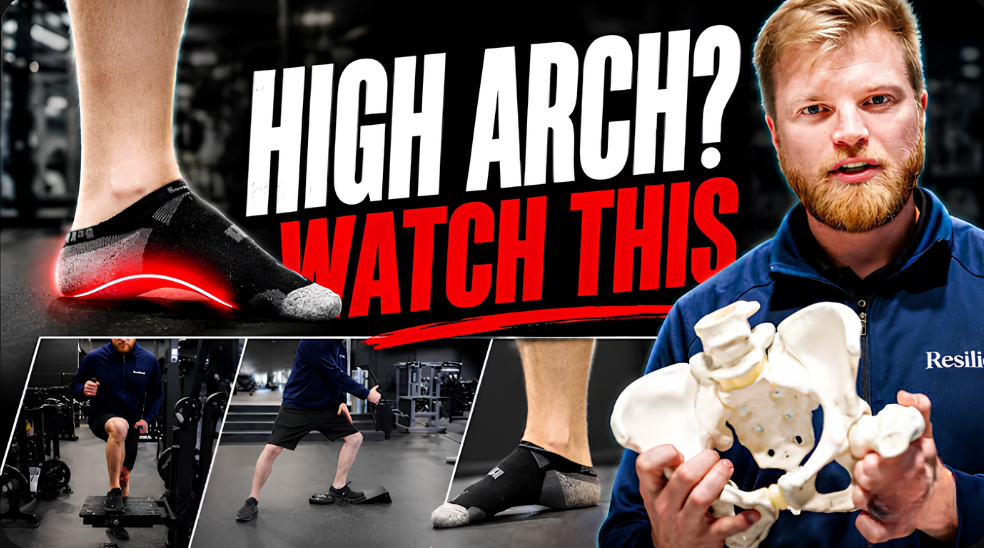
Want to see the full breakdown with exercise demos? Watch the video here.
And if you want to understand how foot shape like this connects to what you're seeing at the knee and hip, the Gait Assessment Mini Course is built exactly for that - covering common compensation patterns across the entire lower chain.

