
Why Hip Flexor Stretches Keep Failing (And What to Do Instead)
Sep 17, 2026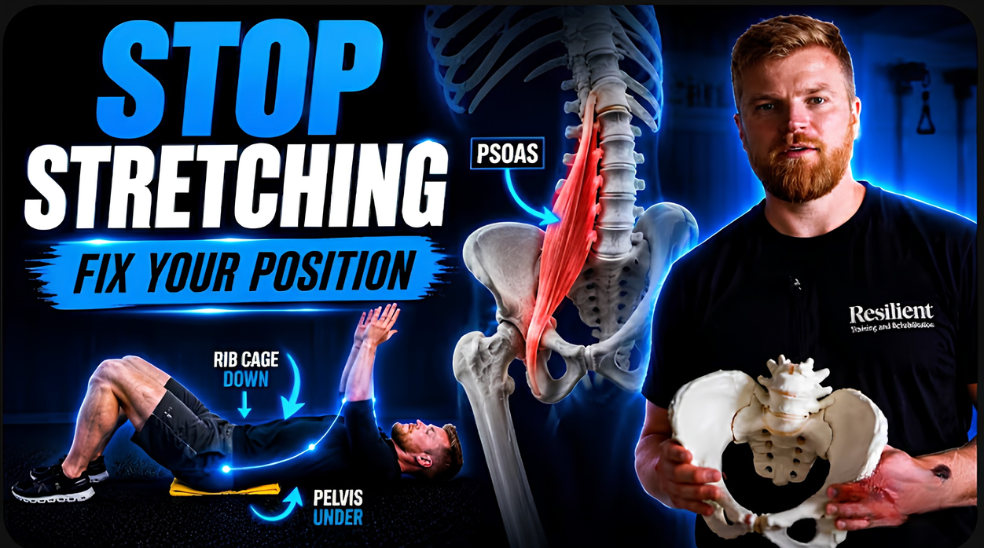
If a client stretches their hip flexors every day and the tightness comes right back, the stretch was never the answer. The tension has a different source, and it starts higher up than most coaches look.
The Psoas Gets Blamed First
When someone complains about hip flexor or low back tension, the psoas is usually the muscle coaches point to. It's worth understanding what this muscle actually connects to before deciding how to address it.
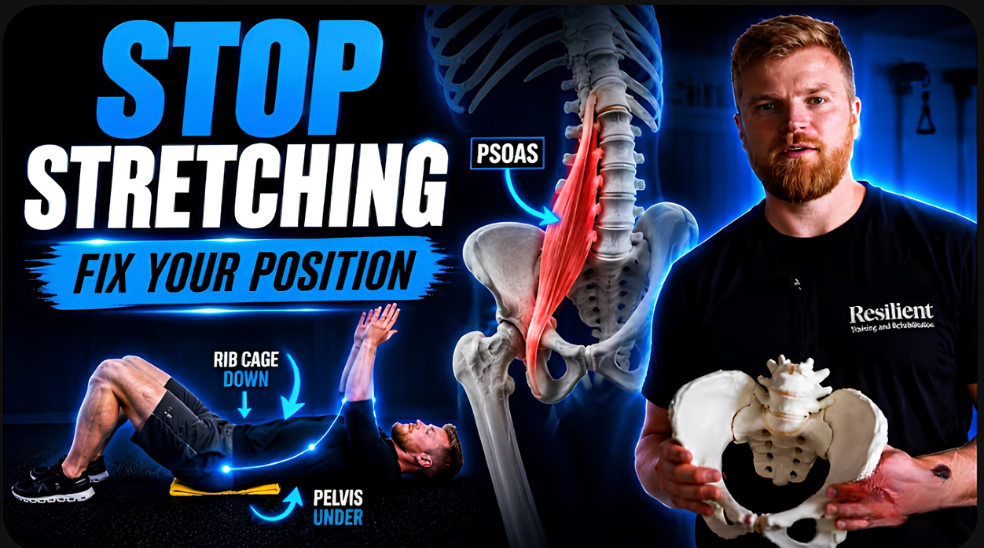
The psoas attaches directly into the diaphragm, runs down along each vertebra, and ends at the femur. Because it's tied into the diaphragm, breathing has a direct effect on how much tension sits in that muscle. Any change in spinal position changes the tension running through it as well.
Overstretched, Not Overtight
Here's where most cueing goes wrong. This muscle is rarely sitting in a position of too much shortening. More often, it's already overstretched.
When someone breathes in and holds that position, the ribs flare and the pelvis tips forward. That combination pulls the psoas into more length while also externally rotating the femur. So the muscle a coach assumes is tight is often already stretched past where it needs to be.
When a muscle sits in too much length, the brain sends tension signals to protect it. That tightness a client feels is the nervous system's way of protecting an already-lengthened muscle. Pushing further into a stretch only fights that signal instead of listening to it.
Why Arching and Tucking Don't Change Anything
Two common cues show up constantly: arch the lower back to drive more hip extension, or tuck the pelvis under to flatten the low back against the floor.
Both miss the actual variable. Arching the back pushes the pelvis further forward and flares the ribs more, adding to the same overstretched position. Tucking under doesn't change the ribcage's position relative to the pelvis either. It just adds tension around the hips in a different direction.
The relationship between the ribcage and the pelvis is what needs to shift. Neither cue touches that relationship.
Repositioning the Ribcage and Pelvis
The starting position is simple: lying on the back with feet, hips, and back on the ground. Most people default to one of two patterns here, an anterior tilt with the low back arched off the ground, or an overcorrected posterior tilt where the pelvis tucks too far under. Neither one changes the ribcage-to-pelvis relationship driving the tension.
A pad or towel placed under the hips helps the pelvis settle into a better position without extra effort from the stomach muscles. From there, a reaching pattern through the arms, paired with breathing, brings the ribcage back in line with the pelvis. Breathing in as the arms reach, then breathing out while pressing the feet into the ground without letting the hips lift, builds the position gradually over several reps.
I break down the full cueing and setup step-by-step in this week's video, including the exact hand position and breathing pattern that makes this work.
The Bigger Takeaway
Stretching a muscle that's already overstretched doesn't resolve the tension. It just asks the tissue to go further past the point where the nervous system is already protecting it. Repositioning the ribcage and pelvis addresses the actual mechanism, which is why it holds up over time instead of needing to be repeated every day.
If you're working through how to sequence corrective work like this into a client's program, that's covered in Roadmap to Exercise Selection.

