
Why Hip Hikes Happen (And Why Muscle Tightness Isn't the Cause)
Jul 29, 2026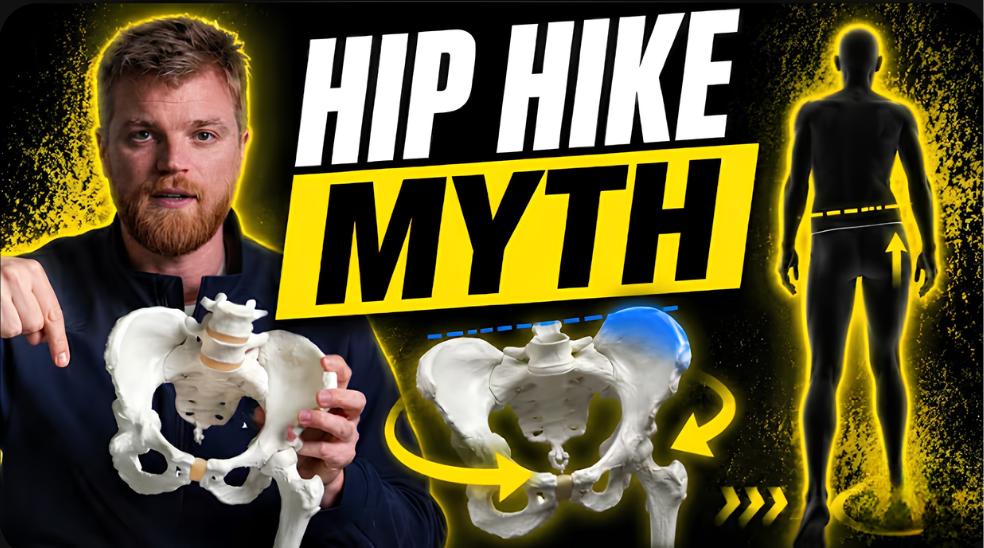
If you've spent any time working with clients or athletes, you've seen a hip hike. Someone steps up, marches a knee forward, or moves through a lateral lunge, and one hip pops up higher than the other.
The instinct for most coaches is to blame muscle tightness. It's an easy conclusion to draw. The hip is elevated, so something must be pulling it up.
But muscle tightness isn't the cause of a hip hike. It's a reaction to it. The actual cause lives in the pelvis, the spine, and how the center of mass is shifting through the movement.
What's Actually Happening
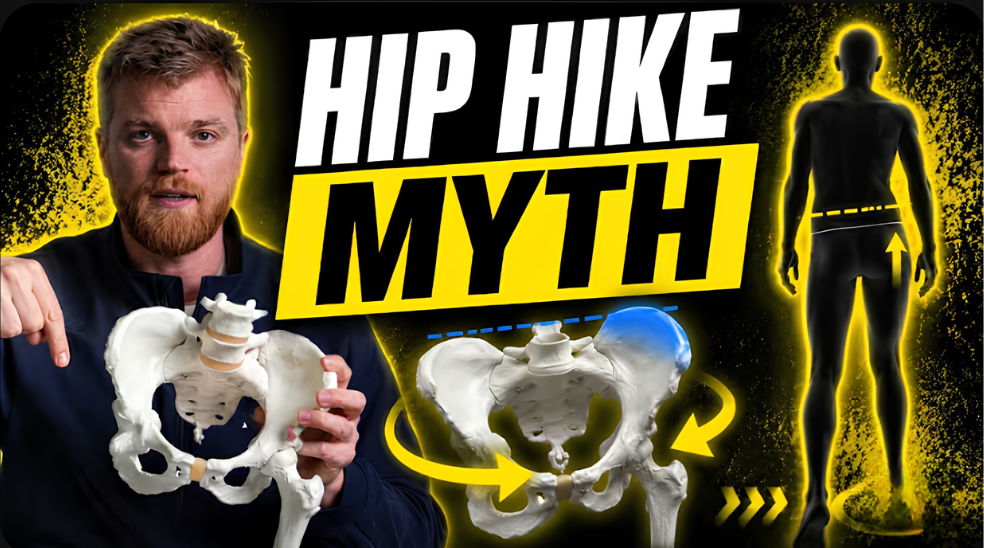
Picture someone with a right hip hike. As they step up onto that right leg, the pelvis begins rotating toward the right. At the same time, the left hip drops.
This shift happens because the right hip loses some of its ability to flex and internally rotate. Without that range available, the body needs another strategy to get the leg through the movement, and hiking the hip becomes that workaround.
As the pelvis rotates further right, the left femur starts to externally rotate more, which causes the hip to hike up even further. It becomes a bit of a feedback loop. The more the pelvis turns, the more the body has to compensate to avoid losing balance.
Meanwhile, the left side of the pelvis is dealing with its own issue. As the left hip drops, tension and compression build through the lower left portion of the pelvis.
Why This Matters for Exercise Selection
This pattern shows up clearly in movements like a lateral lunge. Moving from left to right, the right knee needs to stay in line with the hip, with the sit bone and heel lined up. That requires the ability to internally rotate the right femur.
If that internal rotation isn't available, the body finds a different path. Instead of moving through the hip, it dumps the pelvis forward, arches the lower back, and compresses the posterior part of the pelvis to complete the movement. That's not the outcome you want. Ideally, movement happens through hip extension at the pelvis, not through extension above the pelvis or hyperextension at the knee below it.
This is why understanding the mechanism behind a hip hike changes how you approach programming. Instead of stretching or releasing "tight" muscles, the priority becomes restoring hip flexion and internal rotation on the side that's hiking, while also creating space through the posterior pelvis on that same side.
Where to Go From Here
A hip hike isn't a single-muscle problem. It involves base of support, pelvic rotation, ribcage rotation, spinal rotation, and where compression is building through the pelvis. Once you can see all of those pieces together, it becomes much easier to identify where the real restriction is and build exercises that address it directly.
If you want to see this broken down visually, including how the ribcage and upper body factor into the picture, check out this video over on YouTube.
If you want a deeper understanding of how compensation patterns like this connect to joint position, joint shape, and exercise selection, that's exactly what's covered in Foundations of Biomechanics Course.

