
Why One Hip Hikes Up (And It's Not Weak Glute Med)
Aug 20, 2026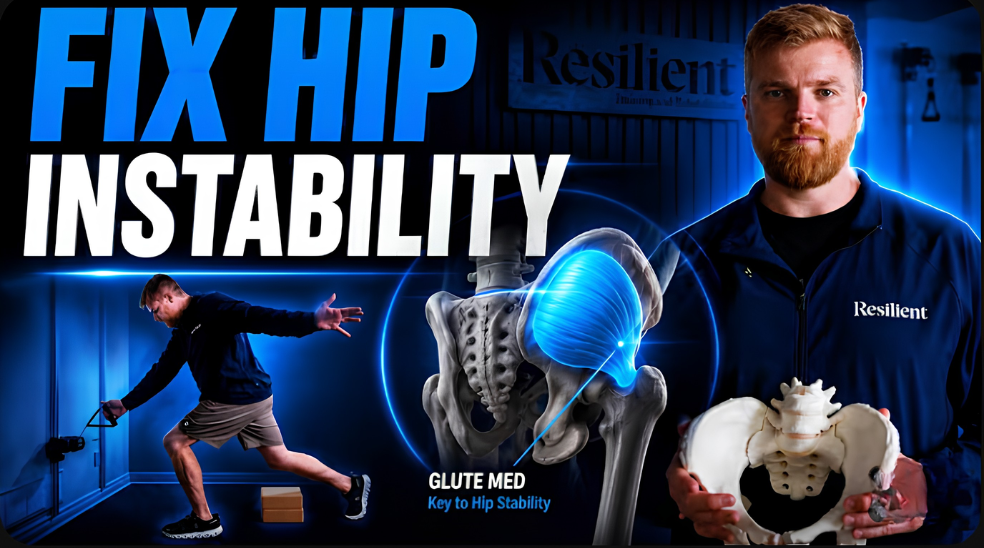
If you've ever watched someone squat, lunge, or stand on one leg and noticed one hip lift up and out of position, you've probably heard the standard explanation. Weak glute med. The fix is usually a batch of isolation exercises aimed at strengthening that muscle directly.
The problem is that this explanation misses what's actually happening most of the time.
The Muscle Isn't the Starting Point
Glute med gets blamed for a long list of issues. Ankle sprains, hip hiking, general instability through the hip. And the response is almost always the same: strengthening work aimed at isolating the muscle.
But muscles don't go weak just because they're deconditioned. They go quiet because they're not in a position to work. If the pelvis isn't set up to allow the right motion at the hip, the glute med can be as strong as you want and it still won't fire the way it's supposed to.
What the Pelvis Has to Do With It
Picture a pelvis that's turned toward one side. In order for the hip to move well from that position, it needs internal rotation. If that internal rotation isn't available, the hip compensates by hiking up instead.
The anterior glute med contributes to hip flexion and internal rotation of the femur, working alongside a number of other muscles to do it. But none of that matters if the pelvis is rotated or tipped forward into an anterior tilt. Both of those pelvic positions block the motion the glute med needs in order to contribute the way it should.
So instead of chasing isolated strengthening or running a muscle test to confirm a "weak point," the more useful step is figuring out what's actually happening at the pelvis. That starts with a couple of specific measurements.
Two Measurements That Tell the Real Story
Hip external rotation. If this is limited, it's a sign the pelvis is tilting forward. As the pelvis dumps forward, tension builds through the back side of the hip, pulling the femur into more of an externally rotated position already. That leaves less room to externally rotate further. Any rotation happening at the pelvis itself will also limit this movement.
Hip internal rotation. This one needs to be tested lying down rather than seated. In a seated position, some of the ligaments at the front of the hip relax, which can make internal rotation look better than it actually is. Lying down gives a more accurate picture of whether the back of the hip and pelvis can actually open up.
With the knee bent to 90 degrees, the question is simple: can the femur roll back into the socket? If there's too much internal rotation available and not enough external rotation, hiking the hip up becomes the workaround the body uses to complete the motion.
Both measurements need to land in a similar range. When one is significantly more limited than the other, that mismatch is usually what's driving the instability that gets pinned on the glute med.
Restoring Pelvic Position Before Chasing Strength
Once the pelvis is in a position that allows for proper internal and external rotation, the anterior glute med has what it needs to actually work.
Restoring pelvic position starts with a foot-against-the-wall drill using a foam roller to create internal rotation up the chain, followed by a cable exercise that reinforces the same pattern. Both are built around restoring the pelvic motion first, rather than isolating the muscle that's been getting blamed for it. The cueing on these is easier to follow when you can see them, so I'd recommend watching the full demonstration here.
The Bigger Takeaway
Hip hiking isn't a strength problem. It's a positioning problem, and treating it like a strength problem means addressing the wrong link in the chain. Once the pelvis can move the way it needs to, the muscles around it stop having to compensate.
If you want a deeper breakdown of how compensations like this show up in movement patterns, and how to assess and address them, I cover the full system inside Roadmap to Exercise Selection.

