
Why "Tuck Your Ribs" and "Tuck Your Pelvis" Are the Wrong Cues (And What to Use Instead)
Jun 28, 2026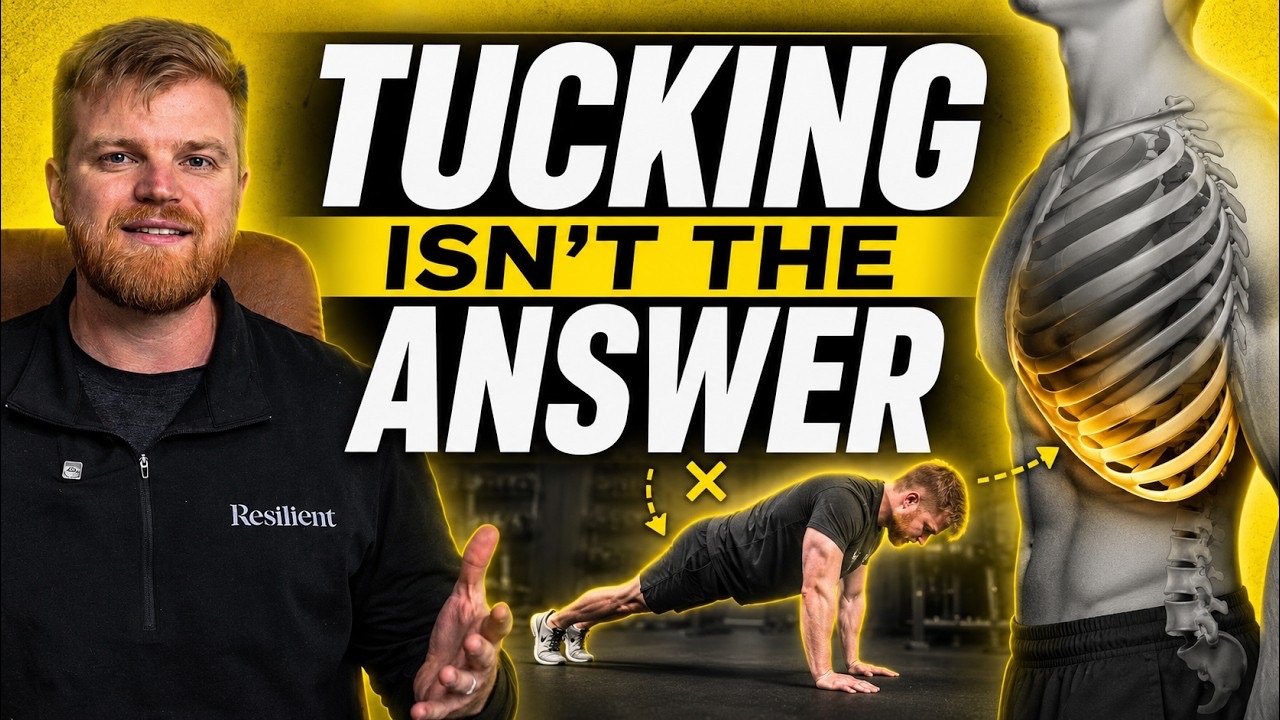
I had a conversation with a client recently about cues they kept running into online. They had been cued these things before, by other coaches and by what they were watching on the internet, and they wanted to know why I don't use them. The two cues in question were "tuck your ribs" and "tuck your pelvis."
I'm not a fan of either one. Not because the intention is wrong. The intention is good. We're trying to get someone into a better position. The problem is that these cues don't actually put the body where we think they do. So let's break down what's really happening, and what to do instead.
Listen to the Podcast Episode Here: Listen Here
What These Cues Are Actually Doing
When you cue someone to tuck their rib cage or tuck their pelvis, you're asking them to move a proximal structure directly. Most people respond by moving that whole structure as one big unit. They aren't changing the mechanics underneath. They're just relocating the block.
Here's what that looks like in practice.
Cue someone to tuck their hips underneath and they squeeze their glutes and roll the pelvis back. The lower back starts to flex and round. The whole system collapses, and they drift toward a sway back position where the abs fire excessively and the glutes overwork. Try squeezing your glutes as hard as you can and then bending over to touch your toes or set up for a deadlift. It's very difficult. Forcing the pelvis into the opposite extreme doesn't make it effective.
Cue someone to tuck their lower ribs and you'll watch the body collapse. The head drifts forward. The shoulders round in. That isn't more range of motion. It's a new compensation, and it usually makes the existing limitation worse.
Why Cueing the Area Itself Rarely Works
If someone's knees cave in during a squat, telling them to push their knees out doesn't fix anything. It treats the symptom and ignores the reason the knees are caving in the first place.
Cueing the rib cage and the pelvis directly is the same mistake. The rib cage flares for a reason. The pelvis dumps forward for a reason. If we don't understand why it's happening, grabbing at that area and forcing it into position just buries the compensation somewhere else.
So the question isn't "how do I move this structure." The question is "what is driving this position, and what can I use to change it." That answer almost always lives somewhere other than the structure itself.
The Fix Is Distal to Proximal
This is the framework I want you to take away. Instead of cueing the proximal structures directly, use the distal structures to reposition them. Use the hands, the arms, the feet, the knees, and the legs to reinforce the position you want at the rib cage and the pelvis.
Distal to proximal. Change the position of the rib cage and pelvis through what's happening at the hands and the feet.
The Rib Cage: Fix It Through the Hands
Picture someone in a pushup position, hands and toes on the ground, and their stomach is sinking toward the floor. The instinct is to cue "pull the ribs up" or "tuck the ribs." Don't.
First, ask whether that's even the right position for them. If they don't have around 90 degrees of shoulder flexion, a standard pushup may not be appropriate yet. That isn't a strength issue. It's a range of motion issue, and no cue solves it. Modify instead. Elevate the hands onto a ramp, or widen the hands slightly, until the position is actually accessible.
If the position is appropriate, cue the hands, not the ribs. Tell them to push through their hands and think about lifting the chest up between the shoulder blades. They're not lifting with the chest. They're creating it by pushing through the arms. That closed chain, where the hands stay in contact with the ground, lets the rib cage shift back and retract between the shoulder blades.
Two things to watch. Keep the elbows slightly bent. If the elbows lock out to find the position, you've recreated the exact compensation you were trying to avoid. And cue the pressure through the inside edge of both hands. That's what drives the rib cage up rather than letting it collapse.
So the swap is simple. Instead of "tuck your ribs," say "push through your hands and lift your chest between your shoulder blades."
The Pelvis: Fix It Through the Feet
Now take someone standing in an anterior pelvic tilt. The common cue is to tuck the hips, squeeze the glutes, or manually roll the pelvis under. That's essentially a standing butt wink. The pelvis rolls back as one unit, the lower back rounds, and the system collapses.
If they're sitting in one extreme and you cue them to roll the pelvis back, you've just moved them into the other extreme. That isn't progress.
Instead, pick an exercise that lets the feet do the work. An anterior pelvic tilt usually means the person is loaded more toward their toes. So choose movements that push them back into their heels. A TRX squat, a wall supported hack squat, reverse walking. The legs reposition the pelvis without you ever cueing the pelvis.
You can also take them to the ground. Lie them down, put a pad under the hips, and cue them to press the tag of their pants into the floor. That doesn't force a big rotation of the pelvis. It lets the pelvis sink back and stay grounded, the same way grounding the heels works when standing.
The Principle to Take With You
Understand why the rib cage is flaring and why the pelvis is dumping forward. Then use the structures above and below, the hands and arms, the feet and knees and legs, to reinforce the position you want from the outside in.
When you cue the area itself, you're limited. You can only really pick exercises where the client manually holds that position, and you fight their compensation the whole way. When you go distal to proximal, you open up far more exercise variations, you get better transfer between movements, and you actually start to restore range of motion instead of hiding the limitation.
The intention behind the old cues was never wrong. The method just leaves a lot on the table.
Want the full framework behind cues like this?
This distal to proximal approach is the backbone of how I teach assessment and exercise selection inside the EVOLVE Biomechanics Mentorship. If you work with movement and you want a system that holds up under scrutiny instead of a list of cues that fall apart in practice, that's where to start: Join Here

