
You're Doing the Pigeon Stretch Wrong (Here's How to Set It Up Properly)
Oct 22, 2026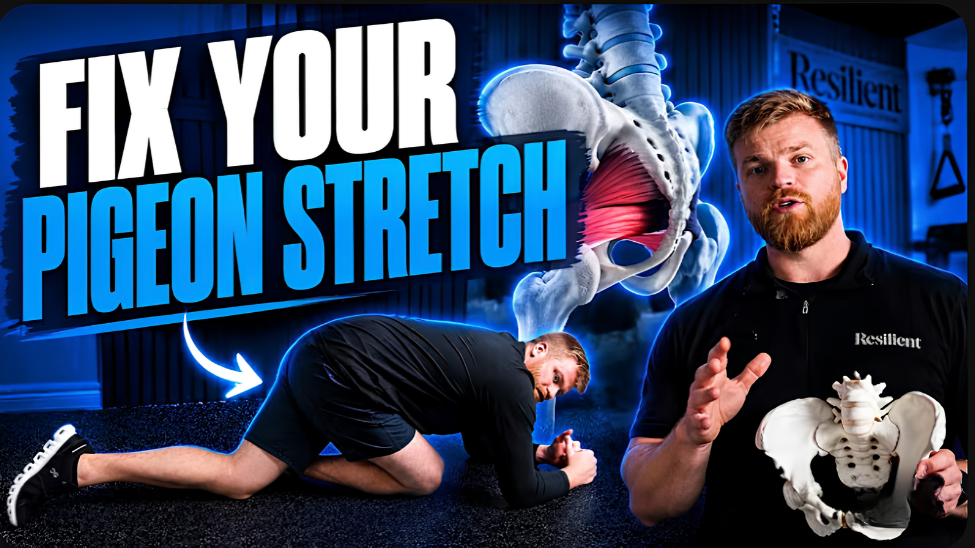
The pigeon stretch is one of the most common exercises people use to open up their hips. It shows up in yoga classes, warm-ups, and home programs, and it gets handed to a lot of people dealing with low back pain.
There's good reason for that. Used well, the pigeon can help restore hip mobility and take pressure off the lower back. The problem is that most people set it up in a way that works against the exact area they're trying to open. They end up feeling a bit of a stretch in the back of the hip, a pinch in the front, and not much lasting change.
In this post, I'll walk through why the pigeon can be effective, what goes wrong with the typical setup, and the adjustment I use to make sure the stretch goes where it's supposed to.
Why the Back of the Hip Gets Stuck
To understand the pigeon, we need to start with what's happening at the pelvis.
A lot of people live with the back of the pelvis in a squeezed position. The external rotators at the back of the hip, like the piriformis and the lower glutes, pull the femur, sit bone, and sacrum toward each other. If you want to feel what that's like, squeeze your glutes as hard as you can and hold it. That's essentially the state the posterior hip is stuck in.
When the pelvis is squeezed together like this, the muscles back there become very stiff, and the hip loses its ability to internally rotate.
Why Internal Rotation Matters
Internal rotation is one of those qualities that doesn't get enough attention, and it plays a big role in how we move.
First, it's what allows us to put force into the ground. Second, it allows the ilium (the pelvic bone) to rotate posteriorly, which creates space in the back of the hip. We need that space any time we go into hip extension, push off from one side, or land on that side.
When that space isn't available, the body finds it somewhere else. Usually that means the lower back takes over. The pelvis tilts forward, or in some cases it tucks underneath, which you'll see as a butt wink in a squat or a slouched, sway back posture in standing. Either way, the hip isn't doing its share and the spine is picking up the slack.
Why the Pigeon Can Work
This is where the pigeon earns its reputation.
When the femur is flexed to around 90 degrees, the external rotators at the back of the hip lose their leverage. Instead of squeezing the pelvis together, they can help create internal rotation. So if we put the hip in that position, we have an opportunity to open up the back of the hip, restore movement at the joint, and take some pressure off the lower back.
The key word there is opportunity. The position alone doesn't guarantee that's what happens.
What Most People Get Wrong
Most of the time, the issue comes down to the setup.
When people get into the pigeon, they tend to turn the front leg out as far as they can, pushing the hip into as much external rotation as possible. The thinking makes sense on the surface. More rotation should mean more stretch.
The trouble is that the pelvis is already in a state of external rotation. That's the whole reason the back of the hip feels stuck. Cranking the leg further into external rotation adds to the pattern we're trying to undo.
Then, when people sink back into the stretch, two things tend to happen. They might feel some stretching in the back of the hip, but they also start to feel a pinch in the front. That pinch shows up because they're going into deeper amounts of hip flexion, and deeper flexion needs the back of the pelvis to open up to make room. If it doesn't open, the front of the joint gets crowded.
A Better Way to Set Up the Pigeon
The change is simple, and it all happens before you sink into the stretch.
Instead of starting by forcing the leg out, start with the leg turned out and then internally rotate the femur. That internal rotation is what opens up the back part of the hip. From there, come up and over the leg, drop the knee down, straighten yourself out, and lower down into the stretch.
A few things to keep in mind:
- The knee doesn't need to be far back. You can go further if your hips allow it, but even a modest position does the job. Because the femur is internally rotated, you're opening up the back of the hip capsule and the back of the pelvis, which is the space we want to create.
- Keep any side-to-side movement small. Shifting a little can be useful, but if you drift too far, the movement starts coming from your spine instead of your hip.
- The movement should come from the femur. Small, controlled motion keeps you working into the hip capsule rather than just shifting your hips around excessively.
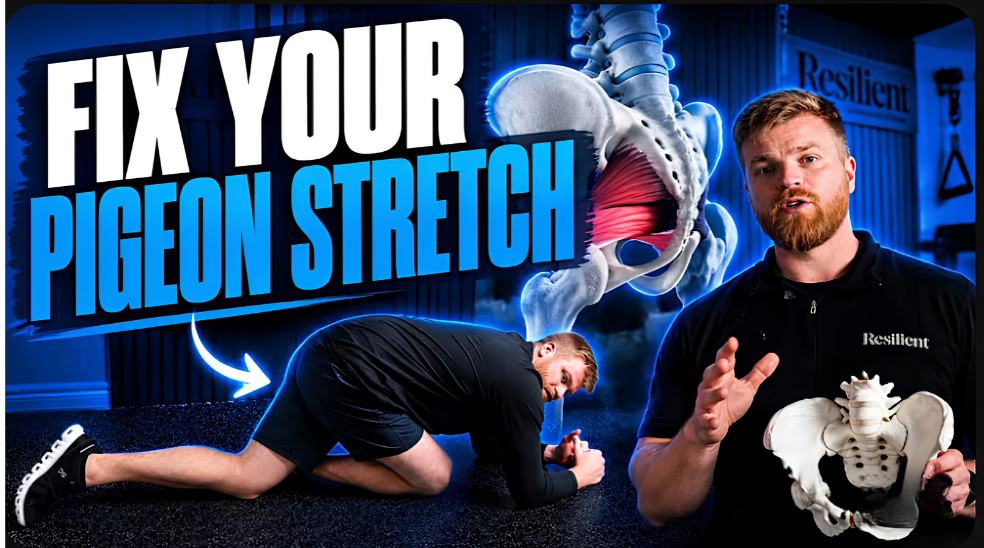
If you want to see the full setup and how much movement to allow, I go through it step by step in this week's new video.
Stretching Is Only Part of the Picture
One thing we have to appreciate with exercises like the pigeon is that it won't be the only thing we do to improve how someone moves.
A stretch on the floor won't fully transfer to standing on its own. To reinforce the new position, we need to bring in strength exercises, along with specific variations of those exercises, that put load and fatigue through the same pattern. That's what gives the system a reason to adapt and hold onto the change.
So use the pigeon to open up the back of the hip, then follow it with strength work that teaches the body to use that space when it matters.
Want a Program That Does This for You?
If you're looking for a structured way to pair mobility work with strength training, that's what the Rebuild Blueprint is built for. It's a 12-week strength program based on what I've seen work across thousands of clients, designed to address compensations, build strength, and improve mobility along the way.

